A practical 2026 guide to heat loss surveys, explaining what gets measured, why room by room calculations matter, how grants fit in, and what homeowners should ask before agreeing insulation or a heat pump.
Why heat loss surveys matter in 2026
A heat loss survey is one of the most useful checks a homeowner can arrange before spending money on insulation, heating controls or a heat pump. It shows where heat is escaping, how much heat each room needs, and which upgrade should come first.
The topic is becoming more important in 2026 because more homes are being assessed for the Warm Homes Plan, the Warm Homes Local Grant, the Boiler Upgrade Scheme and private retrofit work. A good survey protects the homeowner from guesswork. It also helps installers avoid oversizing, undersizing or recommending measures in the wrong order.
Heat loss is not just a whole house number. MCS explains that low carbon heating systems such as heat pumps need room by room heat loss calculations that account for building fabric, room dimensions, air change rates, desired internal temperatures and the lowest external temperature during winter.
That is why a real survey looks at the building before it looks at the product. It asks what the home needs, which rooms are weak, where moisture risk sits, and whether the proposed work will make the heating system easier to run.
The short answer
In 2026, a heat loss survey is worth doing before major insulation work, before replacing a boiler with a heat pump, before changing radiators, and before applying for a grant where a home survey will decide the improvement package.
For grant routes, the Warm Homes Local Grant is only available in England. GOV.UK says eligible homes must be privately owned, have an EPC of D, E, F or G, and the household income must usually be £36,000 a year or less unless a postcode or benefit route applies.
For heat pump routes, the Boiler Upgrade Scheme can provide £7,500 towards an air source heat pump, £7,500 towards a ground source heat pump, £5,000 towards a biomass boiler, or £2,500 towards an air to air heat pump. GOV.UK says there is one grant per property and hybrid heat pump systems are not eligible.
The practical point is simple. Measure first, then design. A survey should help decide whether the best next move is insulation, ventilation, radiator changes, smart controls, solar panels, or a heat pump.
What a heat loss survey measures
MCS describes heat loss as heat transferring from inside a building to outside. It includes heat lost through the fabric of the building, such as external walls, floors, ceilings, windows and doors. It also includes heat escaping through air leakage or intended ventilation.
That means a survey is not just a quick look at the boiler. It should consider the rooms, fabric, openings, air paths and heating emitters together.
Fabric heat loss is calculated for each building element using its U value, area and temperature difference. Ventilation heat loss is calculated for each room using internal air volume, air change rate and temperature difference.
A lower U value means heat moves through the building element more slowly. That is why insulation, better glazing and tighter detailing can reduce heat demand when they are suitable for the property.
What happens during a survey
A professional survey normally starts with the basics. The assessor checks the property type, age, construction, floor area, room layout and any visible signs of damp, mould, leaks or ventilation problems.
Fabric checks
They then look at the parts of the home that lose heat. These include the roof, walls, floors, windows, doors and obvious air leakage paths. Energy Saving Trust says an uninsulated home can lose around 25% of its heat through the roof, which is why loft and roof checks are still important even when the main question is heating.
Heating checks
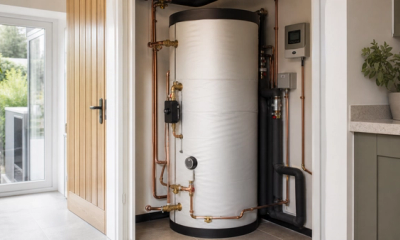
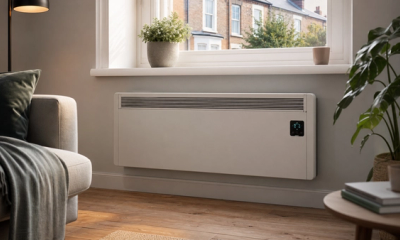
The survey should also record what heating is already in each room. Radiator size, underfloor heating, pipework, hot water storage and controls all affect the final design.
For a heat pump, the survey should produce a room by room view, not just a broad estimate. That allows the installer to decide whether the existing heat emitters can work at lower flow temperatures or whether changes are needed.
Why room by room matters
Two homes can have the same total floor area and still need very different heating designs. One might have a cold rear extension, another might have an uninsulated roof room, and another might have one bedroom over an exposed garage.
If the design only uses an average house figure, the weakest room may be missed. That is how homeowners end up with one room that never feels comfortable, even after a major upgrade.
MCS says room by room calculations are needed for low carbon heating because systems such as heat pumps need to match the specific needs of the application with a slim margin of error.
Room by room results also help prioritise insulation. If one room is losing far more heat through a roof, wall or floor, treating that element may be more useful than replacing equipment first.
Heat loss and insulation order
A heat loss survey should make the upgrade order clearer. The best starting point is usually the most obvious heat loss or comfort problem, provided the building is dry and suitable.
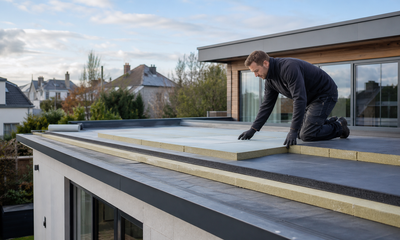
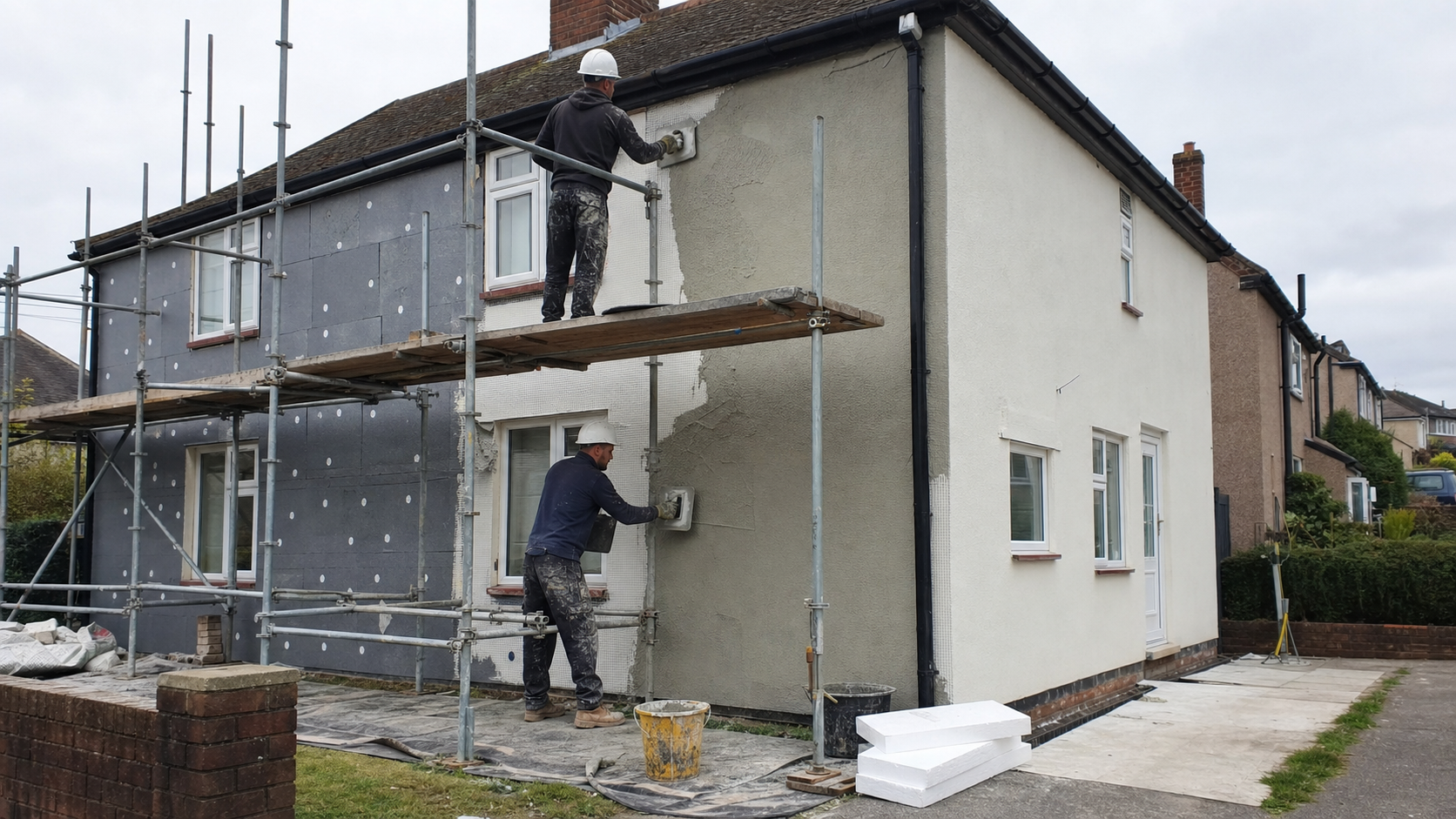
Loft insulation may be simple where there is a normal cold loft. Flat roofs, lived in lofts and damp concerns need professional advice. Cavity wall insulation can work where the wall has a suitable cavity and exposure risk is acceptable. Internal wall insulation, underfloor insulation and room in roof insulation need more detailed planning because they affect surfaces, moisture and finishes.
The survey should also flag ventilation. Better insulation and tighter homes can reduce uncontrolled air movement. That can improve comfort, but planned ventilation still matters for moisture and indoor air quality.
The right order is not the same for every home. A cold solid wall home may need wall insulation planning. A draughty home may need air leakage work first. A home with a planned heat pump may need radiator sizing after the fabric plan is agreed.
Heat loss and heat pumps
Heat pumps work best when the building heat demand is understood. Ofgem says heat pumps perform best in a well insulated home, and that insulation measures such as cavity wall or loft insulation can significantly reduce heat loss and may help improve the performance of a low carbon heating system.
This does not mean every home needs every insulation measure before a heat pump. It means the design should be based on evidence.
The installer needs enough information to size the system, choose flow temperatures, check radiators, plan hot water, and explain running expectations. Ofgem says the new heating system funded by the Boiler Upgrade Scheme must be capable of meeting the full space heating and hot water requirements of the property.
If the survey finds that a room needs a lot of heat, the answer might be a larger radiator, underfloor heating, better insulation, better control, or a combination. The point is to decide before installation, not after the homeowner complains.
Heat loss and the Warm Homes Local Grant
The Warm Homes Local Grant is a survey led scheme. GOV.UK says that if a household is eligible and the local council has funding available, the council will arrange a home survey to see how the home could be made more energy efficient.
GOV.UK gives examples of possible improvements, including wall, loft and underfloor insulation, air source heat pumps, smart controls and solar panels. It also says the local council will organise and pay for agreed improvement work, while landlords may need to pay for some improvements.
The DESNZ guidance says the scheme will provide energy performance upgrades and low carbon heating to low income homes in England with EPCs between D and G that are privately owned. It also says upgrades should be tailored to individual homes so the most appropriate measures are installed.
That makes the survey central. The grant is not simply a request form for one product. It is a route into an assessed package.
Heat loss and the Warm Homes Plan
The Warm Homes Plan is the wider government programme behind many of the changes homeowners are hearing about in 2026.
GOV.UK says the plan will help upgrade 5 million homes by 2030 through direct support for low income households, grants, finance and new rules for warmer rented homes. The plan sets out £15 billion of public investment, including £5 billion for low income schemes, £2.7 billion for the Boiler Upgrade Scheme, £2 billion for consumer loans and £1.1 billion for heat networks.
For homeowners, the most useful lesson is that the plan is not only about heating products. It links insulation, clean heat, solar panels, batteries, finance, rented property standards and consumer advice.
A heat loss survey fits that approach because it turns a broad policy goal into a practical property plan.
Energy prices and why accuracy matters
Ofgem says the energy price cap from 1 July to 30 September 2026 is £1,862 a year for a typical dual fuel household paying by Direct Debit. Ofgem also says average Direct Debit electricity rates for that period are 26.11 pence per kWh with a 57.19 pence daily standing charge, and gas rates are 7.33 pence per kWh with a 29.04 pence daily standing charge.
Those figures are not a promise about any one bill. Actual costs depend on region, tariff, payment method and energy use.
They do explain why survey accuracy matters. If a heating system is oversized, it may cost more than needed. If it is undersized, comfort suffers. If insulation is added in the wrong place, the homeowner may spend money without fixing the room that drives the bill.
The survey should therefore produce decisions that are specific enough to act on.
What the homeowner should receive
A useful heat loss survey should leave the homeowner with more than a verbal opinion. It should produce a clear record of what was checked and what the design assumes.
The report should identify the property type, room dimensions, key fabric elements, current heating emitters, ventilation assumptions and any obvious constraints. If the survey supports a heat pump design, it should make clear how each room will be heated and what changes are needed.
Where insulation is recommended, the report should explain the reason. For example, it might identify roof heat loss, exposed floor heat loss, weak wall construction, poor glazing, draughts or a room that needs better controls.
For grant work, keep copies of the survey, eligibility evidence, EPC information, product details, warranties and completion documents.
Questions to ask before agreeing work
- Which rooms have the highest heat loss.
- Which building elements are causing the problem.
- What assumptions were used for air change and internal temperature.
- Is there any damp, mould or ventilation issue to fix first.
- Will insulation change the heating design.
- Will radiator sizes or controls need to change.
- Does the home qualify for the Warm Homes Local Grant.
- Is the Boiler Upgrade Scheme relevant.
- What evidence will be kept for the EPC and grant file.
- What work should happen first.
These questions help turn the survey from a tick box exercise into a useful plan.
Warning signs in a poor survey
Be cautious if the survey skips room measurements, ignores insulation levels, does not ask about damp, gives a heat pump size before checking emitters, or promises a grant before eligibility is confirmed.
Also be cautious if the advice is the same for every home. A terrace, a bungalow, a flat, a park home and a solid wall house do not all need the same package.
A poor survey often jumps straight to a product. A good survey explains the problem first, then shows why the recommended product or measure fits.
The homeowner should be able to understand the logic without needing to become a building physics expert.
How to prepare for a survey
Before the visit, gather any EPC, previous insulation paperwork, boiler service record, heat pump quote, extension drawings, roof guarantees or window documents you already have.
Make a note of problem rooms. Tell the assessor which rooms are cold, which rooms overheat, where mould appears, where draughts are felt, and whether any part of the property has been extended or converted.
If you are applying for the Warm Homes Local Grant, have income, benefit or postcode information ready if requested by the application route. GOV.UK says the council will usually contact applicants within 10 working days to get more information and arrange a home survey.
If you are planning a heat pump, ask whether the installer is MCS certified and whether the design will include room by room heat loss calculations.
How this links with EPCs
An EPC is useful, but it is not the same as a full room by room heat loss design. The EPC gives a rating and suggested improvements. A heat loss survey gives the design information needed for comfort, sizing and sequencing.
GOV.UK says Warm Homes Local Grant eligibility requires an EPC of D, E, F or G. If the homeowner does not know the EPC, GOV.UK says it can be found out during the application.
For landlords, EPC evidence can also matter when planning future compliance and upgrade budgets. The survey should be kept with grant paperwork and completion documents because it helps explain why measures were chosen.
The best approach is to use the EPC as a starting point and the survey as the detailed plan.
Common upgrade sequences
In a simple case, the sequence might be loft insulation, draught proofing, controls and then heating design.
In a solid wall home, the sequence might be wall insulation assessment, ventilation planning, room by room heat loss, then radiator or heat pump design.
In a home with a cold extension, the sequence might be roof or floor insulation first, then heating emitter checks for that room.
In a grant funded home, the sequence will usually be shaped by the council survey and the approved package.
Whatever the route, avoid designing the heating system in isolation from the fabric. The building and heating need to work together.
Bottom line
A heat loss survey is not paperwork for its own sake. It is the link between a cold home and a practical upgrade plan.
In 2026, that matters because households are navigating the Warm Homes Plan, Warm Homes Local Grant, Boiler Upgrade Scheme, higher technical standards and changing energy prices at the same time.
The best survey gives clear room by room information, checks moisture and ventilation, identifies the right fabric measures, and supports a heating design that can keep the home comfortable.
If you are considering insulation, a heat pump or a grant application, start with the evidence. Measure the home first, then choose the measure.