
Keep heat in without creating a moisture problem.
Insulation works best when the construction, exposure, condition, ventilation and heating strategy are understood before a measure is selected.
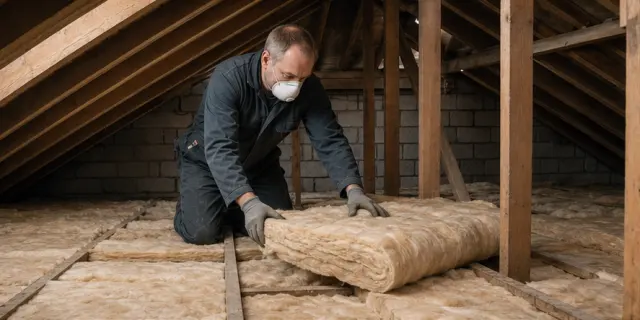
Start with how the building was constructed and how it behaves.
The right insulation measure depends on wall type, roof use, floor construction, exposure, existing defects and the way moisture moves through the home. A recommendation should explain why the measure suits that building.
Loft insulation
Check depth, continuity, eaves ventilation, services, tanks and safe access before adding material.
Arrange a fabric surveyCavity wall insulation
Confirm cavity condition, exposure, wall defects and suitability through an appropriate survey.
Government consumer guideInternal wall insulation
Plan junctions, moisture risk, room dimensions, services and ventilation as a coordinated design.
Discuss solid-wall homesRoom-in-roof insulation
Treat slopes, dwarf walls, ceilings and ventilation as one thermal envelope rather than isolated patches.
Homeowner planning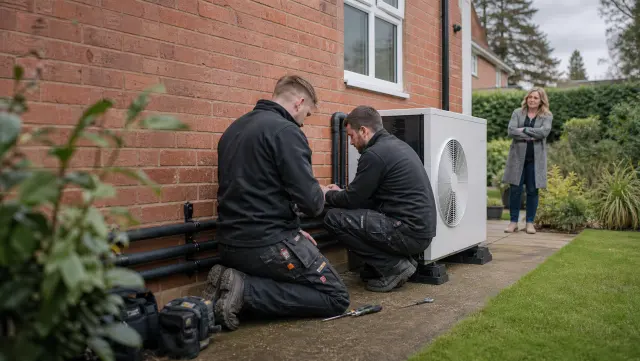
Insulation should improve comfort without hiding defects.
Leaks, damp, blocked ventilation and damaged masonry should be resolved before insulation covers them. Installation quality at eaves, joists, corners, window reveals and service penetrations often matters as much as nominal product performance.
Where a heat pump or solar system is planned, the fabric assessment should inform heating demand and electrical strategy so equipment is not designed around avoidable losses.
- InspectIdentify defects, moisture sources and existing ventilation.
- DesignSelect a compatible build-up and resolve junctions.
- VerifyRecord product, coverage, photographs and guarantees.
Home insulation must suit the construction, condition and ventilation.
Insulation can improve comfort and reduce heat loss, but the wrong system can hide defects or increase moisture risk. A proper assessment considers wall and roof construction, exposure, existing damp, ventilation and the junctions where heat still escapes.
We also check whether current insulation grants may apply before customer-paid work is scoped. Where a heat pump or EPC improvement is planned, the fabric assessment informs the heating demand and the evidence retained for the property.
Evidence first, then a defined next step.
Each stage should reduce uncertainty about the property, the technical scope, the funding or payment route and the party responsible for delivery.
Survey
Construction, condition, exposure, ventilation and heat-loss paths.
Prioritise
Choose measures by benefit, risk, access and disruption.
Install
Protect ventilation routes and manage junction details.
Record
Photographs, product evidence and updates for the property file.
Answers before you commit.
Direct information on suitability, cost, evidence and responsibility.
That depends on existing coverage, cost, access and the building. Loft insulation is often straightforward, but a survey should confirm the priority.
Poor design or installation can contribute to moisture problems. Existing defects, ventilation and wall exposure need to be assessed.
Suitable documented insulation can improve modelled performance, but the effect on the rating depends on the property and methodology.
It may be available through targeted schemes such as the Warm Homes: Local Grant where household and property criteria are met.
Treat the building fabric as a system.
A property survey can identify the useful measures, the risks to resolve and the evidence to keep.