A solar battery has shifted from a luxury add on to a serious financial decision in 2026. With the April 2026 price cap at 24.7p per kWh and Smart Export Guarantee rates between 12p and 17.5p, every unit you store and self consume is worth more than ever. This guide covers what a battery costs, how much you save, the funded routes that pay for it, and the time of use tariffs that double the return.
A solar battery has shifted from a luxury add on to a serious financial decision in 2026. With the April 2026 Ofgem price cap putting the average direct debit electricity unit rate at 24.7p per kWh, the gap between buying electricity from your supplier and earning the export rate on the surplus your panels send back to the grid has never been wider. A battery closes that gap by letting you store the electricity you generate in the day and use it in the evening when prices peak, and on the right time of use tariff it can keep cutting your bills overnight as well.
This guide covers what a solar battery actually does, what the leading systems cost in 2026, how much you can realistically save, the funded routes that pay for the battery for eligible households, and the pitfalls to avoid when sizing and installing one.
What a Solar Battery Storage System Actually Does
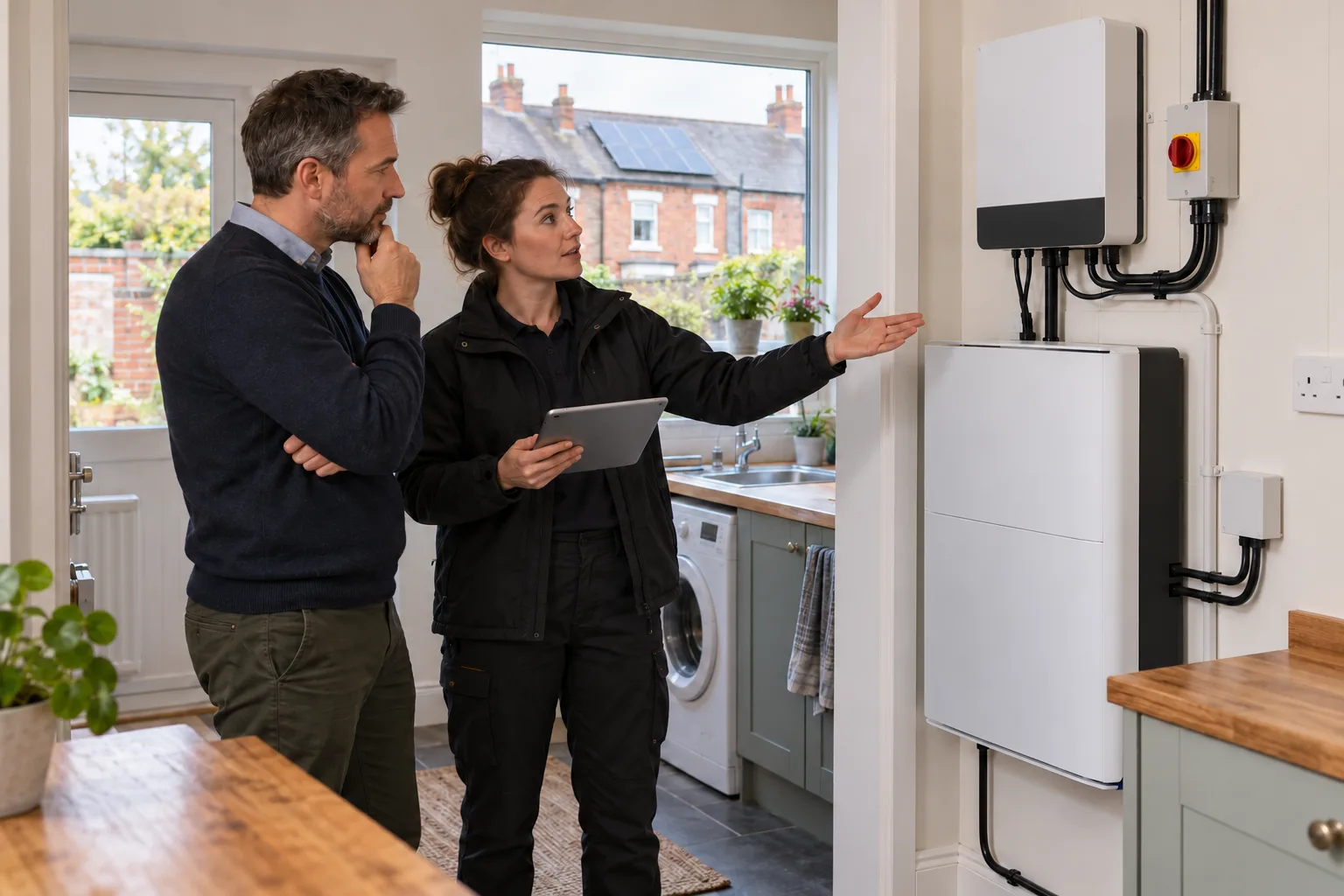
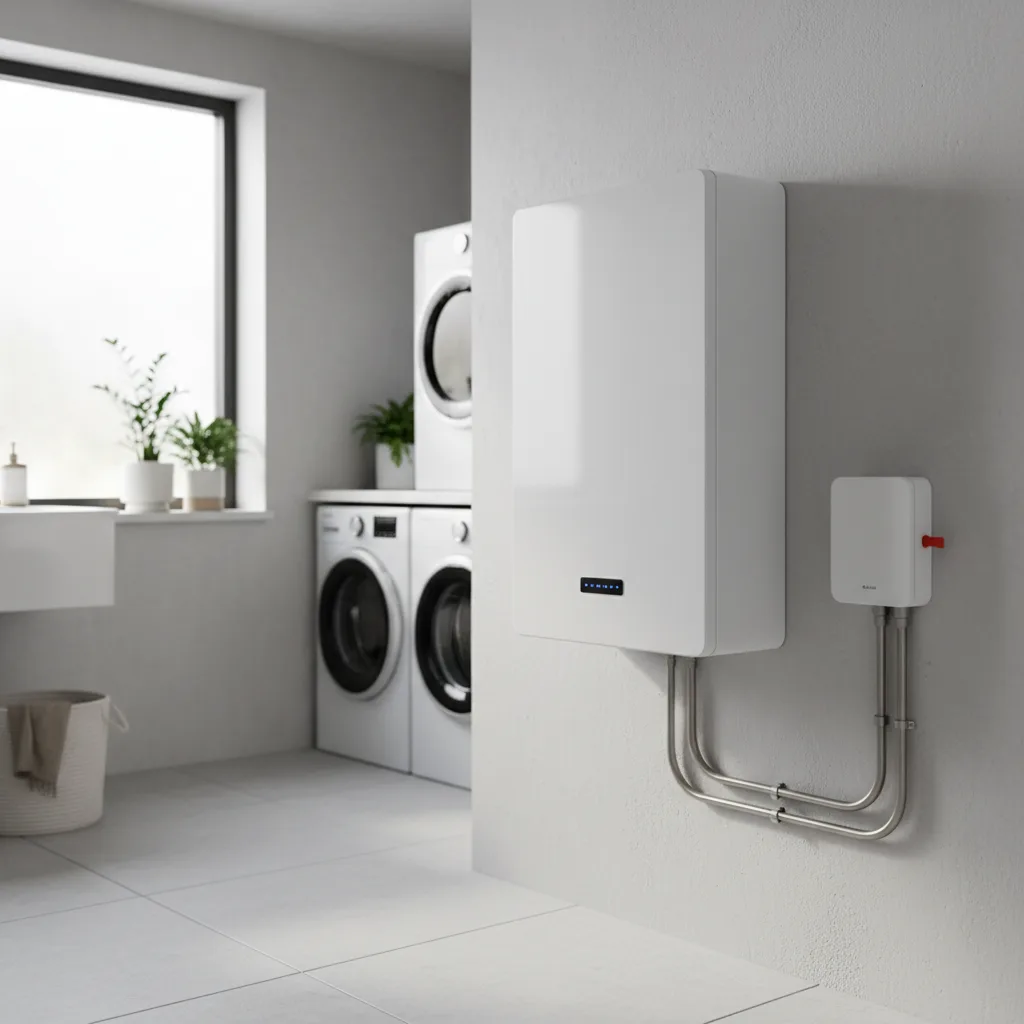
A solar battery is a stationary lithium battery, almost always lithium iron phosphate in 2026, that connects to your solar PV system and your home consumer unit through an inverter. When your panels are producing more electricity than the house is using, the surplus that would normally be exported to the grid is diverted into the battery. When the panels stop producing, in the evening or on a cloudy day, the battery discharges and powers the house instead of the grid.
That is the basic loop. The reason it matters financially is the gap between the import rate and the export rate. At the April 2026 price cap, importing electricity from your supplier costs around 24.7p per kWh. Exporting electricity to the grid under the Smart Export Guarantee pays between 12p and 17.5p per kWh depending on the supplier. Every unit you store and self consume instead of exporting is therefore worth roughly 7p to 13p more.
There is a second layer to a modern battery. Most systems on the UK market in 2026 can also charge from the grid during cheap overnight windows on a time of use tariff, then discharge during the expensive peak period. That gives a battery genuine value even on cloudy winter days when your panels are barely producing.
The UK Battery Storage Market in 2026
Battery prices have continued to fall through 2026. Lithium iron phosphate cells dominate the residential market because they are safer, longer lived, and cheaper per kWh than the older nickel cobalt chemistries. The market is also more crowded than it was three years ago, with Tesla, GivEnergy, Fox ESS, Sunsynk, GoodWe, Growatt, Solax, and SolarEdge all competing on UK domestic installs.
The average installed cost of a residential battery system in the UK in 2026 sits between £3,500 and £10,000, depending on capacity, brand, whether it is paired with a new solar PV system or retrofitted alongside an existing one, and whether you specify a backup gateway. The cost per kWh of usable storage typically falls as capacity rises, with smaller batteries working out at £400 or more per kWh and larger systems closer to £270 per kWh.
The other change in 2026 is integration. Modern hybrid inverters now talk to electric vehicle chargers, smart heating controls, and time of use tariff platforms. A battery is no longer just a box on the wall. It is the central node in your home energy system.
How Much Does a Solar Battery Cost in 2026
The honest answer is that there is a wide range, but the table below covers the realistic installed prices for the most common system sizes in 2026.
- Small battery, 3 to 5 kWh installed: £2,500 to £4,500. Suitable for a one or two bedroom flat or a low usage household.
- Medium battery, 5 to 10 kWh installed: £4,500 to £7,000. The sweet spot for a typical three bedroom semi or terrace.
- Large battery, 9 to 13.5 kWh installed: £7,000 to £10,500. Right for a four or five bedroom home, or any home with an EV, heat pump, or electric heating.
- Very large battery, 15 kWh or more installed: £10,000 to £15,000. Usually only worth it for high consumption homes or those wanting whole home backup.
Installation labour typically adds £800 to £1,500 to the battery cost, and that figure is included in most quoted installed prices. A backup gateway, which automatically isolates your home from the grid during a power cut and runs essential circuits from the battery, is an extra £600 to £1,500 depending on whether you want partial or whole home backup.
The Leading Battery Brands Compared
Three brands dominate the UK domestic market in 2026. The choice between them depends on capacity, warranty, and how much you value smart software.
Tesla Powerwall 3
The Tesla Powerwall 3 launched in the UK in October 2024 and has become the default premium choice. It offers 13.5 kWh of usable storage, an integrated hybrid inverter rated at 11.5 kW continuous, and a 10 year warranty with 80 percent capacity retention and unlimited cycles. Installed price in 2026 is typically £9,500 to £10,500 including the inverter and a single phase install. The Powerwall 3 is expandable to 54 kWh by stacking expansion packs, and a backup gateway add on costs around £1,000 if you want whole home backup.
GivEnergy
GivEnergy is a British brand that has built a strong reputation on price and a mature smartphone app. The current range starts at 2.6 kWh and goes up to 13.5 kWh in the All in One unit. A 5.2 kWh GivEnergy battery is typically £3,800 to £4,300 installed and the 13.5 kWh All in One is around £11,995 including VAT. The warranty is 12 years or 6,000 cycles, with a guaranteed minimum of 70 percent retained capacity. AC coupled inverters are available for retrofits where you want to keep an existing solar inverter.
Fox ESS, Sunsynk, GoodWe and Others
Fox ESS, Sunsynk, GoodWe, Growatt, Solax, and SolarEdge all compete on the mid market between £4,000 and £8,000 installed for a 5 to 10 kWh system. Fox ESS has gained share in 2026 with its EPS BOX SP whole home backup gateway. Sunsynk hybrid inverters are popular with installers for off grid and complex retrofits. SolarEdge appeals to households that want optimisers on every panel.
The right choice for most UK homes is the brand your MCS certified installer is accredited to fit, because the warranty depends on installer accreditation and ongoing software updates depend on the brand actively supporting the UK market.
How Much Can You Save with a Battery in 2026
This is the question that decides whether a battery is worth it for you. The answer depends on three things: how much electricity you generate, how much of it you would otherwise export, and what you pay for the electricity you import.
Without a battery, the average UK home with a 4 kWp solar PV system self consumes around 35 to 50 percent of the electricity its panels generate. The remaining 50 to 65 percent is exported to the grid at the SEG rate, which in 2026 is typically 12p to 17.5p per kWh.
With a battery sized correctly for the home, self consumption typically rises to 70 to 85 percent. That swing matters because every kWh you self consume saves you the import price (24.7p per kWh at the April 2026 cap) instead of earning you the export price (12p to 17.5p).
In real numbers, a typical 4 kWp solar PV system generating 3,800 kWh a year with a 5 to 10 kWh battery delivers annual savings of roughly £800 to £1,200 in 2026, compared with around £600 to £900 for the same system without a battery. The battery itself is therefore generating an extra £200 to £400 a year on average.
On a battery costing £4,500 installed, that gives a simple payback of around 11 to 14 years. With time of use tariff arbitrage on top, where you charge the battery from the grid at the off peak rate and discharge it during the peak period, payback can fall to 8 to 10 years for households that engage with their tariff.
Sizing Your Battery Correctly
An undersized battery fills up too quickly on a sunny day and forces you to export the rest at the lower SEG rate. An oversized battery costs more than it earns back and rarely cycles fully, so you waste warranty cycles you have already paid for.
The rule of thumb is to size your battery to your evening and overnight usage, not your full daily demand. The Ofgem typical household uses 2,700 kWh of electricity a year and the actual measured average is closer to 3,449 kWh a year, which works out at around 7 to 9.5 kWh a day. Most of that is consumed in the morning and evening peaks.
A reasonable starting point by household type:
- One or two bedroom flat or small house: 3 to 5 kWh battery, daily usage 5 to 7 kWh.
- Three bedroom semi or terrace: 5 to 10 kWh battery, daily usage 8 to 12 kWh.
- Four or five bedroom detached: 10 to 15 kWh battery, especially if you have an EV, electric heating, or a heat pump.
If you have a heat pump, size up. A heat pump typically adds 2,500 to 4,500 kWh of electricity demand a year, most of which is consumed in the morning and evening. A 10 to 15 kWh battery paired with a heat pump tariff such as Cosy Octopus or Eon Next Pumped can shift a meaningful share of that load into the cheap rate window.
Pairing Your Battery with a Time of Use Tariff
A battery on a flat rate tariff is good. A battery on a time of use tariff is excellent. The reason is simple. Most time of use tariffs offer a deeply discounted overnight rate for around 6 to 10 hours, then a peak rate in the late afternoon. If you charge your battery at the off peak rate and discharge it through the peak, every kWh of differential drops straight onto your savings.
The leading time of use tariffs for solar plus battery in 2026 are:
- Cosy Octopus at 14.53p off peak across three windows totalling 8 hours a day, 33.28p day rate, 51.68p peak from 4pm to 7pm.
- Intelligent Octopus Flux for those who already have it, where Octopus controls the battery for you and pays the highest export rates across the peak period. Flux and Intelligent Flux were paused for new signups in March 2026, so existing customers should hold on to them.
- EDF Heat Pump Tracker with a flat 10p per kWh discount in the 4am to 7am and 1pm to 4pm windows, useful if you also have a heat pump.
- Eon Next Pumped with a super off peak window 10pm to 6am, which suits households with both a battery and an EV.
A battery on Cosy Octopus or Intelligent Flux can knock £150 to £300 a year off your bill on top of what the battery saves through self consumption alone.
Funded Routes for a Battery in 2026
Warm Homes Local Grant is delivered by councils in England for qualifying households in privately owned D-to-G homes. A survey determines suitable measures and the council decides the funded package; a headline scheme budget is not a personal grant entitlement. Landlords may need to contribute. Check the official eligibility route and current alternatives.
- EPC rating D, E, F, or G.
- Household income of £36,000 or less, or address in Index of Multiple Deprivation deciles 1 or 2, or someone in the home receives a qualifying benefit. Some councils set a higher income threshold up to £38,000.
- Owner occupier or private tenant with landlord consent.
The wider Warm Homes Plan, the £13.2 billion scheme to upgrade five million homes by 2030, includes an indicative £2,500 battery storage element that is being added to maximise self consumption of solar. The detail is still being rolled out council by council.
The Boiler Upgrade Scheme does not fund batteries. BUS is restricted to heat pumps and biomass.
Tenants in social housing can ask their landlord whether their home is being upgraded under the Warm Homes Social Housing Fund, which can include solar and battery as part of a whole house retrofit.
0% VAT on Battery Storage
Since 1 February 2024, standalone battery storage installations qualify for 0% VAT in the UK, whether the battery is fitted alongside new solar panels, retrofitted to an existing solar system, or installed on its own with no solar at all. The 0% rate is currently confirmed by HMRC until 31 March 2027, after which the VAT rate is scheduled to rise to 5%.
The 0% rate is applied automatically by your installer at the point of sale. You do not need to claim it back from HMRC. The system must be supplied and installed by the same professional company under a single contract for the relief to apply.
If you are considering a battery, the 0% VAT window closes at the end of March 2027. After that, a £4,500 installed battery will cost an extra £225 in VAT.
Backup Power During a Grid Outage
A standard solar plus battery install will not keep your lights on during a power cut. UK grid connected solar and battery systems are required by G98 and G99 to disconnect from the grid the moment the grid fails, for the safety of engineers working on the network. Without a backup gateway, the battery sits idle until the grid comes back.
A backup gateway is an extra device that automatically isolates your home from the grid when the grid fails, then runs your house from the battery and any solar that is still generating. There are two main flavours:
- Essential circuit backup, where the gateway powers a small set of circuits such as the lights, fridge, broadband, and a couple of sockets. Typical installed cost £600 to £1,000.
- Whole home backup, where the gateway powers the whole consumer unit. This needs a larger battery, a higher rated inverter, and an automatic transfer switch. Typical installed cost £1,000 to £2,500 on top of the battery.
The Tesla Powerwall 3 and the Fox ESS EPS BOX SP are the two most common whole home backup options on the UK market in 2026.
MCS Certification, G98 and G99
Three regulatory hurdles every domestic battery install in the UK has to clear in 2026:
- MCS certification of the installer. MCS 012 is the battery storage standard. An MCS certified installer is required to register the system for the Smart Export Guarantee. Without MCS, no SEG.
- DNO notification under G98 or G99. A combined system below 3.68 kW per phase AC output uses G98 fit and inform, where the installer notifies the District Network Operator within 28 days. Above 3.68 kW per phase, you need a G99 application approved before the install starts, which can take 30 to 90 days.
- Building Regulations compliance. Notification through your installer to building control under Part P (electrical) and any structural considerations for siting the battery.
Hybrid systems where one inverter handles both solar and battery have made the G98 and G99 process easier in recent years, because there is one combined AC output to notify rather than two separate ones.
Battery Lifespan, Cycles and Warranties
Lithium iron phosphate cells, which dominate the residential market in 2026, are rated for between 6,000 and 10,000 cycles before capacity falls to 70 to 80 percent of original. At one full cycle a day, that gives a useful life of roughly 16 to 27 years. In practice, UK batteries cycle around 250 to 320 times a year because of seasonal solar generation, which is why most warranties are framed in years and cycles together.
Typical 2026 warranty terms:
- Tesla Powerwall 3: 10 years, unlimited cycles, 80 percent capacity retention.
- GivEnergy All in One: 12 years, 6,000 cycles, 70 percent retention.
- Fox ESS, Sunsynk, GoodWe, Growatt: 10 years standard, 70 to 80 percent retention, with cycle caps of 6,000 to 10,000.
Batteries degrade fastest at high state of charge, high temperature, and high discharge rate. Most UK installs last well because lofts, garages, and utility rooms stay cool by global standards. The lifespan of the inverter, typically 10 to 15 years, is often the limiting factor on the system as a whole.
So, Is a Solar Battery Worth It in 2026
The answer is yes for most homes that already have solar panels and a reasonable amount of evening or overnight electricity demand. The combination of the April 2026 price cap, the persistent gap between import and export rates, the spread of time of use tariffs, and the 0% VAT window through March 2027 makes the maths better than it has been for years.
It is less clear cut for homes with very low evening usage, no EV, no heat pump, and no time of use tariff. In that case, a battery may struggle to pay back inside its warranty, and it may make more sense to maximise solar self consumption with a hot water diverter and a smart EV charger first.
If you qualify for the Warm Homes Local Grant or live in an IMD decile 1 or 2 area, get a home assessment and ask whether a battery is included in the recommended package. A free or part funded battery changes the maths completely.
Talk to Cucumber Eco
Cucumber Eco is a free energy consultancy. We help UK homeowners and landlords work out which energy upgrades are right for their property, which funded routes they qualify for under the Warm Homes Plan and the Warm Homes Local Grant, and which installers in our MCS certified network are best placed to deliver the work. There is no charge to the homeowner.
Get in touch through the Cucumber Eco website to book a free consultation and find out whether a solar battery, or any of the other measures we cover, is the right next step for your home.
Factual corrections checked 11 September 2026. Original publication date retained.