Grants

The Warm Homes Plan 2026: A Complete Guide to the Free Home Upgrade Scheme

8 April 2026by Alice Fearnley
The Warm Homes Plan 2026: A Complete Guide to the Free Home Upgrade Scheme

The Warm Homes Plan is the UK government's flagship scheme for 2026, offering up to £30,000 of fully funded home upgrades to eligible households. It covers insulation, heat pumps, solar panels, double glazing, and smart controls. This guide explains who qualifies, what is covered, and how to apply.

The Warm Homes Plan is the UK government's most significant home energy programme since the Green Deal era. Launched with full funding commitments for 2025 to 2030, it replaces the previous patchwork of schemes with a single, coherent offer for households that cannot afford to upgrade their homes. If your property is cold, expensive to heat, or poorly insulated, this guide will tell you everything you need to know about qualifying, applying, and getting the work done before the rules change again.

What Is the Warm Homes Plan and How Does It Differ from Previous Schemes?

The Warm Homes Plan is a government funded programme that pays for energy efficiency and low carbon heating measures in homes that are below EPC band C. It is administered partly through energy suppliers and partly through local authorities, giving households two separate routes to access funding depending on their circumstances.

For many years, the main route for households on low incomes was ECO4, the Energy Company Obligation. ECO4 was a useful scheme, but it was funded through a levy on energy bills, meaning that every household in the country indirectly subsidised the upgrades. It was also heavily restricted in what it could install and how much it could pay. The Warm Homes Plan changes the model fundamentally. Funding now comes from central government rather than energy bills, the grant cap is substantially higher at up to £30,000 per property, and the range of eligible measures is far wider.

ECO4 is no longer available to the vast majority of households. It has not been formally abolished, but referrals and new applications through the traditional route have effectively closed as the Warm Homes Plan has taken over. If you were previously told you might qualify for ECO4, the advice now is to apply under the Warm Homes Plan instead.

Full Warm Homes Plan Eligibility Criteria

To qualify for the Warm Homes Plan you must satisfy both a property condition test and either an income test or a deprivation area test. Both conditions must be met at the same time.

Property Condition

Your property must have an Energy Performance Certificate rating of D, E, F, or G. A property rated C or above is not eligible because the scheme is designed to bring the least efficient homes up to an acceptable standard. If you do not know your current EPC rating, you can look it up for free on the government's EPC register using your postcode. EPCs are valid for ten years, so if yours is old it may not reflect recent work you have done, and it may be worth commissioning a new assessment before you apply.

Income Test

Households with a combined gross annual income of under £36,000 automatically qualify on income grounds. This figure applies to the total income of all adults living in the property, including employment income, pension income, self employment profit, and most benefits. Universal Credit, Pension Credit, Child Tax Credit, and Working Tax Credit are all counted toward this figure. The threshold is reviewed annually, so it is worth checking the most current guidance when you apply.

Deprivation Area Test

If your household income is above £36,000 but your home is in an area classified as Index of Multiple Deprivation deciles 1 or 2 (the most deprived 20 percent of areas in England), you may still qualify. This route acknowledges that deprivation is not always reflected in income alone and that communities experiencing multiple social disadvantages often have the worst quality housing stock. Scotland, Wales, and Northern Ireland use equivalent deprivation indices for their versions of the scheme.

You can find your IMD decile by entering your postcode into the government's deprivation mapping tool. Installers and local authorities who administer the scheme will also check this on your behalf as part of the application process.

Warm Homes Plan Eligibility for Renters and Landlords

Renters in privately rented properties can qualify if they meet the income or deprivation test. The funding is paid to the landlord on the condition that the work is carried out at no cost to the tenant and that the tenant's rent is not increased as a result. Landlords themselves may apply directly for the local authority route of the scheme, particularly if they own properties in areas facing the upcoming Minimum Energy Efficiency Standards deadline.

Every Measure Covered by the Warm Homes Plan

The scheme covers a wide range of measures, and multiple measures can be funded in a single property up to the overall grant cap. What is installed will depend on a survey of your home and the recommendation of an accredited assessor.

Insulation Measures

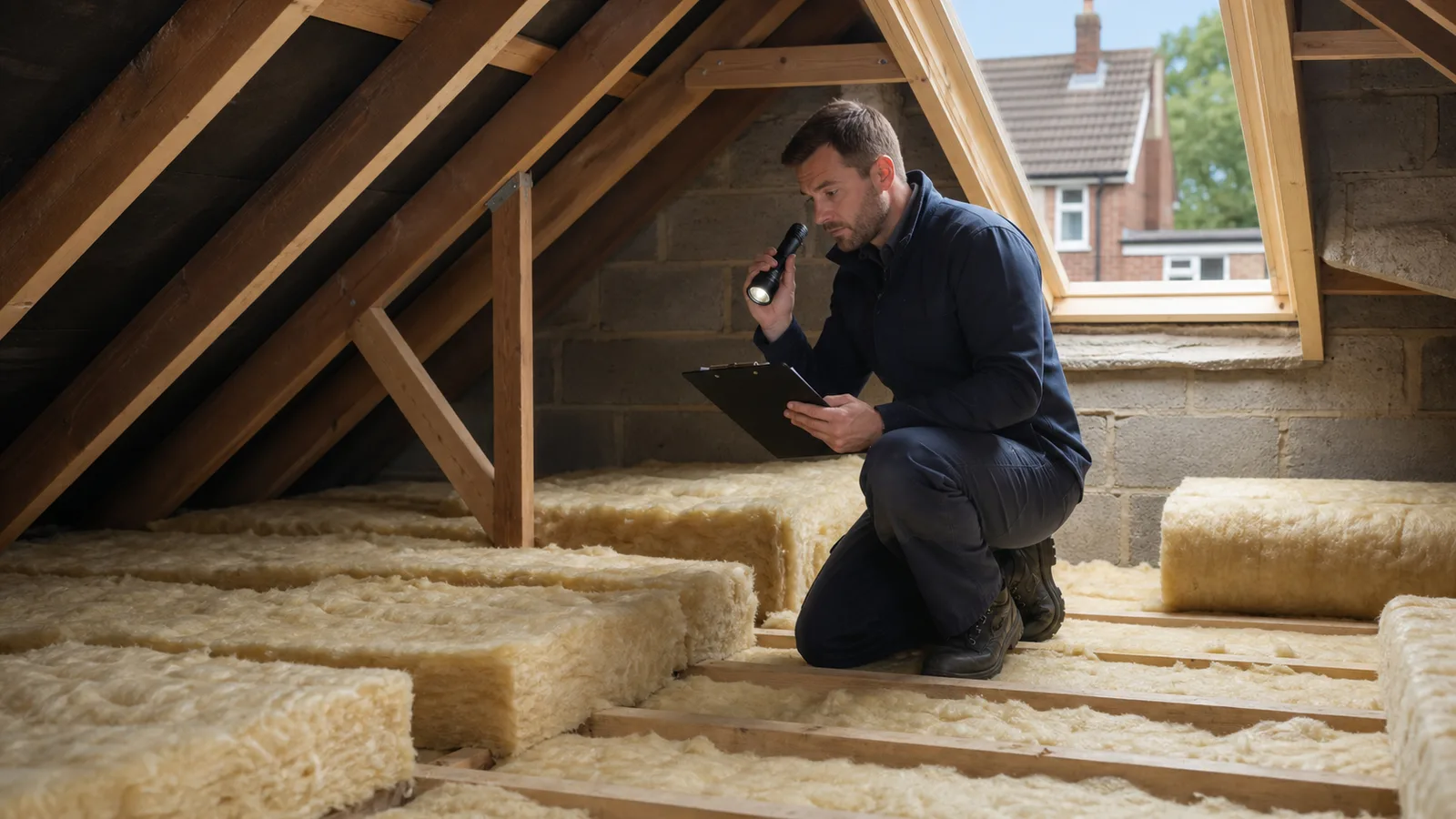
Loft insulation is the single most cost effective energy upgrade available for most UK homes and is covered in full under the scheme. Properties with an accessible loft and less than 100mm of existing insulation are almost always recommended for a top up or full installation. Cavity wall insulation is covered for properties with unfilled cavity walls, which accounts for a large proportion of homes built between 1920 and 1995. Solid wall insulation, either internal or external, is available for older properties with solid brick or stone walls. Solid wall insulation is significantly more expensive to install, which makes the £30,000 cap particularly important for these properties. Floor insulation and flat roof insulation are also included where they are technically suitable and offer meaningful improvements to the property's overall rating.

Heat Pumps

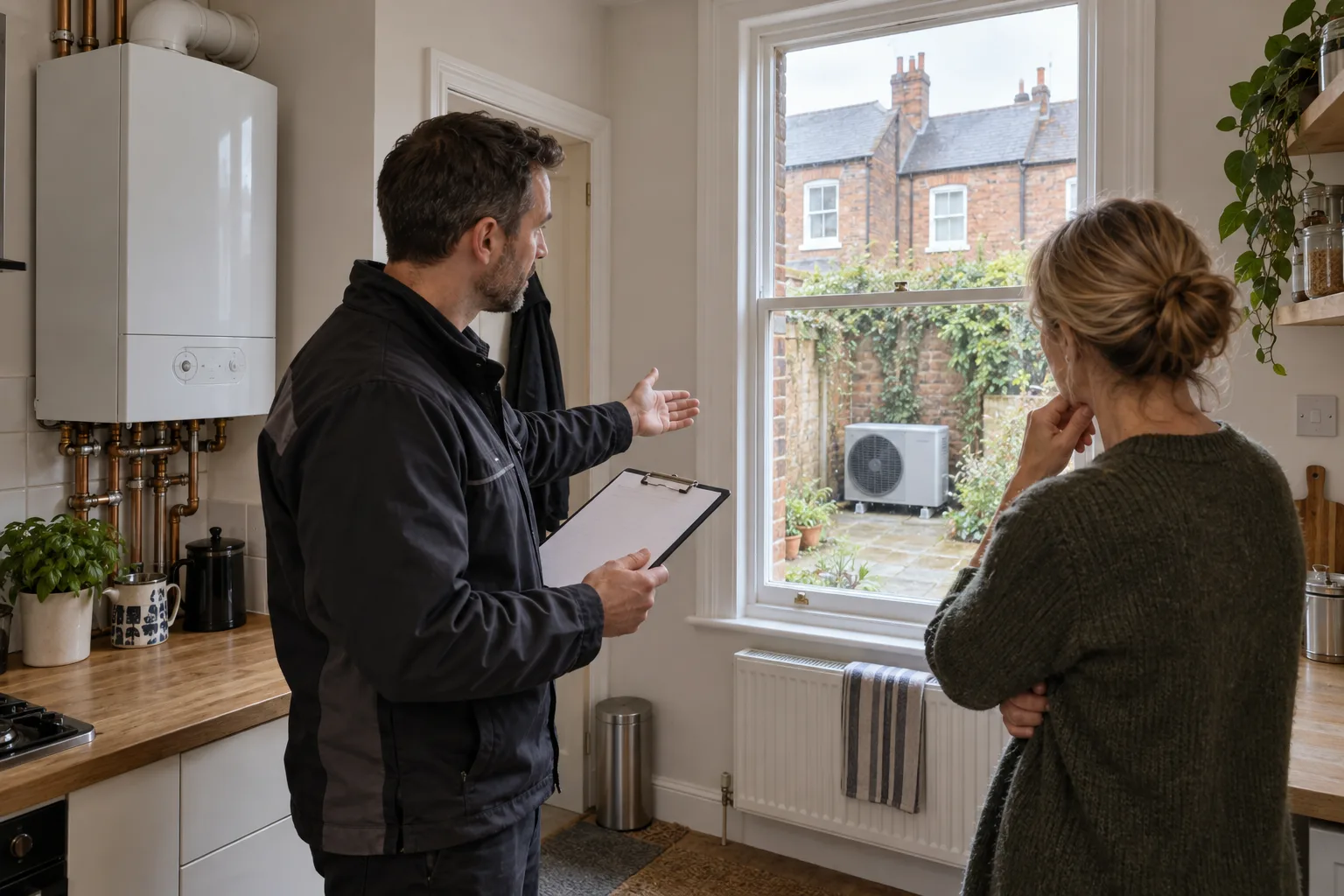
Air source heat pumps and ground source heat pumps are eligible under the Warm Homes Plan. A heat pump replaces a gas or oil boiler and extracts warmth from the outside air or from the ground to heat your home and hot water. Running costs depend on electricity tariffs and the efficiency of your system, but a well insulated home with a properly sized heat pump will typically see lower energy bills than one running on oil or LPG. Heat pumps work best when insulation is already in place, which is why the scheme often funds insulation and a heat pump in the same visit.

Solar Photovoltaic Panels

Solar PV panels generate electricity from daylight and can significantly reduce your electricity bills and your carbon footprint. Under the Warm Homes Plan, solar panels are included as an eligible measure alongside battery storage in certain cases. A typical installation of 4kWp can generate around 3,500 kWh per year in a south facing UK location, covering a significant portion of an average household's electricity demand.

Solar Thermal

Solar thermal systems use the sun to heat water rather than generate electricity. They are particularly effective for households with high hot water demand and can reduce domestic hot water costs by up to 60 percent during summer months. Solar thermal is eligible under the Warm Homes Plan and pairs well with heat pumps or conventional boilers.

Double Glazing and Window Upgrades

Double glazing is covered where properties still have single glazed windows, as single glazing is a significant source of heat loss and contributes to cold, damp homes. Triple glazing is available in some circumstances where it offers a meaningful uplift in the EPC rating. External doors may also be included where they are poorly insulated or ill fitting.

Smart Controls and Heating System Upgrades

Smart heating controls, including smart thermostats and time and temperature zone controls, are included as eligible measures. These are often installed alongside larger measures such as heat pumps to ensure the system operates at maximum efficiency. Heating controls alone rarely raise an EPC rating significantly, but they form part of a whole home improvement plan.

The £30,000 Grant Cap and How It Is Allocated

The maximum grant available under the Warm Homes Plan is £30,000 per property. This is a significant increase on previous schemes and reflects the reality that many older UK homes require substantial investment to reach an acceptable energy standard.

The grant covers 100 percent of the cost of eligible measures for qualifying households. There is no contribution required from the homeowner or tenant. The funding is paid directly to the installer, so you never handle the money yourself. The £30,000 cap is a ceiling, not a guaranteed amount. What you actually receive depends on what your property needs and what an accredited survey recommends. A property needing only loft insulation and smart controls may receive £2,000 worth of work. A solid wall property requiring external wall insulation, a heat pump, and solar panels may approach the full cap.

Where the recommended works exceed £30,000, the household or landlord may be asked to contribute the difference, though this is not always required and local authority versions of the scheme sometimes have additional top up funding available.

The Warm Homes Local Grant: The Local Authority Route

Alongside the main scheme, the Warm Homes Local Grant is a parallel funding stream administered directly by local councils. It is specifically targeted at owner occupiers and private renters in properties rated EPC F or G, which are the very worst performing homes in the country.

The Warm Homes Local Grant is funded until March 2028, giving local authorities a fixed window to identify and upgrade the hardest to treat properties in their area. Councils have flexibility in how they prioritise applicants, and some have chosen to target specific geographic areas, specific property types such as rural off gas grid homes, or specific demographic groups such as households with children under five or adults over 70.

To access this route, contact your local council directly or visit the government's Find a Local Grant tool. Some councils have waiting lists, and demand in many areas significantly exceeds available capacity, so applying early is strongly recommended.

The Boiler Upgrade Scheme: An Alternative If You Do Not Qualify

If your household income is above £36,000 and your home is not in a deprived area, you may not qualify for the Warm Homes Plan. In that case, the Boiler Upgrade Scheme is worth considering.

The Boiler Upgrade Scheme offers a grant of £7,500 toward the cost of installing an air source heat pump or a ground source heat pump. Unlike the Warm Homes Plan, there is no income test and no requirement to be in a deprived area. Any homeowner in England or Wales replacing a fossil fuel heating system with a heat pump can apply, provided they use an MCS accredited installer.

The £7,500 grant is applied at the point of installation, meaning you pay the installer the net cost after the grant has been deducted. You do not need to claim anything separately. The Boiler Upgrade Scheme is currently funded until 2028 and is expected to continue in some form beyond that date, though the grant amount may change.

How to Check Your Eligibility and Apply

There are two main routes into the Warm Homes Plan: through an approved installer or through your local authority.

Route One: Through an Approved Installer

Approved installers are companies that have been registered with Ofgem and certified to carry out work under the scheme. When you contact an approved installer, they will ask about your household income, your property's EPC rating, and your postcode. If you appear to qualify, they will arrange a survey of your property at no cost to you. The survey determines which measures are technically feasible and cost effective for your home. Once the recommended package of measures is agreed, the installer applies for funding on your behalf and schedules the installation. You do not need to make any upfront payment.

Route Two: Through Your Local Authority

If you are applying via the Warm Homes Local Grant, the process starts with your local council. Most councils have a dedicated team or a portal for energy efficiency grants. You submit basic details about yourself and your property, and the council will assess your eligibility and arrange a survey if appropriate. Local authority routes often have access to additional funding sources that can supplement the main grant, meaning that in some council areas you can access more support than through the installer route alone.

What to Have Ready When You Apply

You will be asked to provide proof of income such as recent payslips, a tax credit award notice, or a Pension Credit letter. You will also need to provide your property address so that the installer or council can look up your EPC and check your IMD decile. If you are a tenant, the name and contact details of your landlord will be required.

The Home Energy Model: Why Acting Before 2027 Matters

The government has confirmed that the Standard Assessment Procedure, which is the calculation methodology behind the EPC rating system, will be replaced by the Home Energy Model in the second half of 2027. This is a significant change that will affect every property in the country.

The Home Energy Model uses a more detailed and more accurate methodology than the current SAP. It accounts for factors such as the actual orientation of your property, local weather data, and the real world performance of heat pumps and solar panels under UK conditions. The new model is expected to produce different EPC ratings to the current system, and in some cases those ratings will be lower than what you currently see on your certificate.

This matters for Warm Homes Plan eligibility because the scheme requires your property to be rated D to G. If the Home Energy Model reassesses your property at band C or above, you would no longer qualify. Acting now, while the existing SAP methodology is still in use, means you apply under the current eligibility rules. Waiting until after the transition carries the risk that your property is reclassified and you lose access to funding you would otherwise have received.

MEES 2030 for Landlords: Why Funded Measures Now Prevent Costly Compliance Later

Landlords in England and Wales face a significant regulatory deadline in 2030. The Minimum Energy Efficiency Standards are being tightened to require all privately rented properties to achieve at least EPC band C before they can be legally let. Properties that do not meet this standard from 2030 onward cannot be rented out until they are upgraded.

The cost of upgrading a typical EPC D or E property to band C ranges from around £5,000 to over £25,000 depending on the starting point and the measures required. For landlords whose tenants qualify under the Warm Homes Plan, the entire cost of those upgrades can be covered by the grant. A landlord who acts now, while their tenant qualifies and while funding is available, could achieve full MEES 2030 compliance at zero cost. A landlord who waits until 2029 will face the same work but will pay out of pocket.

The Warm Homes Local Grant, running until March 2028, is particularly relevant for landlords with F and G rated properties. These are the properties most at risk of being unable to let after 2030, and they are the ones the grant is specifically designed to upgrade.

Frequently Asked Questions

Can I apply for the Warm Homes Plan if I am on Universal Credit?

Yes. Universal Credit is included when calculating household income, but receiving it does not automatically disqualify you. If your total household income including Universal Credit is under £36,000 and your property is EPC D to G, you qualify. Many households on Universal Credit will comfortably meet the income threshold.

What if my property is already EPC C but I still feel it is cold?

The Warm Homes Plan is only available for properties rated D to G. If your property is rated C, you are not eligible regardless of your income. If you believe your EPC is inaccurate, you can commission a new assessment. If it confirms a C rating, the Boiler Upgrade Scheme is still available to you if you want to upgrade your heating system.

Is there a waiting list for the Warm Homes Plan?

Demand for the scheme significantly exceeds installer capacity in many parts of the country. Approved installers often have waiting times of several weeks to several months. The local authority route may have even longer queues in areas where councils have already received a high volume of applications. Applying as early as possible is the best way to secure a place in the queue.

Can I choose which measures are installed?

The measures recommended by the accredited survey are driven by what will make the greatest improvement to your property's energy rating and comfort. You cannot choose measures freely, but you can discuss the options with the installer and raise any concerns about specific measures. If, for example, you have concerns about external wall insulation affecting the appearance of your home, there may be internal alternatives available.

Does the Warm Homes Plan cover new build properties?

No. New build properties are required to meet current building regulations, which already require a minimum EPC band B in most cases. The Warm Homes Plan is specifically designed for existing properties that were built before modern energy efficiency standards were introduced.

What happens after the work is completed?

Once installation is complete, your property will be issued with a new EPC reflecting the improvements. You should receive guarantees for all installed measures, typically ten years for insulation and heat pumps and 25 years for solar panels. If any problems arise with the installation, you can raise a complaint through the installer, through the TrustMark dispute resolution service, or through your local authority if you applied via the council route.

Next Steps

The Warm Homes Plan represents a genuine and substantial opportunity for eligible households to improve their homes at no cost. The combination of a generous grant cap, a wide range of covered measures, and two separate application routes means that more households than ever before have access to meaningful support.

The changes coming with the Home Energy Model in 2027 and the MEES 2030 deadline for landlords both create a compelling case for acting sooner rather than later. Funding will not be available indefinitely, installer capacity is limited, and the eligibility rules will change as the regulatory landscape evolves.

If you believe you may qualify, the best first step is a free eligibility check with an approved installer or a call to your local council's energy team. There is nothing to lose by enquiring, and the potential benefit of a fully funded home upgrade is one of the most significant financial opportunities available to low income and fuel poor households in 2026.

Back to Blog

Related Posts

Ready to Cut Your Energy Bills?

Find out if you qualify for free energy efficiency upgrades in just 10 minutes.

Get Free Assessment