A practical 2026 guide to internal wall insulation for solid wall homes. It explains grant routes, cost drivers, room space impact, building rules, and how the work fits with heat pumps, EPC plans and the Warm Homes Local Grant.
Why internal wall insulation matters in 2026
Internal wall insulation is one of the most useful upgrades for older UK homes with solid walls. It is fitted to the inside face of external walls, usually with insulated plasterboard or a framed system, so it can improve comfort without changing the outside look of the property.
That matters because many solid wall homes are hard to treat from the outside. Some are in conservation areas. Some have brick or stone fronts that owners want to keep. Some sit on narrow streets where scaffold, render and boundary details make external wall insulation difficult. Internal wall insulation gives those homes another route.
The timing is also important. Ofgem says the energy price cap for a typical direct debit dual fuel household rises to £1,862 from 1 July to 30 September 2026. The same Ofgem table gives average direct debit rates of 26.11 pence per kWh for electricity and 7.33 pence per kWh for gas in that period. A better insulated wall does not make energy free, but it can reduce heat demand and help the home feel warmer at lower thermostat settings.
Internal wall insulation is not a quick decorative job. It changes wall surfaces, skirting, sockets, radiators, reveals and sometimes fitted furniture. Done well, it can be a major comfort upgrade. Done badly, it can create moisture issues, thermal bridges and messy follow on work. The right question is not just whether it saves money. It is whether the home, funding route and installation plan are right.
What internal wall insulation is
The Energy Saving Trust describes solid wall insulation as an extra layer that helps keep more heat inside the home. For solid walls, that layer can go on the outside surface as external wall insulation or on the inside surface as internal wall insulation.
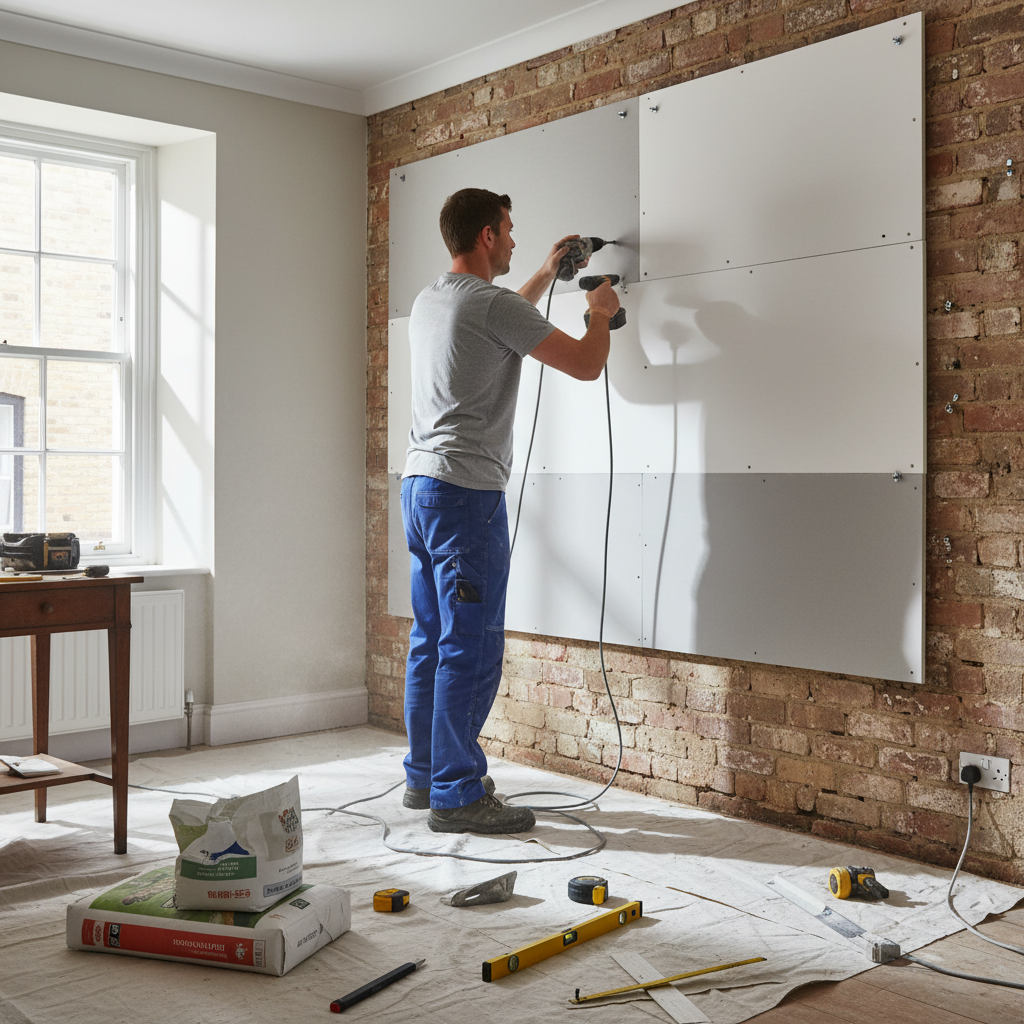
Internal wall insulation normally sits on the internal face of external walls. The installer may use insulated plasterboard fixed to the wall, or a timber or metal frame with insulation between the studs and a plasterboard finish. The exact build up depends on the wall type, moisture risk, space available and the target performance.
It is most relevant where a home has solid brick, solid stone or other wall types that do not have a fillable cavity. Homes built before cavity wall construction became common are often the ones where internal wall insulation is considered, but the age of the house alone is not enough. A survey should confirm the wall construction before any decision is made.
Internal wall insulation compared with external wall insulation
Internal and external wall insulation aim to do the same main thing. They reduce heat passing through external walls. The difference is where the insulation sits and what disruption it causes.
External wall insulation changes the outside of the building. It can improve weather protection and reduce thermal bridging, but it can affect appearance, boundaries, roof edges, window details and planning sensitivity.
Internal wall insulation keeps the outside appearance largely unchanged. That can be useful for period homes, flats, streets with a consistent frontage, or properties where external work is not practical. The trade off is that it affects the inside of the rooms being treated.
You may lose some room space on each treated wall. Sockets and radiators may need moving. Skirting and coving may need attention. Window reveals need careful detailing so the insulated wall does not leave cold strips around openings.
This is why the best projects start with room by room planning, not just a square metre price. The work is part insulation, part building detail, part decoration and part moisture control.
Does internal wall insulation qualify for grant funding
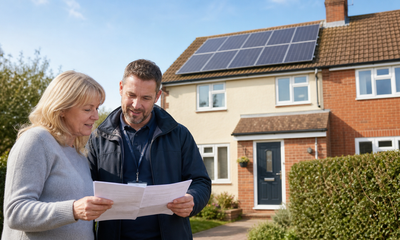
The Warm Homes Local Grant is the main route to check for eligible households in England. GOV.UK says the scheme can provide free energy saving improvements to people on a low income, receiving certain benefits, or living in certain postcode areas. GOV.UK also says that if an eligible council has funding available, the council arranges a home survey and may suggest wall, loft and underfloor insulation, air source heat pumps, smart controls and solar panels.
The detailed Warm Homes Local Grant policy guidance lists Internal Wall Insulation as an energy performance measure. It also lists Solid or External Wall Insulation, Loft Insulation, Underfloor Insulation, Heating Controls, Solar PV and other eligible measures. That means internal wall insulation can be part of a funded whole home package where the property and household fit the scheme rules.
For landlords, the guidance says one eligible private rented home per landlord can be fully funded, with a 50 percent contribution required for further homes upgraded after that. Tenants are not expected to contribute to the cost of upgrades under that rule.
The Warm Homes Plan is the wider government plan that includes grants, finance and home upgrades. GOV.UK described it as a £15 billion plan launched in January 2026 to help millions of families benefit from solar panels, batteries, heat pumps and insulation. Internal wall insulation sits naturally inside that plan because it is a fabric first upgrade for homes that leak heat through solid walls.
Where the Boiler Upgrade Scheme fits
The Boiler Upgrade Scheme is not a wall insulation grant. Ofgem says it is an England and Wales scheme that provides upfront grants to reduce the cost of installing heat pumps and biomass boilers. Ofgem currently lists £7,500 for air to water, ground source and water source heat pumps, £2,500 for air to air heat pumps in residential properties, and £5,000 for biomass boilers.
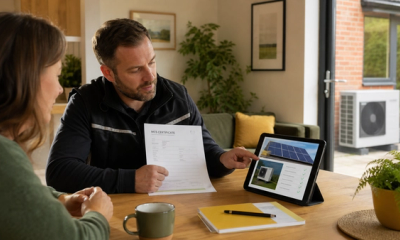
The connection is practical rather than direct. A solid wall home with weak fabric may need more heat from any heating system. If a homeowner wants a heat pump later, internal wall insulation can reduce the heat load and make the heating design easier. The fabric plan and the heating plan should therefore be looked at together.
For a grant funded home, it is common for the council survey or retrofit assessment to consider several measures at once. Internal wall insulation may sit alongside loft insulation, underfloor insulation, smart controls or low carbon heat where the package is appropriate.
What affects the cost
Internal wall insulation cost varies because no two homes are exactly the same. A simple room with flat clear walls is very different from a bay fronted room with many sockets, radiators, chimney breasts, built in cupboards and old plaster.
The main cost drivers are:
- The number of external walls being treated
- The size and shape of the rooms
- The insulation system and board thickness
- Whether sockets, radiators and pipework need moving
- The condition of the existing plaster
- The amount of decoration needed after installation
- Moisture and ventilation work required by the assessment
- Whether window reveals, floor edges and ceiling junctions need extra detailing
- Access, storage and phasing inside an occupied home
- Quality assurance, warranties and scheme compliance
This is why a quote should describe exactly what is included. It should say which walls are included, what happens to services, how reveals are treated, what finish is included, what ventilation checks are included and what guarantee applies.
Building regulations and target performance
Internal wall insulation is controlled by building rules because it upgrades a thermal element. Approved Document L Volume 1, 2026 edition, gives a threshold U value of 0.70 for walls being upgraded by internal or external insulation, and an improved U value of 0.30 for that type of work in existing dwellings.
Those numbers matter because a proper installer should not only make a wall look new. They should understand the target thermal performance and how the insulation build up meets it. They should also consider other parts of the Building Regulations, including moisture, fire safety and ventilation.
The target is not just a product choice. The existing wall, the insulation thickness, the fixings, junction details and air gaps can all affect real performance. If an installer cannot explain how the system meets the building control route, that is a warning sign.
Moisture and ventilation checks
Moisture is the biggest reason to treat internal wall insulation carefully. When insulation is placed on the inside, the original wall can become colder because less heat reaches it from the room. If moisture from inside the home reaches a cold layer and cannot dry safely, condensation and mould risk can increase.
That does not mean internal wall insulation is unsafe. It means the design must be appropriate for the wall. Solid brick, solid stone and mixed walls behave differently. Exposed elevations, driving rain, previous damp treatment, blocked vents and poor pointing all matter.
A good assessment should check:
- Signs of penetrating damp
- Signs of rising damp
- Existing ventilation
- Extract fans in wet rooms
- Chimney and fireplace details
- Window reveal risk
- Floor and ceiling edge details
- Whether the chosen system allows the wall to dry safely
Ventilation is not optional. A warmer and more airtight room can still have poor indoor air if moisture from cooking, washing and drying clothes is not removed properly.
Room space and disruption
The practical downside of internal wall insulation is that it takes space from the inside of the room. The loss depends on the system, but even a modest build up can change how furniture fits and how a room feels.
Before agreeing the work, measure the rooms and look at the everyday details. Will a wardrobe still fit. Will curtains clear the new reveals. Will shelves need moving. Will a radiator need to be relocated. Will the new wall line affect sockets, light switches, skirting, architraves or fitted units.
The work can also be disruptive. Rooms may need clearing. Walls may need stripping. Plaster and boards create dust. Decoration may be needed afterwards. In an occupied home, the installer should explain the order of rooms, how long each room will be out of use, and whether heating or electrics will be affected.
Internal wall insulation is often easiest when a room is already being refurbished. If you are replacing a kitchen, redecorating bedrooms or dealing with old plaster, the extra disruption can be easier to manage.
EPC impact and solid wall homes
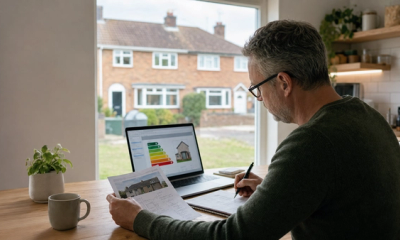
Internal wall insulation can help an EPC because it improves the building fabric. For landlords, that can matter when a property is below the rating needed for future rental standards. For homeowners, it can improve comfort and make the home more suitable for low temperature heating.
However, EPC improvement depends on the full property. A home with uninsulated lofts, draughty floors, old heating controls and weak glazing may need a package of measures. Internal wall insulation can be powerful, but it should not be treated as the only possible answer.
The better approach is to compare the EPC recommendation, a retrofit assessment and the household goals. If the goal is grant eligibility, the council route decides what is funded. If the goal is a future heat pump, the heat loss calculation matters. If the goal is rental compliance, the EPC pathway matters.
What to ask before signing
Ask practical questions before the quote is accepted.
- Which exact walls are included
- What insulation system will be used
- What U value is being targeted
- How will moisture risk be assessed
- How will window reveals be insulated
- What happens to sockets and radiators
- What ventilation checks are included
- Is decoration included
- What guarantee applies
- Is the installer TrustMark registered where grant work requires it
- Will Building Control be notified where required
- How will the work be evidenced for grants or EPC records
The Energy Saving Trust says TrustMark is a government endorsed quality assurance scheme and that any TrustMark solid wall insulation company will offer a 25 year guarantee. That is a useful benchmark when comparing offers.
Internal wall insulation and comfort
The main benefit people notice is comfort. A solid wall can feel cold even when the air temperature is acceptable. That cold surface can make a room feel draughty and can encourage condensation at corners and reveals.
Internal wall insulation raises the internal surface temperature of the treated wall. Rooms can feel more even. Heating may cycle less often. Furniture near external walls may feel less cold. These are comfort gains as much as bill gains.
The change can be especially noticeable in bedrooms, living rooms and home offices where people spend long periods sitting still. It can also make low temperature heating more practical because the room loses heat more slowly.
When internal wall insulation may not be right
Internal wall insulation is not right for every property.
It may be a poor fit if there is unresolved damp, if the wall is exposed to severe driving rain, if the room cannot spare space, if fitted furniture makes access impossible, or if the owner wants a very quick low disruption measure.
It can also be the wrong first measure if cheaper and simpler upgrades are missing. Loft insulation, draught proofing, heating controls and underfloor insulation may be easier starting points, depending on the home.
For some homes, external wall insulation is the better technical option. For others, internal wall insulation is the only realistic way to improve solid walls without changing the building appearance. The survey should decide, not a generic sales script.
The sensible order of work
A sensible plan starts with the property, not the product.
- Confirm wall type and EPC rating
- Check whether the home is eligible for the Warm Homes Local Grant
- Survey damp, ventilation and existing services
- Decide which rooms are suitable
- Choose the insulation system
- Plan sockets, radiators, reveals and decoration
- Coordinate other fabric measures
- Recheck heating design if a heat pump is planned
- Keep evidence for Building Control, grants and EPC updates
This order reduces surprises. It also makes sure internal wall insulation supports the wider home energy plan rather than creating new problems.
Bottom line
Internal wall insulation is a strong 2026 option for solid wall homes where external insulation is difficult or unwanted. It can improve comfort, support EPC upgrades and prepare a home for better heating performance. It can also be funded through the Warm Homes Local Grant where the household, property and local council funding route match.
The work needs a careful survey because the details matter. Moisture, ventilation, services, room space and finish quality are just as important as the insulation board itself.
If your home has solid walls, start with eligibility and assessment. Check the Warm Homes Local Grant route, understand the Building Regulations target, and ask the installer to explain the full room by room plan before any work starts.