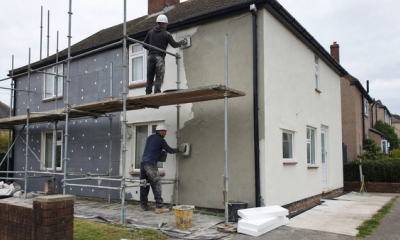
A practical guide to checking an EPC before applying for grants or planning retrofit work in 2026. It explains how the EPC register, Warm Homes Local Grant rules, landlord planning and survey evidence fit together.
Why EPC checks matter before any grant application
An Energy Performance Certificate is often the first document a homeowner, landlord or installer needs before deciding which energy improvements make sense.
In 2026, the EPC is not just a sales document. It affects grant eligibility, rental planning, retrofit priorities and the order in which measures should be considered. If the certificate is missing, out of date or based on old property details, the next step can become slower than it needs to be.
The practical point is simple. Check the EPC before you start talking about insulation, heating, solar panels or windows. A few minutes on the register can tell you whether the property already has a certificate, what rating it has, which recommendations are listed and whether a new assessment may be needed.
That does not mean the EPC is perfect. It is a standardised assessment, not a full building survey. But for grants and compliance, it is still one of the main documents that everyone refers to.
The short answer
You can use the GOV.UK energy certificate service to find a property's EPC, display energy certificate or air conditioning inspection certificate.
An EPC tells you how energy efficient a property is. GOV.UK says you must have one when selling a property, renting out a property or building a new property.
For many grant routes, the rating matters. Warm Homes Local Grant is available in England for privately owned homes with an EPC of D, E, F or G, subject to income, postcode or benefit routes and a council led survey.
For landlords, EPC planning is also becoming more important because the government has consulted on higher private rented sector standards and published updated consultation material in 2025.
What an EPC actually tells you
An EPC gives a property an energy efficiency rating and includes recommendations for improvement. It is designed to help people compare properties and understand the likely areas where energy performance could be improved.
The rating is useful because it gives a shared starting point. A homeowner can see whether the home is already relatively efficient or whether it sits in the D to G band that often triggers grant conversations. A landlord can see whether the property is close to the expected direction of regulation. An installer can see which measures have already been suggested.
The recommendations section matters as much as the headline letter. It may point to loft insulation, wall insulation, heating controls, glazing, hot water improvements, solar panels or heating changes. Those recommendations are not a final design, but they help shape the first conversation.
A good retrofit plan should treat the EPC as evidence, then check the actual property. The certificate is the start of the process, not the whole process.
How to find an EPC online
GOV.UK provides a find an energy certificate service. It can be used to search for a property's energy certificate, including an EPC.
The usual route is to search by postcode and select the property address. If a certificate exists, the register should show the rating, certificate details and recommendations.
If the address does not appear, it does not always mean the home cannot be assessed. It may mean there is no current certificate on the register, the address is recorded differently or the property needs a new assessment.
Before assuming grant eligibility, check the exact address. Flats, converted houses and properties with similar names can be easy to confuse. The wrong certificate can lead to the wrong advice.
When a new EPC may be needed
GOV.UK says an EPC is needed when a property is sold, rented out or built. It is also common to consider a new assessment when the existing certificate is old, the home has changed significantly or the recommendations no longer reflect the building.
A certificate can be technically present but still unhelpful for decision making. For example, it may have been created before insulation was added, before a heating system changed or before windows were replaced.
Grant providers and delivery bodies may still have their own rules about what evidence they accept. That is why it is sensible to keep the EPC, photos, invoices and survey notes together.
If the EPC rating is close to a threshold, a new assessment can change the conversation. That can work either way. It might confirm that the home still qualifies for a grant route, or it might show that the property has already improved beyond the target band.
EPC D to G and Warm Homes Local Grant
Warm Homes Local Grant is one of the main reasons EPC checks matter in 2026.
GOV.UK says the grant is only available in England. It is aimed at eligible low income households in privately owned homes, including owner occupied and privately rented properties.
The home must have an EPC rating of D, E, F or G. GOV.UK also says household income must usually be £36,000 a year or less, with postcode and benefit routes possible.
The EPC rating is therefore not a minor detail. If the property is EPC C or better, it falls outside the main D to G eligibility requirement for this scheme. If the property is D to G, the next checks are income route, tenure, local authority availability and property suitability.
What the council survey adds
Warm Homes Local Grant is not decided from the EPC alone. GOV.UK says a council may suggest measures after a home survey.
Those measures can include wall insulation, loft insulation, underfloor insulation, air source heat pumps, smart controls and solar panels. The survey should decide what is suitable for the individual home.
This is where the EPC and the real building need to meet. The certificate might suggest a measure, but the survey checks whether it is practical, safe and worthwhile. A roof may not suit solar panels. A wall may need a different insulation approach. A heating upgrade may need fabric work first.
For homeowners, the message is to treat the EPC as the eligibility and planning document, then let the survey test the best package of works.
EPC checks for landlords
Landlords should be especially careful with EPC records. GOV.UK says an EPC is required when renting out a property, and the certificate is often one of the first things a letting agent, tenant or compliance adviser will ask for.
Private rented sector policy is also moving. The government published a 2025 update on improving the energy performance of privately rented homes and has consulted on future standards. Because rules can change through regulation, landlords should avoid relying on old assumptions.
The practical approach is to check the current EPC, review the recommendations, collect quotes for realistic improvements and keep records of what has been done.
If a property is close to C, relatively small measures may be enough. If it is E, F or G, a deeper plan may be needed, especially where solid walls, old heating, poor ventilation or limited roof insulation are involved.
EPC reform and the Home Energy Model
The EPC system itself is being reformed. GOV.UK's consultation page on reforms to the Energy Performance of Buildings regime says a partial response has been published and confirms plans to introduce four new headline metrics on new style domestic EPCs, subject to parliamentary approvals.
That matters because the familiar single headline rating may not tell the whole story in future. New metrics are expected to give a broader view of energy performance.
For now, existing EPCs still matter. Grant eligibility, rental checks and property marketing still rely on the current regime unless and until new rules come into force.
The sensible 2026 approach is to use the current EPC for today's decisions, while keeping an eye on reform where long term property plans are involved.
What to check on the certificate
Start with the address. Make sure the certificate matches the exact property, not a neighbouring flat or a similarly named building.
Check the current rating. For Warm Homes Local Grant, D to G is the key rating band.
Check the certificate date. An old certificate may not reflect upgrades that have already happened.
Check the recommended measures. These can guide the order of work, especially if insulation, heating controls or heating system changes appear.
Check assumptions. Some EPCs include assumptions where details were not visible to the assessor. If the assumptions are wrong, the recommendation list may be less useful.
Check whether the property is rented, owner occupied or being sold. The same certificate can affect different decisions depending on tenure.
Common EPC problems that slow grants down
The first problem is a missing certificate. If there is no current EPC on the register, the application or advice process may need a new assessment before it can continue.
The second problem is a mismatch between the address and the property. This is common with flats, maisonettes, annexes, renamed buildings and houses split into multiple dwellings.
The third problem is a certificate that predates major work. If insulation, heating or glazing has changed since the assessment, the rating may not reflect the current home.
The fourth problem is assuming that an EPC recommendation is the same as a funded measure. A recommendation can support a conversation, but the scheme survey decides the package.
The fifth problem is ignoring ventilation. When homes are insulated or draught proofed, ventilation needs to be checked so that the property remains healthy as well as warmer.
How EPC checks affect insulation choices
Insulation is often the first area to review when a home has a weaker EPC. Loft insulation, cavity wall insulation, internal wall insulation, room in roof insulation, underfloor insulation and draught proofing can all change heat loss.
The EPC can help identify where the property is likely to lose heat, but the property type matters. A cavity wall home is different from a solid wall home. A flat roof is different from a pitched loft. A suspended timber floor is different from a solid floor.
A survey should check what is already present and what can be installed safely. It should also consider moisture, ventilation and disruption.
For grant applications, the strongest evidence is usually a combination of the EPC, a property survey and clear photos or records of existing construction.
How EPC checks affect heating upgrades
Heating upgrades should not be planned without looking at heat loss. If a home leaks heat, a new heating system may have to work harder than necessary.
An EPC can flag heating controls, hot water, insulation and renewable technology recommendations. Those recommendations help installers understand the likely order of work.
For a heat pump, a proper heat loss survey is still essential. The EPC is not a substitute for room by room design, radiator checks, hot water cylinder sizing or noise considerations.
For electric heating, the EPC can highlight whether modern high heat retention storage heaters, smart controls or fabric upgrades are more appropriate than like for like replacement.
How EPC checks affect solar panels
Solar panels often appear in EPC recommendations, but that does not mean every roof is suitable.
The EPC can show that solar may improve the rating, but a solar survey should check roof condition, orientation, shading, available space, electrical setup, inverter location and meter arrangements.
If the home may qualify for Warm Homes Local Grant, solar panels can be considered as part of the wider package after a survey. If the home is not grant eligible, the owner may still want to review VAT relief, Smart Export Guarantee payments and installer certification.
The EPC is useful, but the roof and electrical checks decide whether the installation is practical.
How current energy prices affect EPC decisions
Ofgem says the price cap for a typical direct debit dual fuel household is £1,862 from 1 July to 30 September 2026.
For the same period, Ofgem says average direct debit electricity is 26.11 pence per kWh and gas is 6.29 pence per kWh.
Those figures are not a personal saving estimate. Your bill depends on the property, tariff, heating system, occupancy and how energy is used.
They do explain why EPC decisions matter. A home that loses heat quickly can expose the household to higher running costs, especially when heating demand rises. Improving insulation, controls and heating design can reduce waste and make the property easier to manage.
Documents to keep with your EPC
Keep the EPC itself, the certificate reference, survey notes, photos, invoices, product guarantees, installer certificates and any grant eligibility documents.
If the work includes heating or solar panels, keep the commissioning paperwork and any MCS certificate where relevant.
If the property is rented, keep tenant permissions, landlord contribution records and any correspondence with the local authority or delivery body.
Good records make future EPC assessments easier. They also help if the property is sold, refinanced, relet or reviewed for a grant.
Questions to ask before starting
- Does the property already have an EPC on the register
- Does the certificate match the exact address
- What is the current rating
- Is the rating D, E, F or G
- Is the certificate still a fair reflection of the home
- Which recommendations are listed
- Has any insulation or heating work happened since the assessment
- Is the property owner occupied or privately rented
- Could Warm Homes Local Grant eligibility apply
- Is a new assessment needed before decisions are made
Bottom line
An EPC check is one of the quickest ways to make a grant or retrofit conversation more accurate.
It can show whether a home sits in the D to G band used by Warm Homes Local Grant, highlight likely improvement measures and give landlords a clearer compliance starting point.
It should not replace a proper survey, but it should come before expensive decisions. Check the certificate, confirm the address, review the recommendations and then build the retrofit plan around the real property.