A practical guide to solar panel grants in 2026, covering Warm Homes Local Grant eligibility, Smart Export Guarantee payments, VAT relief, battery rules and the checks homeowners should make before agreeing an installation.
Why solar grants are worth checking in 2026
Solar panels are one of the most searched home energy upgrades in 2026, and for good reason. They can reduce grid electricity use, support a battery, and create a route to export payments when the system is set up correctly.
The funding picture is more complicated than a single national solar grant. Some households may be able to receive solar panels through the Warm Homes Local Grant. Others may not qualify for grant funded panels, but can still benefit from VAT relief and Smart Export Guarantee payments.
That distinction matters. A homeowner who searches for a solar grant may find three different things mixed together. One is a true grant route through a local authority. One is a tax relief that reduces the cost of eligible energy saving materials. One is an export payment scheme that pays for surplus electricity after the panels are installed.
This guide explains what each route means, who should check eligibility, and what paperwork matters before any installation goes ahead.
The short answer
There is no single universal grant that pays for solar panels for every UK household in 2026.
Warm Homes Local Grant can include solar panels for eligible homes in England after a council arranged survey. The home must be privately owned, the EPC must be D, E, F or G, and household income must usually be £36,000 a year or less unless the postcode or benefit route applies.
VAT relief can reduce the tax cost of eligible energy saving materials, including solar panels and battery storage, when the rules are met. GOV.UK guidance says the temporary zero rate runs until 31 March 2027, then the reduced rate is due to apply.
Smart Export Guarantee is not a grant. It is a payment route for eligible exported electricity. The installation normally needs the right certification and export metering before a supplier can pay for surplus power.
What counts as a solar grant
People often use the phrase solar grant to mean any support linked to solar panels. In practice, it is better to separate four categories.
First, a grant pays for work directly or through a council delivery route. Warm Homes Local Grant is the main route to check for eligible low income households in England.
Second, a tax relief changes the VAT treatment. It is still valuable, but it is not the same as a council grant.
Third, an export tariff pays for electricity that leaves the home after the system is installed. This helps the running economics, but it does not pay the upfront installation cost.
Fourth, finance spreads cost over time. Finance can be useful for some households, but it is not grant funding and should be assessed carefully.
Using the right language avoids disappointment. It also makes the eligibility checks much clearer.
Warm Homes Local Grant and solar panels
Warm Homes Local Grant is available in England and is delivered through local authorities. GOV.UK says it is for privately owned homes, including owner occupied homes and privately rented homes, where the home has an EPC of D, E, F or G.
The income route is also important. GOV.UK says household income must usually be £36,000 a year or less, although postcode and benefit routes may also apply.
Solar panels are listed by GOV.UK as one of the measures a council may suggest after a home survey. Other possible measures include wall insulation, loft insulation, underfloor insulation, air source heat pumps and smart controls.
The key word is may. Eligibility does not mean every home will automatically receive solar panels. The council survey decides what is suitable for the property and which package should be installed.
Who is most likely to qualify
The first qualifying check is location. Warm Homes Local Grant is an England scheme.
The second check is tenure. The property needs to be privately owned. That includes owner occupiers and privately rented homes, but the delivery rules can differ for landlords.
The third check is EPC rating. The home needs to be EPC D to G. If the home is already EPC C or better, it is outside the main eligibility route.
The fourth check is income or route into the scheme. GOV.UK states a usual income limit of £36,000 a year or less, with alternative routes based on postcode or certain benefits.
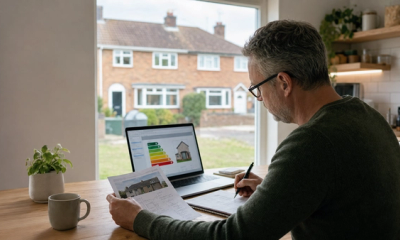
The fifth check is suitability. A roof may need the right orientation, condition, available space, shade profile and electrical setup. The survey stage is where those practical details should be assessed.
What the council survey looks for
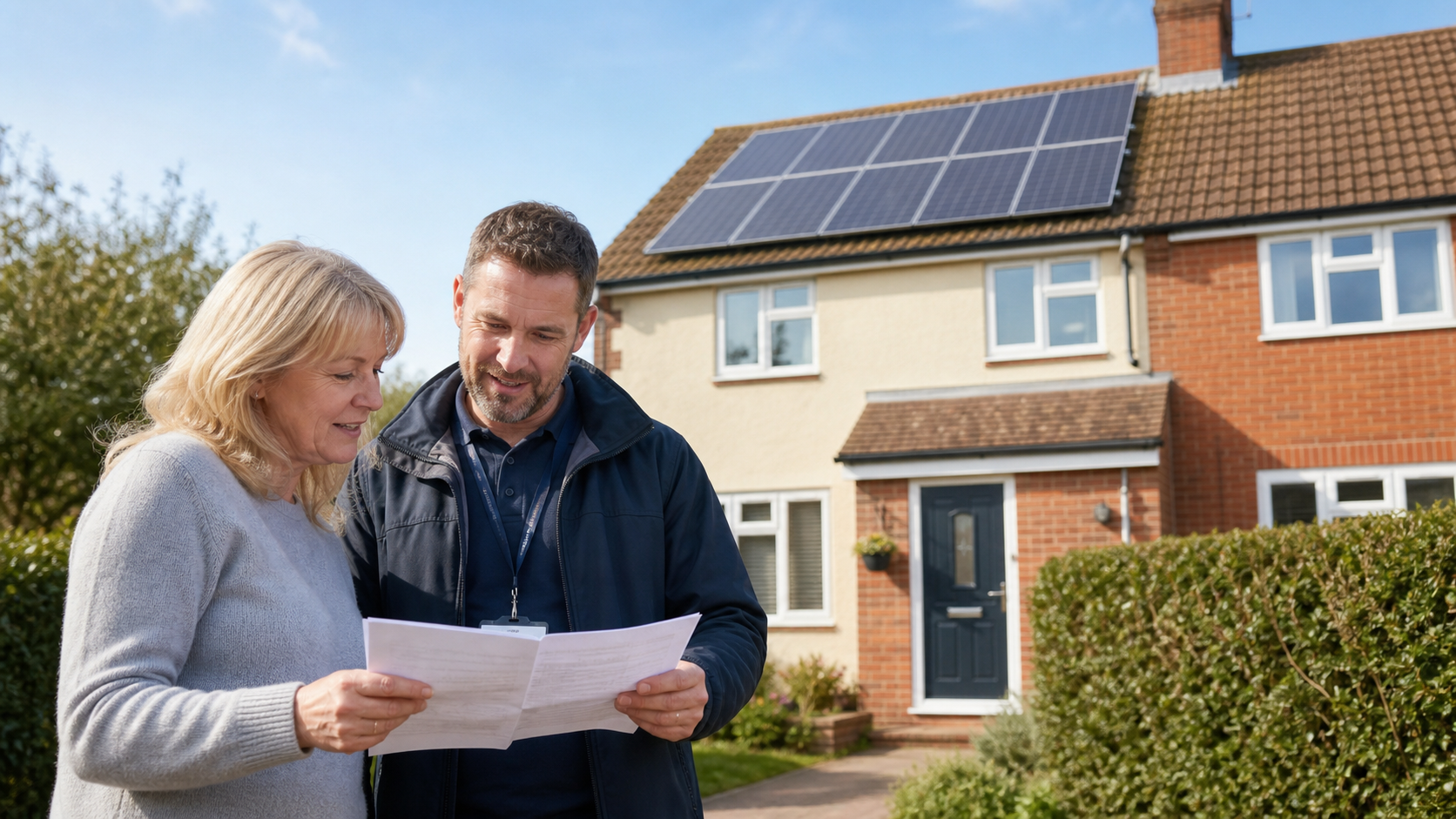
A solar panel decision should not be made from a postcode alone. The home needs a practical survey.
The survey should check the EPC, roof structure, roof condition, shading, orientation, meter setup, consumer unit, cable route, inverter location, ownership details and whether other measures should come first.
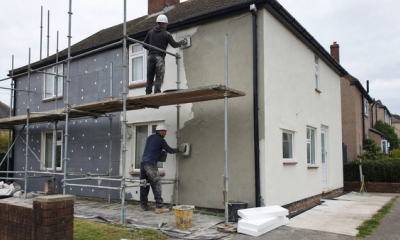
For many homes, insulation is part of the same conversation. If the building loses heat quickly, the best grant package may start with fabric improvements before or alongside solar panels.
The survey should also look at how the household uses electricity. A family at home during the day may use solar generation differently from someone who is usually out. Battery storage may also change the pattern.
Good solar grant advice is not just about panels. It is about matching the measure to the home.
Warm Homes Local Grant funding limits
DESNZ guidance says Warm Homes Local Grant has separate average cost caps for delivery. The guidance sets £15,000 for energy performance upgrades and £15,000 for low carbon heating, managed as averages across projects by closure.
That does not mean every household receives £15,000 for solar panels. It means delivery bodies manage eligible measures within scheme rules and project averages.
DESNZ guidance also says the scheme has £500 million allocated for delivery from April 2025 to March 2028. That long delivery window is one reason households should check early rather than waiting until urgent work is needed.
For an individual homeowner, the important point is simple. The local authority decides the package after eligibility and survey. Solar panels may be included, but they are not guaranteed for every eligible home.
Solar panels for landlords
Private landlords can be part of the Warm Homes Local Grant route, but the contribution rules matter.
DESNZ guidance says one eligible private rented property per landlord can be fully funded across the scheme. Later properties require a 50 percent landlord contribution, and tenants are not expected to contribute.
That rule is important for landlords planning more than one property. It also matters for tenants, because a tenant should not be asked to pay towards grant funded work where the scheme rules say the landlord contribution applies.
Landlords should also think about EPC improvement plans, tenant electricity use, metering and permission for export tariffs. Solar can be valuable, but the benefit should be clear and properly documented.
Smart Export Guarantee is not a grant
Smart Export Guarantee is often confused with solar grant funding. It is different.
The scheme requires certain electricity suppliers to offer payment for eligible exported electricity from small low carbon generators. Ofgem says eligible technologies include solar photovoltaic systems, wind, hydro, anaerobic digestion and micro combined heat and power.
Ofgem also states that the main installed capacity limit is up to 5MW for most eligible technologies and up to 50kW for micro combined heat and power. A normal domestic solar panel system is much smaller than that limit.
The practical point for homeowners is that export payment is about surplus electricity after installation. It can improve the financial case, but it does not remove the need to check the upfront cost, grant eligibility and paperwork.
What evidence export suppliers may ask for
GOV.UK says households applying for Smart Export Guarantee need to show that the installation and installer are certified through MCS or an accredited equivalent scheme.
Energy Saving Trust also says suppliers may ask for an MCS certificate to prove the installation meets the required standard. That is why the installer choice matters before the panels go on the roof.
You may also need an export capable smart meter and details of the generation system. Requirements can differ between suppliers, so the homeowner should check the exact tariff rules before assuming payments will start automatically.
The certificate, meter details and export account should be stored with the property documents. Missing paperwork can delay payments and create avoidable admin later.
VAT relief on solar panels and batteries
VAT relief is a separate support route. It does not assess income and it does not work like a grant application.
GOV.UK guidance on energy saving materials says the temporary zero rate applies to certain installations until 31 March 2027. The guidance includes solar panels and battery storage in the listed energy saving materials.
That means the VAT treatment can reduce the cost where the supply and installation meet the rules. It is still important to use a properly documented installer invoice and to check whether the work qualifies.
From a homeowner perspective, VAT relief helps the upfront economics, but it should not be described as free solar panels. It is a tax treatment, not a grant award.
Battery storage and grant questions
Battery storage can make solar panels more useful by storing generation for later use. It can also change how much electricity is exported.
The grant question is more specific. Warm Homes Local Grant guidance can allow packages that include suitable measures after survey. VAT guidance includes battery storage in the energy saving materials list.
Boiler Upgrade Scheme does not fund batteries. That scheme is for heat pumps and biomass boilers within its rules, not solar batteries.
For homeowners, the practical question is whether the battery is being installed with a clear use case. Ask how much solar generation is expected, how the battery will be controlled, how export payments are affected and what warranty applies.
How the July 2026 price cap affects the calculation
Ofgem says the price cap for a typical direct debit dual fuel household is £1,862 from 1 July to 30 September 2026.
For the same period, Ofgem says the average direct debit electricity unit rate is 26.11 pence per kWh and the electricity standing charge is 57.19 pence per day.
Those figures are not a personalised solar saving estimate. They are national average cap figures. Your savings depend on how much electricity your home uses, when you use it, how much the panels generate, whether you have a battery, and the export tariff you choose.
Even so, the price cap matters because solar panels reduce bought electricity first. The higher the value of avoided grid electricity, the more important self use becomes.
What a good solar quote should include
A solar quote should explain the system, not just the price.
It should show the number of panels, total system size, inverter details, expected annual generation, roof assumptions, shade assumptions, battery details if included, scaffold needs, electrical work, certification route, warranty, payment schedule and aftercare.
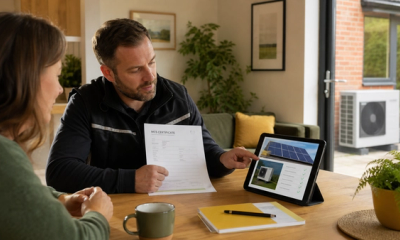
It should also explain export setup. Ask who helps with the Smart Export Guarantee paperwork, what certificate you will receive, and whether your meter can record export.
If grant funding is involved, the quote or council paperwork should be clear about what is funded, what is optional, and whether any contribution is required.
Red flags before signing
Be cautious if someone promises free solar panels before checking EPC, income, tenure and property suitability.
Be cautious if the installer avoids the MCS certificate question. For export tariffs, paperwork can be as important as the panels.
Be cautious if the roof has not been assessed. A poor roof, heavy shading or unclear ownership can change the whole recommendation.
Be cautious if battery savings are presented without assumptions. A battery can be useful, but the benefit depends on usage, generation, tariff and control settings.
Be cautious if a salesperson asks for a same day signature before you have had time to check grant eligibility and installer credentials.
Questions to ask before agreeing solar panels
- Does my home meet the Warm Homes Local Grant eligibility rules
- Has my EPC rating been checked
- Is my roof suitable for solar panels
- Will any insulation work be recommended first
- Who is responsible for the MCS certificate
- What generation estimate has been used
- What export tariff assumptions are being made
- Do I need a new or upgraded meter
- Is battery storage included and why
- What documents will I receive after installation
These questions are normal. A reliable installer or scheme provider should be able to answer them clearly.
How solar panels fit with insulation and heating
Solar panels can reduce electricity bought from the grid, but they do not fix a cold home by themselves.
If the home has poor loft insulation, draughty rooms, cold walls or weak heating controls, the grant package may need to address those issues as well. Warm Homes Local Grant is designed around home upgrades, not isolated product shopping.
Solar panels can also work well with heat pumps and smart controls when the home is suitable. The design should consider electricity use across the year, not only peak summer generation.
The best results come from a whole home view. Check the building fabric, then the heating system, then the solar and battery opportunity.
What documents to keep
Keep the EPC, grant eligibility evidence, survey report, quote, product datasheets, MCS certificate, electrical certificate, inverter warranty, panel warranty, battery warranty if relevant, meter details and export tariff confirmation.
If the work is grant funded, keep the council or delivery body documents too. If the property is rented, the landlord should keep records that can be produced for future EPC and compliance checks.
These documents may be needed when selling the home, changing supplier, checking warranty cover or resolving export tariff issues.
Bottom line
Solar panel support in 2026 is real, but it is not one simple grant for everyone.
Warm Homes Local Grant can include solar panels for eligible low income private homes in England after a council survey. VAT relief can reduce eligible installation costs. Smart Export Guarantee can pay for surplus exported electricity after installation.
The safest route is to check eligibility first, confirm the EPC and property details, use a properly certified installer, and keep the paperwork. Solar panels can be a strong upgrade, but only when the funding, design and documents line up.