A complete 2026 guide to wet and electric underfloor heating in UK homes. Covers installation costs, running costs, heat pump compatibility, retrofit options, Warm Homes Plan and Boiler Upgrade Scheme funding, and whether underfloor heating is the right choice for your property.
Underfloor heating has gone from a luxury new build feature to one of the most asked about retrofit upgrades in the UK. Two things have driven the shift. The first is the move away from gas boilers towards heat pumps, where lower flow temperatures make underfloor systems dramatically more efficient than radiators. The second is the April 2026 expansion of the Boiler Upgrade Scheme, which removed the EPC requirement and made it far easier to combine a heat pump with an underfloor upgrade in one funded package.
This guide covers everything you need to know in 2026. What it costs to install, how much it costs to run, how it pairs with a heat pump, what works for retrofit, and which grant routes apply.
What underfloor heating actually is
Underfloor heating distributes heat across the entire surface of a floor rather than emitting it from one fixed point like a radiator. There are two systems used in UK homes.
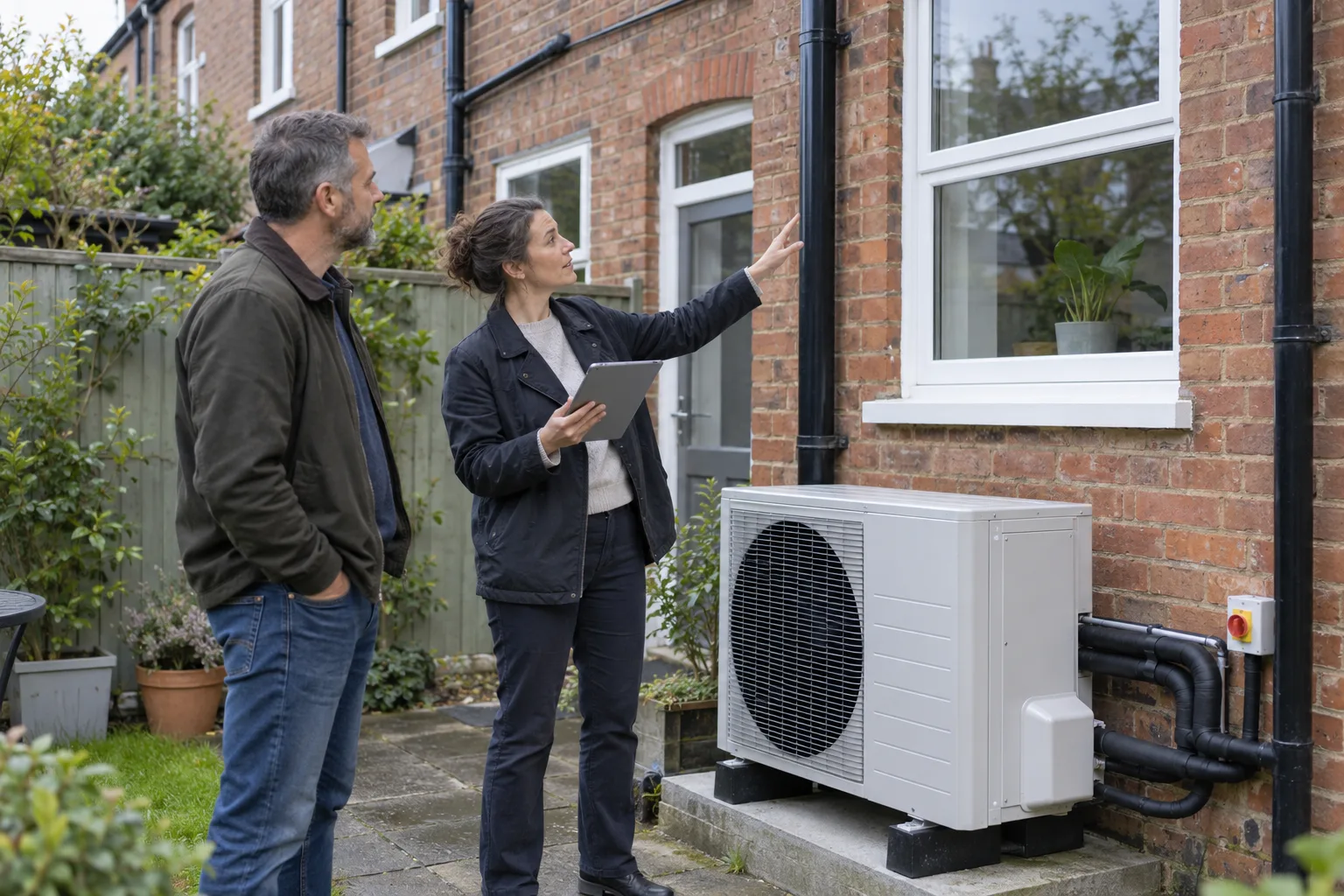
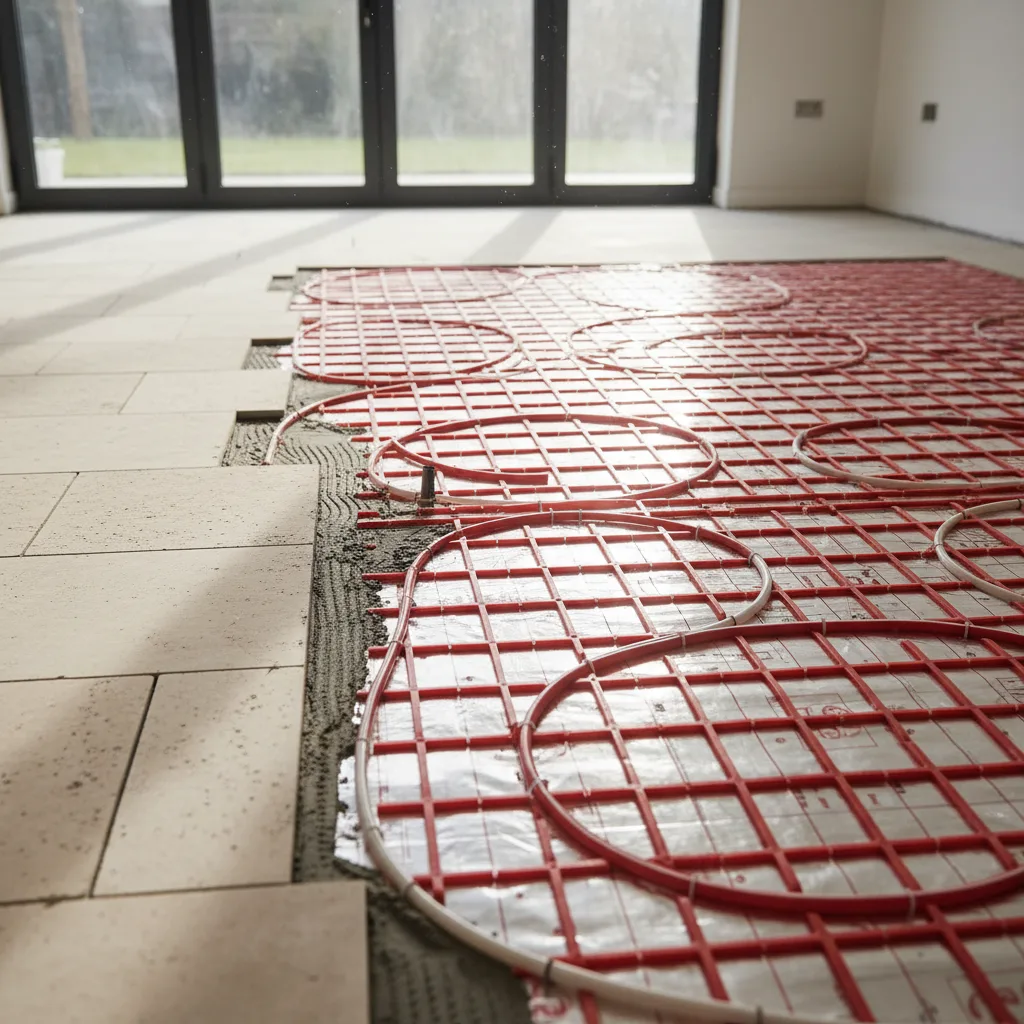
Wet (water based) systems circulate warm water through plastic pipes laid in the floor. The water comes from your boiler, heat pump, or a hybrid system, and the floor itself becomes the heat emitter. Wet systems are the standard choice for whole house heating and the only sensible option when paired with a heat pump.
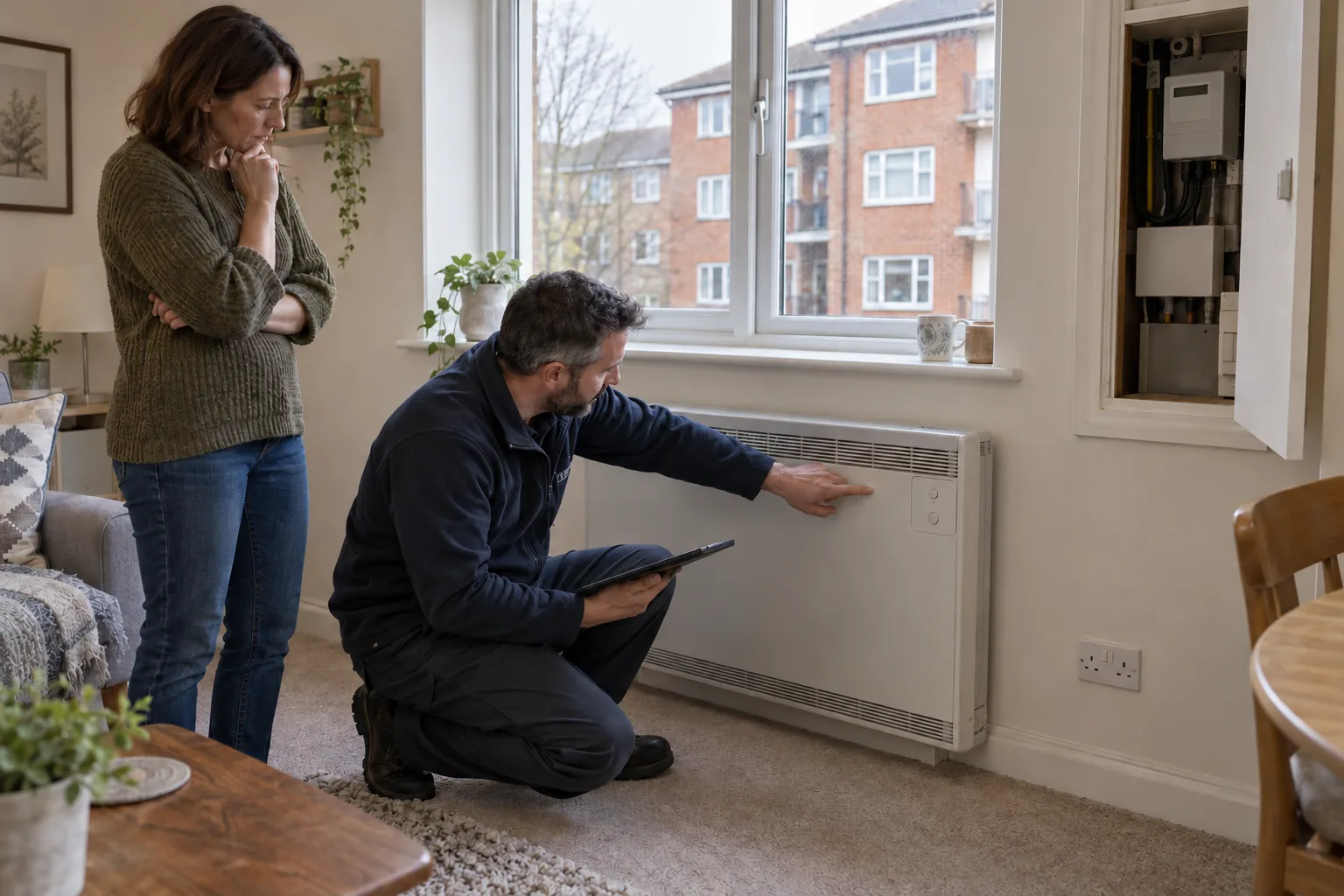
Electric systems use heating mats or cables embedded in the floor that warm up directly from electricity. They are quick to install and ideal for single rooms such as bathrooms or kitchens, but they cost considerably more to run because they convert grid electricity straight to heat at the unit rate.
The pricing, performance, and grant eligibility differ sharply between the two. We will cover each in turn.
How much does wet underfloor heating cost in 2026?
According to UK trade data published in early 2026, wet underfloor heating typically costs between £70 and £190 per m² supplied and installed. The wide range reflects three things: whether the project is new build or retrofit, what kind of subfloor is involved, and where in the country the installer is based.
Typical 2026 installed costs for wet systems:
- New build wet system on a fresh slab: £70 to £100 per m². Lowest cost because the pipework can be laid before screed without disturbing existing structure.
- Retrofit on a solid floor with full screed replacement: £120 to £190 per m². Higher because of demolition, screed replacement, and curing time.
- Low profile retrofit overlay (15mm to 25mm depth): £100 to £140 per m². Sits on top of an existing floor and avoids excavation.
- Suspended timber floor retrofit using spreader plates between joists: £85 to £130 per m².
Regional variation is meaningful. London and the South East typically come in at £110 to £120 per m². Manchester and the North West sit around £90 to £110 per m². Rural locations and Northern cities often fall to £70 to £90 per m².
A typical 80 m² ground floor whole house wet system will cost £6,400 to £9,600 in a new build and £9,600 to £15,200 as a full retrofit. Add £1,500 to £2,500 for a manifold, controls, and zoning, plus another £400 to £900 for thermostats.
How much does electric underfloor heating cost in 2026?
Electric mat or cable systems are far cheaper to install but considerably more expensive to run. Average 2026 supply and install costs sit at £40 to £90 per m², with the all in average around £85 per m² once thermostats and controls are included.
For a 5 m² bathroom, expect to pay £400 to £700 fully installed. For a 15 m² kitchen, £900 to £1,400. Electric systems are best suited to single rooms with hard floor finishes (tile, stone, engineered wood) where the warmth genuinely improves comfort and where running hours are short.
What you save on installation, you pay back many times over on running costs. We come back to this below.
What does it cost to run?
Running cost is where the choice of system really starts to matter. The Ofgem April 2026 price cap sets average unit rates at 24.7p per kWh for electricity and 5.7p per kWh for gas, with daily standing charges of 54.7p for electricity and 35.1p for gas. The headline annual price cap for a typical dual fuel direct debit household is £1,641.
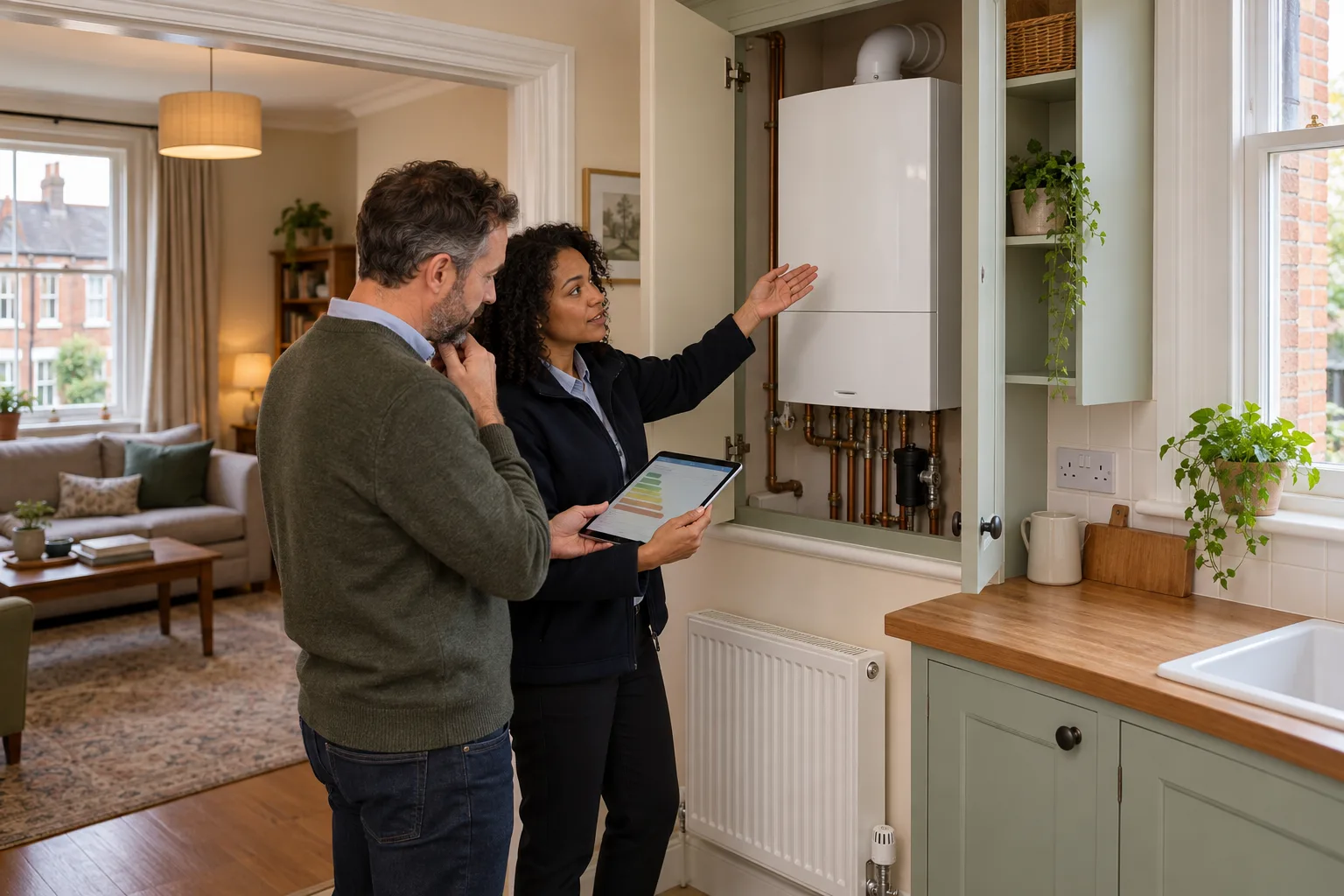
Wet underfloor heating run from a gas boiler typically uses 25% less energy than the same heat output delivered by radiators, because the lower flow temperature (35°C to 45°C versus 60°C to 70°C for radiators) keeps the boiler closer to its condensing range and the larger emitter surface allows lower thermostat settings. UK installers and the Energy Saving Trust report household heating bill reductions of 25% to 30% when switching from radiators to wet underfloor at equivalent comfort levels.
Wet underfloor heating run from a heat pump unlocks far bigger savings. We cover that in detail in the next section.
Electric underfloor heating, by contrast, is expensive to run. UK figures published in 2026 put the running cost of an electric system at around £2.90 per hour for a whole floor, compared with £2.10 per hour for a wet system or radiator setup. Annualised, that is approximately £2,646 a year for electric versus £1,916 for wet. For a small bathroom on short timer cycles the electric premium is manageable. For whole house heating it is a significant ongoing expense.
Underfloor heating with heat pumps: the efficiency gain
This is the part of the conversation that has changed the most in the last two years.
A heat pump achieves its rated efficiency at low flow temperatures. Drop the flow temperature and the SCOP (the seasonal coefficient of performance, which is the average ratio of heat output to electricity input across a heating season) goes up sharply. Manufacturer fleet data and independent UK monitoring confirm the relationship.
- At a 35°C flow temperature, a modern air to water heat pump typically achieves a SCOP of 4.0 or above. That means each unit of electricity produces four units of heat.
- At a 45°C flow temperature, SCOP usually drops to 3.5 to 3.8.
- At a 55°C flow temperature, SCOP falls to 2.8 to 3.2.
- Every 5°C reduction in flow temperature improves COP by approximately 0.3 to 0.4 and reduces running costs by 10% to 15%.
Wet underfloor heating typically operates at 30°C to 40°C, which sits squarely in the heat pump sweet spot. Radiators sized for a heat pump usually need to run at 45°C to 50°C. The gap in efficiency between the two is meaningful.
A worked example. A semi detached house with an annual heat demand of 12,000 kWh:
- Heat pump on radiators at 50°C, SCOP 3.2: 3,750 kWh of electricity, costing £926 at the April 2026 cap.
- Heat pump on underfloor at 35°C, SCOP 4.2: 2,857 kWh of electricity, costing £706 at the same cap.
That is a £220 a year difference for the same warmth. Over a 20 year heat pump lifespan, the underfloor running cost saving is roughly £4,400 in 2026 prices, before any future electricity cost changes.
The MCS MIS 3005-D Heat Pump Design Standard (2025 V1.0) reflects this. Optimal design flow temperatures for both radiator and underfloor systems sit at 40°C to 45°C, corresponding to the four star Heat Emitter Guide operating window. Underfloor heating typically lands in the lower half of that range; radiators in the upper.
Retrofit underfloor heating: what works in older homes
The biggest objection to underfloor heating in existing homes used to be floor build up. A traditional screeded system adds 80mm to 100mm of depth, which is impossible in most period properties without lowering the slab or losing significant ceiling height.
In 2026 there are three retrofit approaches that work without disruption.
Low profile overlay panels. Pre formed insulation boards with channels routed for the pipework, laid directly over the existing floor. Total system depth is typically 15mm to 25mm. Suitable for solid concrete or timber subfloors. Quick to install and far cheaper than full screed. Floor finishes go straight on top.
Suspended floor between joists. For homes with timber floors over a void, pipes run through aluminium spreader plates clipped between joists from below or above (after lifting boards). Adds zero floor height and is effectively invisible once boards are reinstated. Works well in Victorian and Edwardian terraces.
Liquid screed with reduced depth. Anhydrite (calcium sulphate) liquid screed is structurally stronger than traditional sand and cement, so 45mm to 55mm of liquid screed delivers the same strength as 65mm to 75mm of sand and cement. For homes that can take some floor build up, this is the highest performing option because the thermal mass of the screed evens out heat output and pairs beautifully with weather compensated heat pump control.
Response time differs across systems. A traditional screeded system takes about an hour to reach temperature from cold and holds heat for a similar period after switching off. Low profile overlay systems respond in 20 to 30 minutes and cool faster. Suspended floor systems with spreader plates respond fastest of all.
Building Regulations: what you need to comply with
Any new heating system in England and Wales must meet Building Regulations Part L 2022 (the energy efficiency uplift introduced in June 2022 as a stepping stone to the Future Homes Standard). Key requirements relevant to underfloor heating:
- Ground floors must be insulated to limit heat loss to no more than 10 W/m². In practical terms that means 75mm to 100mm of high performance rigid insulation under the underfloor system, or 100mm to 150mm where the floor is solid concrete.
- Underfloor systems intended for intermittent or cyclical operation, or those installed over unheated spaces, must sit on insulation with a minimum thermal resistance of 1.25 m²K/W.
- Every new system must have controls that adjust operating temperature, including thermostats per zone.
- Electric underfloor heating must have a manual override on every room thermostat.
- Screed floors greater than 65mm thick must automatically reduce room temperature at night or when a room is unoccupied (this is normally handled by smart thermostats with setback functions).
Skimping on insulation under an underfloor system is a false economy. Heat that travels downward instead of upward is heat you have paid for and will never feel. Always insist on the regulation minimum or better.
Floor finishes: what works and what does not
Not every floor type sits well over underfloor heating. Maximum surface temperatures are dictated by the finish.
- Tile and stone: up to 29°C surface temperature, ideal heat conductivity, the best partner for underfloor heating.
- Engineered wood: up to 27°C surface temperature, good performance with specified underfloor compatible boards.
- Laminate and vinyl: up to 27°C surface temperature, acceptable but check manufacturer guidance.
- Solid timber boards: poor choice, prone to warping and gapping unless rated for underfloor use.
- Carpet: only with a tog rating below 1.5 (carpet plus underlay combined). Higher togs effectively insulate the heat away from the room.
The 27°C surface cap on softer finishes is significant in poorly insulated homes. If your fabric heat loss is high enough that you need more than around 65 W/m² to keep the room warm, a 27°C floor will not deliver enough output and you will need either a tile finish, supplementary heating, or fabric improvements first.
Funding: which grants apply in 2026
Underfloor heating is not a standalone grant funded measure under any UK scheme. It becomes fundable when packaged with an eligible heating upgrade, most commonly a heat pump.
Boiler Upgrade Scheme (BUS). The April 2026 amendment regulations came into force on 28 April 2026 and made significant changes. The EPC requirement was removed (alternative evidence such as a recent utility bill and photos of the existing heating system is now accepted). Air to air and exhaust air heat pumps are now eligible for £2,500. Air to water and ground source heat pumps continue to receive £7,500. A temporary uplift to £9,000 applies to homes off the gas grid that currently rely on oil or LPG. The grant must now be shown as an upfront discount on installer quotes and invoices. Underfloor heating installed as part of an eligible heat pump system is funded under this combined package, with the grant covering the heat pump portion and the homeowner contributing for the underfloor element.
Warm Homes Plan. Launched in January 2026, this is a £13.2 billion programme to upgrade five million UK homes by 2030. It combines grants for low income households with low interest loans for everyone else. Eligible measures include heat pumps, solar PV and batteries, double glazing, draught proofing, heating controls, and wall and loft insulation. Underfloor heating sits as a complementary measure when bundled with a heat pump install, particularly where existing radiators are undersized for low temperature operation.
Warm Homes Local Grant. Delivered by local authorities, available to households with annual income of £36,000 or less, or homes in IMD deciles 1 and 2, with EPC ratings D to G. Grants up to £30,000 for whole house retrofit packages. Underfloor heating can be included where it is a necessary part of a heat pump conversion in a property where radiators cannot be made to work at low flow temperatures.
The route that applies to you depends on income, property EPC, and what other measures you need. A free retrofit assessment will identify which one fits.
When underfloor heating is the right choice
Underfloor heating is the right answer in five clear scenarios:
- You are installing a heat pump and want to maximise SCOP and minimise running costs.
- You are doing a major renovation, extension, or new build where the floor is already coming up.
- You have a solid floor that is failing and needs replacing anyway.
- You have suspended timber floors and want to upgrade with zero loss of ceiling height.
- You are building or extending a kitchen, bathroom, or open plan living space where the comfort gain from warm floors is meaningful.
When it is not the right choice
Five scenarios where underfloor heating does not stack up:
- Single rooms with high heat demand and a softer floor finish (laminate, vinyl) where the 27°C surface cap will not deliver enough output.
- Period properties with limited floor build up tolerance, no plans to renovate, and existing radiators that already work well.
- Bedrooms and rooms used intermittently where electric mats are quicker but rarely justified on running cost.
- Homes with very poor fabric performance where heat loss is too high for any low temperature emitter to keep up. Insulate first.
- Rental properties where the upfront cost cannot be recovered through rent or improved EPC value within a reasonable timeframe.
Common mistakes to avoid
- Specifying a system without a proper room by room heat loss calculation. Without this you do not know whether the system can meet demand at the chosen flow temperature.
- Cutting insulation thickness to save floor height. Heat lost downward never gets paid back.
- Choosing the wrong finish. Carpet over 1.5 tog or solid timber boards will hobble system performance.
- Skipping the manifold quality. A cheap manifold is the most common point of failure in wet systems.
- Pairing electric underfloor heating with a poorly insulated room and expecting reasonable running costs. It is a comfort upgrade, not a primary heat source for a draughty home.
- Installing underfloor heating before a heat pump but leaving the radiators on the same circuit at higher flow temperatures. The flow temperature must drop to gain the SCOP benefit.
Frequently asked questions
Can underfloor heating be the only heat source in a UK home?
Yes, in most properties built or fully renovated to current Building Regulations. Heat output of 50 to 100 W/m² is sufficient for modern fabric standards. In older or poorly insulated homes, supplementary radiators or fabric upgrades may be needed first.
Does underfloor heating add value to a home?
Estate agent feedback in 2026 consistently rates underfloor heating as a positive selling feature, particularly when paired with a heat pump and a tile or engineered wood finish in kitchens and bathrooms. The combination signals a low running cost, modern home.
How long does wet underfloor heating last?
Pipework manufacturers warrant the pipes for 50 years and most have lifespans of 75 plus years when laid correctly. The manifold and controls have shorter service lives of 15 to 25 years.
Can I add underfloor heating to one room only?
Yes for electric mats, which can be wired into any single room with no disruption to the rest of the heating. Wet systems can also be added to a single room provided the boiler or heat pump can deliver appropriate flow temperatures and the manifold can be sited reasonably nearby.
Do I need planning permission?
No. Underfloor heating sits within permitted development and Building Regulations only.
What to do next
If you are weighing up underfloor heating in 2026, the right starting point is a heat loss calculation and a proper retrofit assessment. The numbers you need are room by room heat demand at the chosen design temperature, your existing fabric performance, and the realistic flow temperature your heating system can run at.
Cucumber Eco offers a free home energy consultancy that covers exactly this. We assess fabric, heat loss, eligible grants, and the right combination of measures for your property. If underfloor heating fits, we will tell you. If a different heat emitter strategy makes more sense, we will tell you that too.
Book a free assessment at cucumbereco.co.uk and we will come back within two working days with a written report and grant route recommendation.