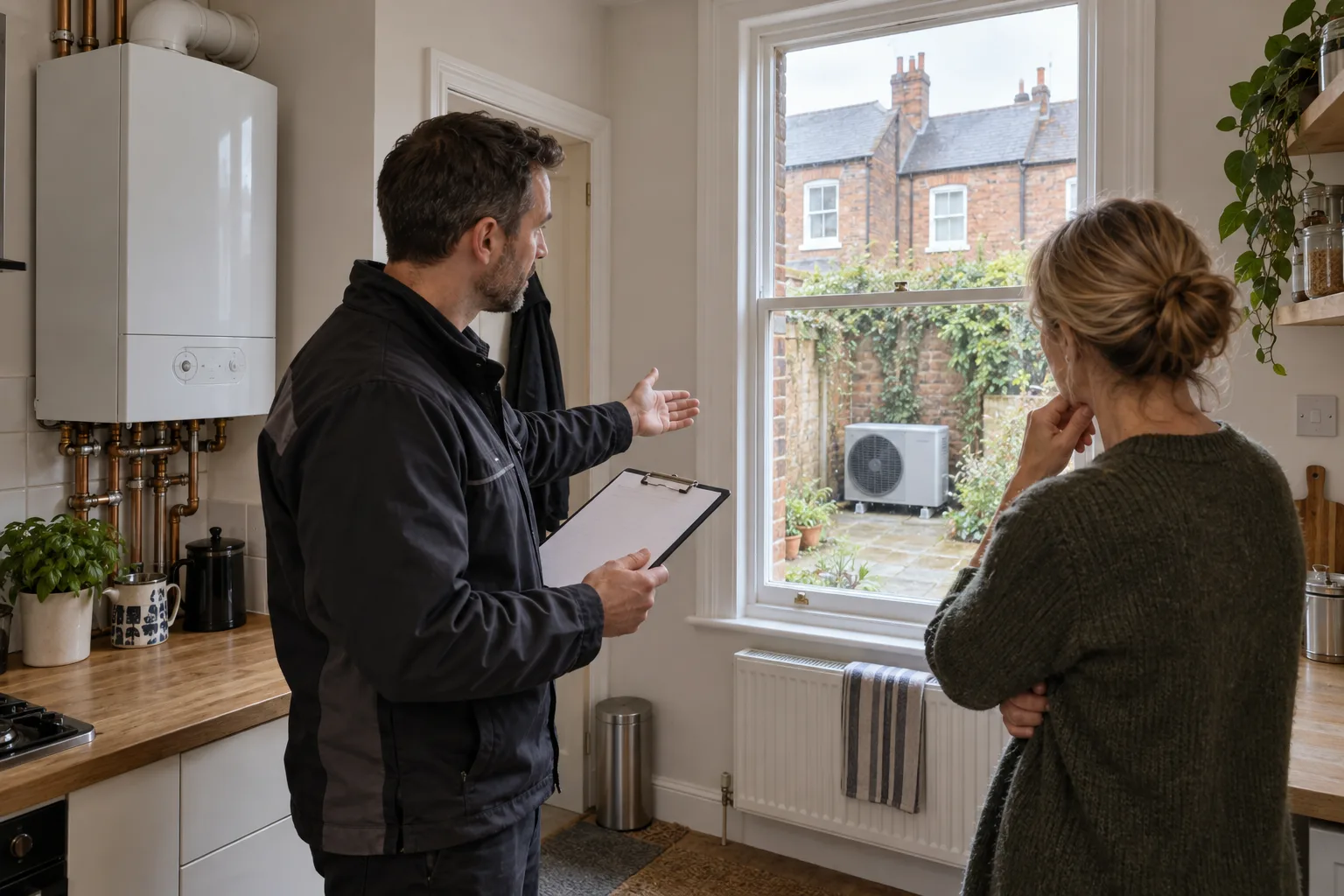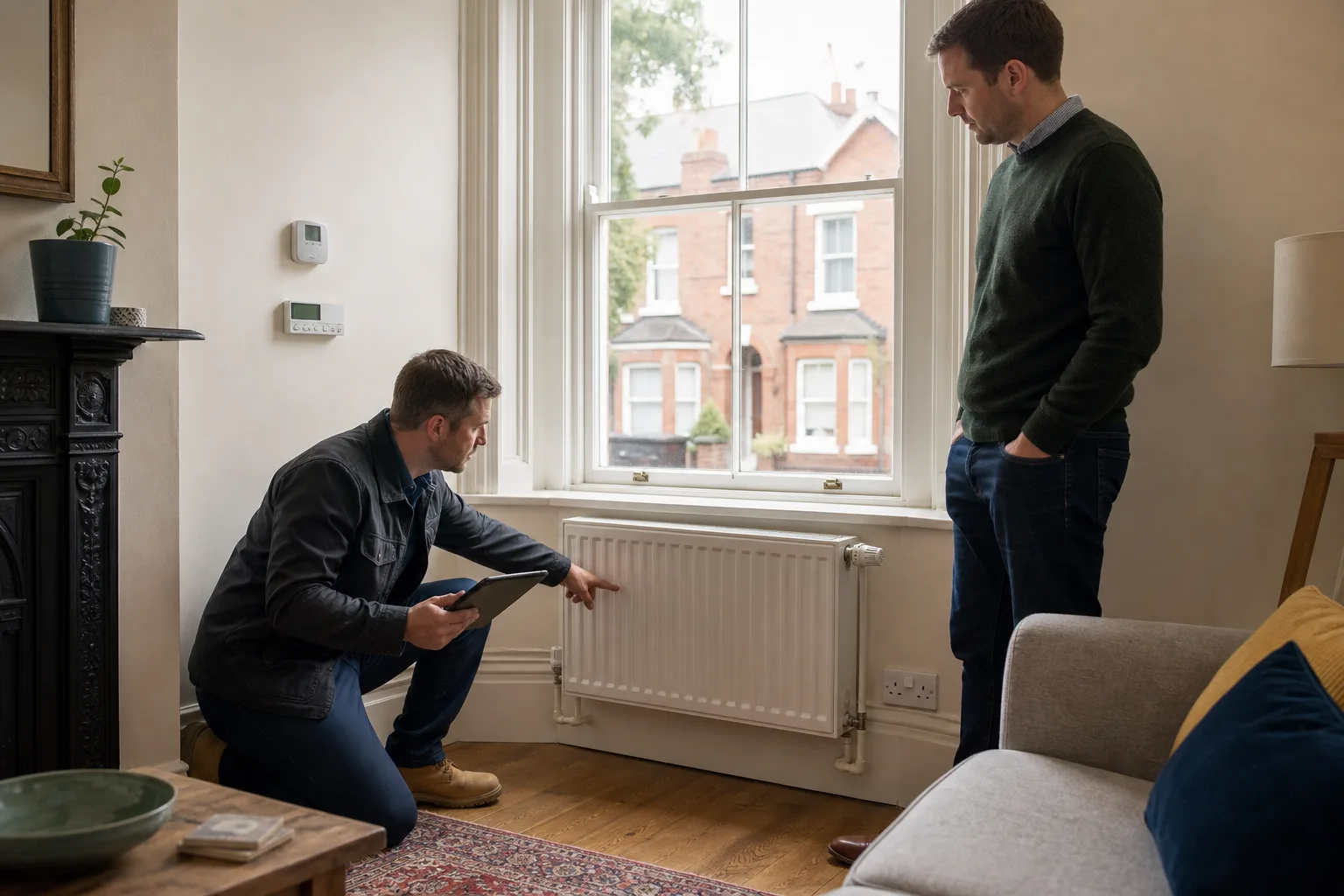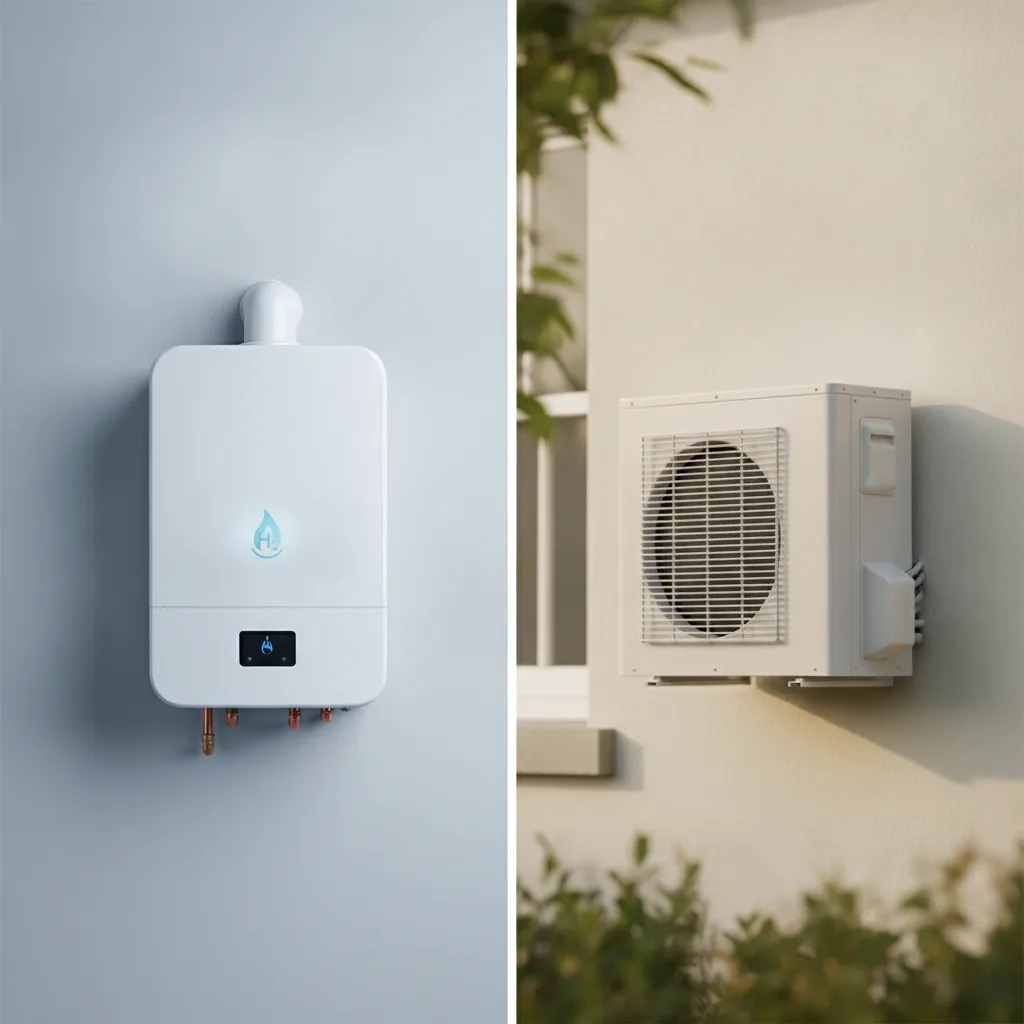
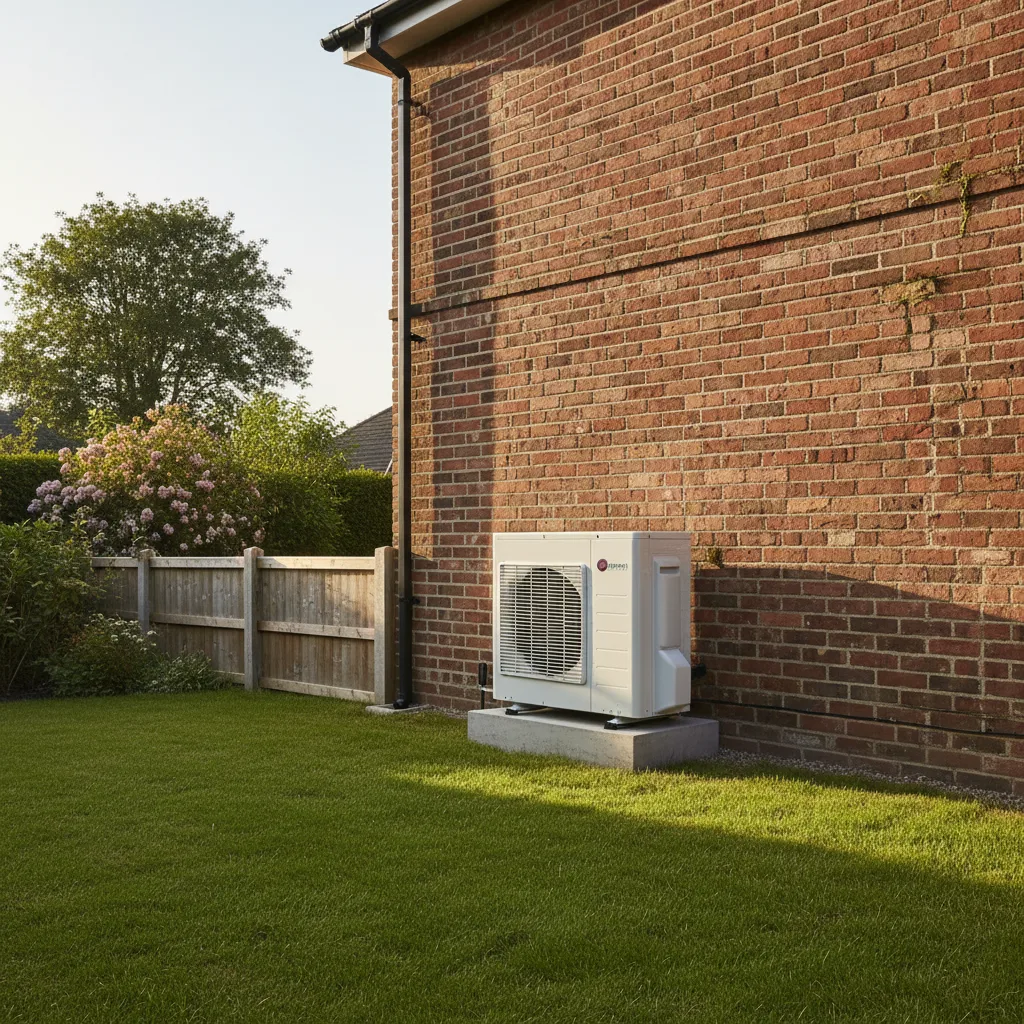
A practical 2026 guide to heat pump permitted development rules in England. Covers the May 2025 reforms, the new MCS 020(a) noise procedure, the 37 dB(A) limit, special cases for flats, conservation areas, and listed buildings, and how the rules connect to the £7,500 Boiler Upgrade Scheme grant.
Quick answer: do you need planning permission?
In England, many domestic air source heat pumps qualify as permitted development, so a full planning application may not be required. The installation must meet the current limits and noise assessment rules. Listed buildings, flats and designated areas need additional checks.
Planning permission used to be the single biggest reason heat pump installations stalled. Surveys came back clear, grant applications were ready to go, then the local planning portal flagged the unit was 90 cm from a fence rather than 100 cm and the project lost two months. In 2025 the rules were rewritten, and in 2026 the new framework is fully bedded in. For most homes in England, an air source heat pump now sits firmly inside permitted development. For others, the planning trap is still very real, just for different reasons.
This guide walks you through the 2026 rules in plain English. It covers what permitted development means, what changed in May 2025, the MCS 020(a) noise calculation that every installer must now run, and the cases where a full planning application is still mandatory. It also explains why the 28 May 2026 certification deadline matters, how the rules connect to your £7,500 Boiler Upgrade Scheme grant, and the six pitfalls we see homeowners walk into every week.
What permitted development actually means
Permitted development rights are a national planning shortcut. They let you carry out specific kinds of building work without applying for full planning permission, provided you stick to a set of rules. For air source heat pumps, the rules are set out in Class G of Schedule 2, Part 14 of the Town and Country Planning (General Permitted Development) (England) Order 2015, as amended.
The amendments that matter today come from The Town and Country Planning (General Permitted Development) (England) (Amendment) Order 2025, which came into force on 29 May 2025. That order rewrote Class G to widen the rights, simplify the noise procedure, and bring air to air heat pumps inside the same framework.
If your installation meets every condition in Class G, it is automatically lawful. You do not need to submit an application, you do not pay a fee, and the council cannot refuse it. If any single condition is breached, the whole installation falls outside permitted development and you must apply for full planning permission.
The May 2025 reforms in one paragraph
The 2025 amendment did four big things. The 1 metre boundary rule was scrapped, so an outdoor unit can now sit anywhere on your land, including right against a fence. The size limit for the outdoor unit was lifted from 0.6 cubic metres to 1.5 cubic metres on a house, which covers almost every domestic heat pump on the market. The number of permitted units doubled from one to two on detached houses. And air to air heat pumps, including reversible cooling units, were brought inside the same Class G permitted development framework.
The 2026 rules, in plain English
Here is what you can install on a typical English home without a planning application.
- The outdoor unit volume must not exceed 1.5 cubic metres on a house, or 0.6 cubic metres on a block of flats. Volume is measured from the outer dimensions of the casing, not the active components.
- The unit must not sit above the highest part of the roof. If you mount on a flat roof, every part of the unit must be at least 1 metre from the external edge of that roof.
- Pitched roof installations are not permitted development. Wall mounted is fine, ground mounted is fine, flat roof mounted is fine within the rules above.
- Up to two heat pumps are permitted on a detached house. One heat pump is permitted on a semi detached, terraced, or end of terrace house, and one on a block of flats.
- The 1 metre boundary rule has been removed in England. Your unit can now sit immediately adjacent to a neighbour's wall or fence, provided the noise calculation passes.
- The unit must comply with MCS 020(a) and the sound calculation must show 37 dB(A) or lower at the assessment position of the closest noise sensitive premises.
- The unit must be removed as soon as it is no longer needed for microgeneration.
If every box is ticked, you are inside permitted development. No planning application needed.
What MCS 020(a) actually requires
MCS 020 has been the planning standard for air source heat pump noise since 2013, but it was significantly updated in 2024 and again in 2025. The current version is MCS 020(a), Issue 1.0, published in July 2025. From 28 May 2026, MCS 020 in any form will be the only permitted certification scheme for permitted development. The transition window for older noise standards closes on that date.
The procedure works in four steps. First, the installer takes the manufacturer sound power level (LWA) at the design operating point. Second, they apply corrections for the installation context, including reflective surfaces within 1 metre of the unit, the presence of barriers, and any tonal or impulsive characteristics in the sound signature. Third, they calculate the predicted sound pressure level at the assessment position, which is 1 metre perpendicular to the centre of the closest habitable room window of any neighbouring noise sensitive property. Fourth, they compare the result to the 37 dB(A) limit.
A reflective surface is any solid surface (excluding vegetation) within 1 metre of the heat pump where the surface extends beyond the edge of the unit by 1 metre or more in two or more directions. A unit fixed to an external wall normally has one reflective surface. A unit in a corner has two. A unit in an enclosed bin store can have three or more, and the noise figure escalates quickly.
A 5 dB tonal correction is applied where the unit produces a clearly tonal noise (typically a fan or compressor whine). This is not common on modern variable speed inverter compressors, but it does still appear on older fixed speed designs.
The Excel based MCS Sound Calculator, made available from 20 September 2024, is now the standard tool. The paper based form is still permitted, but most installers use the spreadsheet for speed.
The 37 decibel limit and what it means
37 dB(A) is genuinely quiet. For context, a quiet bedroom at night sits around 30 dB(A), a refrigerator hum measured at 1 metre is around 40 dB(A), and a normal conversation is 60 dB(A). 37 dB(A) at a neighbour's window is roughly the sound of leaves rustling in a light breeze.
Modern variable speed monobloc heat pumps from Vaillant, Daikin, Mitsubishi, and Octopus all sit between 32 and 48 dB(A) at 1 metre when measured at low load. The challenge for installers is rarely the unit itself. It is the position. A unit tucked into a corner of a side return with a hard rendered wall opposite can effectively double in sound pressure terms. Move the same unit out by 1 metre and rotate it 30 degrees and it can drop by 5 to 8 dB(A).
This is why the MCS 020(a) calculation, not the manufacturer brochure figure, is what determines compliance. A 35 dB(A) unit fixed in the wrong place can fail. A 48 dB(A) unit installed correctly with an acoustic barrier and the right orientation can pass.
Special cases: flats, conservation areas, listed buildings
The headline rules cover most homes. The exceptions matter for the rest.
Flats and blocks of flats. Only one heat pump is permitted under Class G on a block of flats, and the volume is capped at 0.6 cubic metres rather than 1.5. The leaseholder also needs the freeholder's consent under the lease, which is an entirely separate legal step from planning. In a tower or mid rise block, freeholder consent is often the bigger hurdle than planning. The Nesta retrofit research published in 2025 showed leasehold consent was the single biggest blocker for heat pumps in flats.
Conservation areas. The unit must not be installed on any wall or roof that fronts a highway, and it must not sit nearer to any highway that bounds the property than any part of the building itself. In practice this means the unit must go on the rear elevation in most cases. Conservation area restrictions still allow permitted development, but only in the right position.
Listed buildings. Permitted development rights do not apply. You need both planning permission and Listed Building Consent, and you should expect a longer conversation with the conservation officer about visual impact, fixings, and acoustic management. Heat pumps can and do go onto listed homes, but the route is via a full application, not Class G.
Article 4 directions. Local councils can use an Article 4 direction to remove permitted development rights from specific streets or areas. This is rare for heat pumps but does exist. The local planning portal will flag if Article 4 applies to your address.
Wales and Scotland. Wales still requires a 3 metre boundary distance for air source heat pumps, which is why permitted development is harder west of the Severn. Scotland's rules sit in the Town and Country Planning (General Permitted Development) (Scotland) Order, which is broadly similar to England post 2025 but with some local variations.
What still needs full planning permission
Even after the 2025 reforms, there are situations where a full planning application is still mandatory.
- The outdoor unit volume is over 1.5 cubic metres on a house, or over 0.6 cubic metres on a block of flats.
- The unit is mounted on a pitched roof.
- The unit fails the MCS 020(a) sound calculation at 37 dB(A).
- You want a third heat pump on a detached house, or a second on a non detached house.
- The property is listed.
- The property is in a conservation area and you cannot meet the rear elevation rule.
- An Article 4 direction is in place.
- The property is a flat that does not have its own outdoor area, where the only viable position is on shared communal land.
A full planning application takes 8 to 13 weeks in most authorities, plus a £258 fee for a standard householder application. It is not the end of the world, but it is two extra months before installation, and it gives the council the right to refuse or impose conditions.
Why MCS certification matters more than ever
From 28 May 2026, MCS 020 is the only permitted certification scheme for permitted development. Anything else, including older alternative noise standards that were previously accepted, no longer satisfies Class G after that date.
This matters in two ways. First, your installer must be MCS certified to carry out the noise calculation properly, because MCS 020(a) is an MCS scheme document and only MCS contractors can sign off compliance under it. Second, the Boiler Upgrade Scheme amendment regulations that came into force on 28 April 2026 placed MCS certification on a statutory footing for grant claims as well. So MCS is now mandatory for both the planning route and the funding route.
If you use a non MCS installer, you cannot use permitted development from 28 May 2026 onwards, and you cannot claim the £7,500 grant. Two routes, one certification. The installer choice is now the single most important decision in the project.
How permitted development connects to the £7,500 BUS grant
The Boiler Upgrade Scheme amendment regulations 2026 came into force on 28 April 2026 and run alongside the new permitted development framework. The headline figures are:
- £7,500 grant for an air to water heat pump.
- £7,500 grant for a ground source or water source heat pump.
- £5,000 grant for a biomass boiler in qualifying rural properties.
- £2,500 grant for an air to air heat pump (newly eligible).
- £9,000 temporary uplift for off gas grid homes on heating oil or LPG.
The April 2026 amendments also removed the EPC requirement for grant eligibility and brought air to air heat pumps inside the scheme for the first time. The new permitted development framework was deliberately designed to mirror those changes, so air to air units that qualify for £2,500 of grant funding are also covered by Class G as long as they meet the same noise and volume rules.
If you are claiming the BUS grant, the route looks like this. The MCS installer carries out the heat loss calculation, designs the system, runs the MCS 020(a) noise check, confirms the installation falls inside Class G, applies for the grant on your behalf via the Ofgem portal, and shows the grant as an upfront discount on your quote.
The Warm Homes Plan and permitted development
The Warm Homes Plan, published 21 January 2026, brings together just under £15 billion of capital investment over the parliament. For permitted development, the most relevant strands are the Warm Homes: Local Grant (which funds heat pumps and insulation for households on incomes up to £36,000 in eligible areas) and the BUS extension to 2030 with a £2.7 billion total budget.
The plan reinforces permitted development as the default planning route for residential heat pumps. DESNZ and MHCLG worked together on the May 2025 amendment specifically to remove planning friction from the rollout, and the Warm Homes Plan policy document confirms that planning reform is part of the delivery model.
For a typical homeowner, the practical result is that 95 per cent of installations should now sit inside permitted development, the noise calculation is the only meaningful technical check, and the entire project from quote to commissioning runs without a single planning application.
Six common installation pitfalls
- Picking a position too close to a hard reflective wall. A unit installed in a corner with two reflective surfaces can fail the noise calculation even if the manufacturer figure is well below 37 dB(A).
- Forgetting the bin store. A unit hidden inside a brick or rendered enclosure with three or more sides counts as having three reflective surfaces in MCS 020(a) terms. The compliance figure can rise by 8 dB(A) or more, which often pushes a 35 dB(A) unit over the limit.
- Ignoring the flat roof edge rule. The outdoor unit must be at least 1 metre from the external edge of any flat roof. A unit perched on the corner of a flat roof extension is outside permitted development by definition.
- Specifying a unit over 1.5 cubic metres. A handful of high output domestic heat pumps (typically 14 kW and 16 kW models from European manufacturers) edge over the volume cap when measured with the casing. Always check the manufacturer's outer dimensions before signing the design.
- Trying to install on a pitched roof. This is not permitted development under any circumstances on Class G. The only roof installation route is a flat roof installation that meets the 1 metre edge rule.
- Assuming permitted development applies in a conservation area. It does, but only on the rear elevation. A unit on a side wall facing the highway will fail the test even if everything else is perfect.
Frequently asked questions
Do I still need to tell my neighbours? Permitted development does not require neighbour consultation. There is no statutory notification step. That said, a quick conversation with the neighbour whose window is closest to the proposed unit position is good practice, particularly if the unit is right on the boundary.
Does my installer file anything with the council? No. Permitted development is automatic. The MCS noise calculation is held by the installer and submitted to MCS for the certificate, not to the local planning authority. If a neighbour later challenges the noise level, the calculation is the legal defence.
What happens if my heat pump is louder in real life than the calculation predicted? The MCS 020(a) calculation is based on manufacturer data and a defined methodology. If the unit is louder in service, the most common causes are commissioning errors (refrigerant pressure, fan speed setting, defrost frequency) or a new reflective surface that was not present at the design stage (a new shed, a fence panel replaced with a wall). An installer revisit is the right first step.
Can I add a second heat pump later? On a detached house, yes, up to two units total, provided the combined noise calculation still passes 37 dB(A). On any other house type or on a flat, no, unless you apply for full planning permission for the second unit.
What about ground source and water source heat pumps? Ground source heat pumps fall under a separate part of the same permitted development framework (Class G also). The above ground equipment must not exceed 0.5 cubic metres in volume. Bore holes are excavation engineering operations, which are themselves usually permitted development on private land but may require an environmental permit from the Environment Agency depending on depth and aquifer interaction.
The bottom line for 2026
The 2025 reforms turned permitted development from a minefield into a normal default. For 95 per cent of homeowners in England, an air source heat pump now installs without a planning application, without a council fee, and without a two month delay. The 1 metre boundary rule is gone, the volume cap is generous enough for almost every domestic unit, and the noise procedure is clear and predictable.
The two things that matter most in 2026 are the MCS 020(a) sound calculation and the installer's MCS certification. Get those right and the rest of the framework supports you. Get them wrong and you fall outside both permitted development and the £7,500 BUS grant simultaneously.
If you are thinking about a heat pump for 2026 or 2027, start with a heat loss calculation and an outdoor unit position survey. Both are free with most reputable installers. If the position can be made to pass MCS 020(a), the rest of the project should run on rails.
Free assessment
Cucumber Eco can run the heat loss calculation, the MCS 020(a) sound calculation, and the BUS grant application for you, free of charge. No obligation. If your home falls inside permitted development and qualifies for the £7,500 grant, we will tell you exactly what the system will cost and when it can be installed. Get in touch via the form on our website to book a free consultation.
Considering ongoing costs as well as installation rules? Compare heat-pump electricity tariffs and features.
Running-cost next step: compare current heat pump tariffs before estimating likely electricity costs.