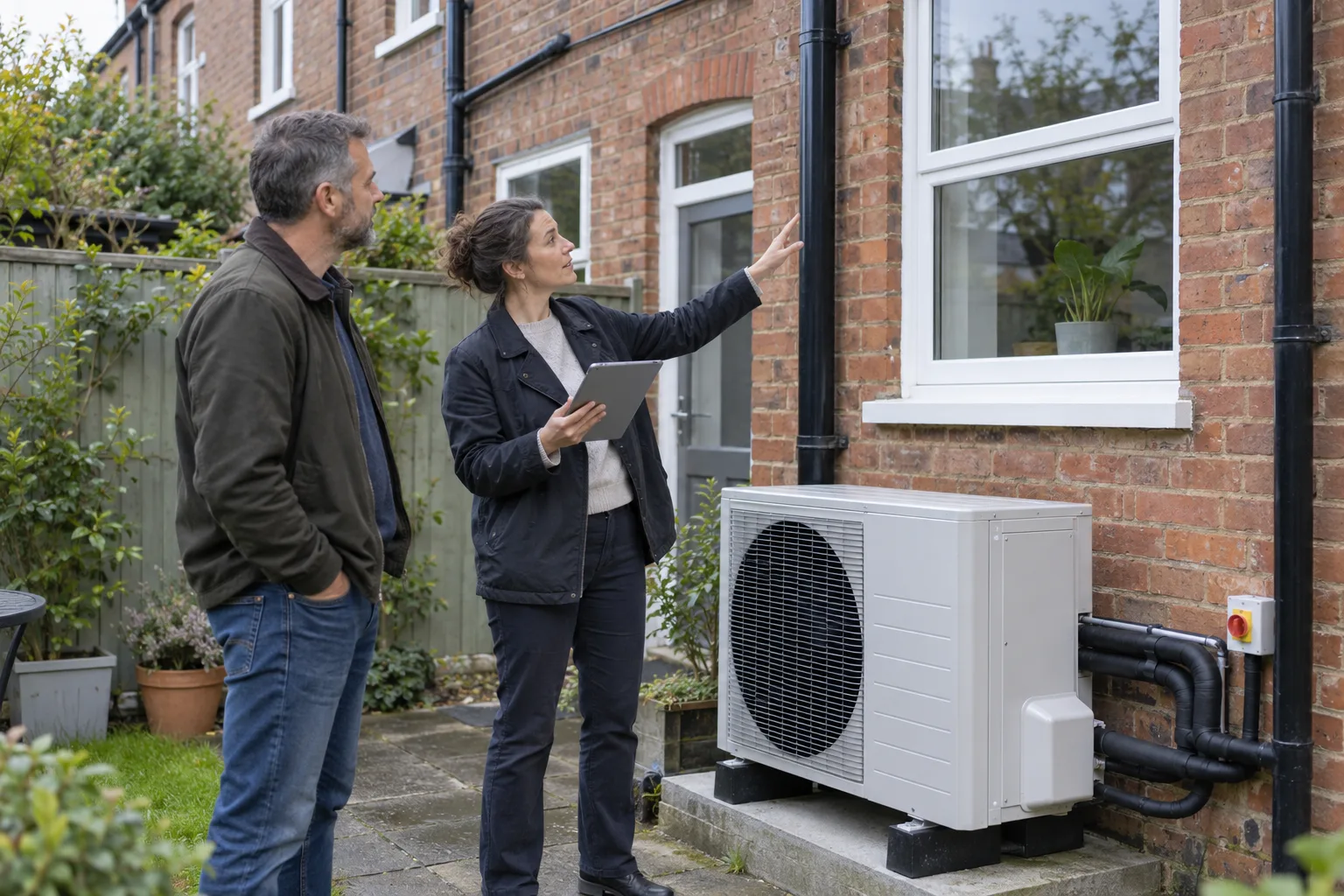

High temperature heat pumps deliver flow temperatures up to 75°C, which means your existing radiators and pipework can usually stay in place. Here is what they cost in 2026, how the £7,500 Boiler Upgrade Scheme grant applies, and which homes benefit most from this lower disruption upgrade.
For years the biggest objection to a heat pump retrofit in a typical UK home has been the same. Larger radiators. Wider pipework. Skirting boards lifted. Decorating budgets blown. It has held back hundreds of thousands of households who liked the idea of a heat pump but flinched at the disruption.
In 2026, that objection has finally lost most of its weight.
A new generation of high temperature heat pumps now delivers flow temperatures of 70°C to 80°C, which is the same band a gas boiler runs at. The R290 propane refrigerant inside them does the heavy lifting that older R32 and R410A units could not. Vaillant, Daikin, Mitsubishi and Octopus all have models on UK shelves that will run a Victorian terrace, a 1930s semi, or a stone cottage on existing radiators with very little intervention.
The £7,500 Boiler Upgrade Scheme grant applies to them in full. The April 2026 amendments to the scheme have removed the EPC requirement and the insulation prerequisite, which has opened the door to thousands more homes. The Warm Homes Plan adds a separate £15bn programme on top.
This guide covers what high temperature heat pumps actually are, what they cost in 2026, how they perform on existing radiators, where they fit best, and how to get the grant.
What Counts as a High Temperature Heat Pump
The definition matters because the term gets used loosely in marketing.
A government evidence report sets the threshold at flow temperatures above 65°C. A standard low temperature heat pump is designed to run between 35°C and 55°C. A medium temperature unit pushes that to 60°C. A true high temperature heat pump can reliably reach 70°C or higher and hold that temperature in cold weather.
The reason that figure matters is simple. UK gas boilers typically run flow temperatures of 65°C to 75°C. Existing radiators were sized to those flows. If a heat pump can match those numbers, the radiators do not need to be ripped out.
The technology that made the leap possible is R290 propane refrigerant. It has a global warming potential of three, compared to over 600 for older R32 and over 2,000 for R410A. More usefully, R290 has a higher critical temperature, which means a heat pump using it can compress the refrigerant to a higher pressure and deliver hotter water without the efficiency falling off a cliff.
Which Homes Benefit Most
High temperature heat pumps are not the right answer for every home. They shine in a specific group of properties:
- Period properties with cast iron radiators and lath and plaster walls where ripping out radiators is expensive or destructive
- Homes where the existing pipework is buried in concrete floors or behind plastered walls
- Listed buildings where heritage consent makes radiator and pipe upgrades complicated
- Properties where the homeowner wants the shortest possible disruption window
- Homes where loft and cavity insulation has been done but solid walls remain uninsulated, leaving heat loss higher than a standard low temperature unit can comfortably cope with
- Households with cylinders that already run at 60°C or higher for legionella protection
For a well insulated new build, a low temperature heat pump running at 35°C with underfloor heating will always be cheaper to run. For a draughty 1900s end terrace where radiator changes would cost £4,000 on top of the install, a high temperature heat pump is often the better commercial decision once disruption and decorating costs are factored in.
The Trade Off: Efficiency at Higher Flows
There is no free lunch in physics. A heat pump is more efficient when it lifts the temperature of the refrigerant by less, so a low flow temperature is always more efficient than a high one.
Industry guidance consistently puts the efficiency drop at roughly nine per cent for every five degrees of additional flow temperature. A modern low temperature heat pump running at 35°C might achieve a SCOP of around 4.0 to 4.5. The same unit pushed to 55°C might land near 3.5. A true high temperature unit running at 70°C will typically deliver a SCOP between 2.8 and 3.3.
That sounds dramatic until you compare it to a gas boiler. A modern condensing gas boiler operating in real conditions runs at around 85 per cent annual efficiency once you account for cycling losses, heat distribution losses, and the fact that most boilers are oversized. A SCOP of 3.0 still means three units of heat for every unit of electricity. Even at the 2026 price cap with electricity at 24.7p per kWh and gas at 5.7p per kWh, a 3.0 SCOP heat pump produces heat at roughly 8.2p per kWh, which is right in the same range as gas at 6.7p per kWh after boiler losses.
The smarter installers reduce that gap further by adding a couple of larger radiators in the rooms with the highest heat demand, then running the rest of the system at the lowest flow temperature the property will allow. This is called weather compensation, and it is now a standard part of any MCS specification.
What They Cost in 2026
Installed prices for a high temperature heat pump in a typical UK three or four bedroom property fall between £10,000 and £15,000 before grant, with the median sitting around £12,500.
Once the £7,500 Boiler Upgrade Scheme grant is applied, the homeowner contribution is usually £3,000 to £7,500. Octopus Energy publish their own median post grant price for the Cosy 6 at £4,459, drawn from quotes between September 2025 and February 2026.
What drives variation:
- System size. A 5kW unit for a small two bedroom flat lands at the lower end. A 12kW or 16kW unit for a five bedroom detached lands at the top.
- Cylinder. A new 200 to 250 litre cylinder typically adds £1,000 to £1,500 if one is needed.
- Buffer tank or volumiser. A 50 litre volumiser adds around £400 fitted.
- Pipework upgrades. Most installs need very little change for a true high temperature unit, but in older homes a small section of microbore pipe may need to be replaced.
- Electrical works. A new dedicated heat pump circuit and isolator adds £300 to £600.
- Hot water demand. Households running multiple bathrooms may need a larger cylinder or a heat pump with a stronger hot water boost mode.
These are typical guide ranges drawn from MCS installer pricing data published through Q1 2026. A free property survey is the only way to confirm the specification for any particular home.
The Models You Will See on Quotes in 2026
Four manufacturers dominate the UK high temperature heat pump market today.
Vaillant aroTHERM Plus
Vaillant's flagship R290 unit comes in 3.5kW, 5kW, 7kW, 10kW and 12kW outputs. Maximum flow temperature is 75°C. SCOP figures published by Vaillant reach 5.03 in low flow conditions, falling to around 3.0 at 65°C flow. The unit is rated to operate down to ambient temperatures of minus 25°C. Sound power is as low as 48dB(A), and the smaller outputs carry the Quiet Mark accreditation. Vaillant is one of the most established UK heat pump brands and the aroTHERM Plus is the unit most installers default to for retrofit work on existing radiators.
Daikin Altherma 3 H HT
The Daikin Altherma 3 H HT is purpose built for retrofit. Power outputs span 4kW to 16kW. Maximum flow temperature is 70°C. Published SCOP reaches 5.43 in low flow conditions. It runs down to minus 28°C ambient. Sound is rated at 38dB at one metre, which is among the quietest in the high temperature class. Daikin position the unit explicitly as a like for like boiler replacement and it is a popular choice for properties where outdoor noise and listed building consent matter.
Mitsubishi Ecodan R290
Mitsubishi's R290 Ecodan delivers flow temperatures up to 75°C. Outputs are 5kW, 8.5kW, 11.2kW and 14kW. SCOP at low flow conditions sits around 4.9 with current published data, dropping to around 3.0 at 65°C flow. The Ecodan ecosystem includes pre matched cylinders and a strong installer training network. Mitsubishi has the deepest UK installer base of any manufacturer.
Octopus Cosy
The Cosy 6, Cosy 9 and Cosy 12 are R290 units capable of 65°C flow with the Turbo configuration, slightly lower than the Vaillant or Daikin maximums but enough for most existing radiators in average to well insulated homes. Real world fleet performance data published by Octopus in 2026 shows a typical SCOP of 3.6 across the installed base, with leading installs reaching 4.0 to 4.1. Cosy is the cheapest mainstream option once the BUS grant is applied, with median post grant prices of £4,459 reported.
The Boiler Upgrade Scheme Position in 2026
High temperature air source heat pumps are fully eligible for the £7,500 BUS grant on the same terms as standard low temperature units. The 2026 amendments confirmed and broadened that position.
What changed in April 2026:
- The valid EPC requirement was removed. Where an EPC exists it is still the primary evidence, but where one is missing, alternative evidence is now accepted.
- The previous requirement to install loft and cavity wall insulation as a precondition has been scrapped.
- Air to air heat pumps were added to the scheme at £2,500.
- The annual scheme budget was increased to £295m for 2025/2026, with the scheme extended to 2030.
What stayed the same:
- Hybrid heat pumps that include or run alongside a fossil fuel boiler are still excluded. This is set in the regulations and the 2026 amendments did not change it.
- The installation must be completed by an MCS certified installer.
- The unit must be MCS approved. All four manufacturers above hold MCS certification on their R290 high temperature ranges.
- The grant is paid to the installer and discounted from your quoted price, so you pay the net figure.
For homes where a hybrid system was being considered as a stepping stone, a high temperature heat pump is now the better grant funded route. It is one system, fully electric, fully eligible, and the existing radiators usually stay.
Warm Homes Plan and Warm Homes Local Grant in 2026
The £15bn Warm Homes Plan announced by government runs alongside the BUS. It is a separate funding stream not a replacement.
Allocation for England:
- £5bn for full home upgrades for households on lower incomes. Heat pumps, insulation, solar PV and battery storage are all in scope. A single household can receive up to £30,000 of measures.
- £2bn in low cost loans aimed at universal heat pump and renewables uptake.
- £2.7bn extension to the Boiler Upgrade Scheme to 2030.
- Targeted programmes for off gas grid and rural communities.
- Direct social housing and public estate funding.
The Warm Homes Local Grant is the local authority delivered stream. It runs to March 2028 and supports owner occupiers and private rented sector tenants with EPC ratings of D, E, F or G whose household income is £36,000 or less, or whose property is in IMD deciles one or two. A high temperature heat pump is a fully fundable measure under the Local Grant where the property fits the eligibility profile.
Running Costs in Practice
For a typical four bedroom UK home with average insulation and a 9kW high temperature heat pump running at a SCOP of 3.0, the running cost works out as follows at the April to June 2026 Ofgem price cap.
Annual heat demand: around 12,000 kWh
Electricity input at SCOP 3.0: 4,000 kWh
Cost at 24.7p per kWh: £988
For comparison, the same home with a gas boiler at 85 per cent real world efficiency:
Annual heat demand: 12,000 kWh
Gas input at 85 per cent: 14,118 kWh
Cost at 5.7p per kWh: £805
In simple terms a high temperature heat pump in a draughty older home is running at near parity with gas in 2026. Drop the flow temperature by adding even one or two larger radiators, get the SCOP up to 3.5, and the heat pump moves clearly ahead. Move to a heat pump tariff such as Cosy Octopus, Intelligent Octopus Flux or British Gas HomeEnergy Heat Pump tariff, and the gap widens further because the heat pump runs hardest in the off peak windows.
The Energy Saving Trust running cost data continues to show heat pumps saving households between £200 and £500 per year compared with oil and LPG, even before any grant is applied.
How the Install Process Works
A standard installation week looks like this:
- Free property survey and heat loss calculation. The MCS installer measures every room, checks ventilation, confirms radiator output at the proposed flow temperature, and prepares a system specification. Allow one to two hours.
- Quote and grant application. The installer submits the BUS application to Ofgem on your behalf. You receive a fixed price quote with the £7,500 already deducted.
- Install day one. The old boiler and any redundant pipework is removed. The outdoor unit is positioned and the indoor cylinder fitted.
- Install day two. Refrigerant lines are run, electrical connections completed, the system is filled and pressurised.
- Commissioning day. The installer balances flow temperatures across each radiator, sets the weather compensation curve, and runs the system through a full hot water cycle.
- Handover. You get the MCS certificate, the manufacturer warranty paperwork, the BUS grant evidence, and a controls walkthrough.
For a true high temperature retrofit on existing radiators the install is often two days, occasionally extending to three for larger homes. Standard low temperature retrofits with radiator and pipework upgrades typically run four to seven days. The shorter window is one of the strongest arguments for the high temperature route in occupied homes.
Getting It Right: Six Common Mistakes to Avoid
- Sizing the unit on radiator output not heat loss. A heat pump must be sized to the calculated heat loss of the property, not to the existing radiator wattage. Oversizing leads to short cycling and poor SCOP.
- Skipping the weather compensation set up. A high temperature heat pump that always runs at 70°C will be far less efficient than one that runs at 70°C only on the coldest days and drops to 50°C in milder weather.
- Choosing the cheapest installer. The price difference between a competent MCS installer and a budget operator is often only £500 to £1,000, and the running cost difference over ten years can be £2,000 or more.
- Ignoring the cylinder. A high temperature unit can run a smaller cylinder than a low temperature unit because the water reheats faster, but the cylinder still needs to be matched to household demand.
- Treating the heat pump like a boiler. Heat pumps are designed to run continuously at a steady temperature. Setting back the thermostat overnight by five degrees and ramping up at 6am is the worst possible operating pattern.
- Forgetting about hot water tariffs. Running the cylinder reheat in the cheap window of a heat pump tariff can cut hot water costs by 40 per cent or more.
Frequently Asked Questions
Are high temperature heat pumps eligible for the £7,500 Boiler Upgrade Scheme grant?
Yes. Air source and ground source high temperature heat pumps qualify for the full £7,500 grant. The April 2026 amendments removed the previous EPC and insulation prerequisites for most applicants, which has broadened access significantly.
Will my existing radiators work with a high temperature heat pump?
In most cases yes. A high temperature heat pump running at 65°C to 75°C can use radiators that were sized for a gas boiler at the same flow temperature. The MCS heat loss survey confirms this room by room before installation.
What is the SCOP of a high temperature heat pump?
Typically between 2.8 and 3.5 when running at 65°C to 75°C flow, rising above 4.0 when run at lower flow temperatures with weather compensation in milder weather.
Can a high temperature heat pump replace an oil or LPG boiler?
Yes, and the running cost saving is substantial. Oil and LPG run at roughly 11p to 14p per kWh of useful heat in 2026 at typical efficiencies, compared to around 8p per kWh of useful heat for a SCOP 3.0 heat pump on the standard price cap.
Is R290 propane refrigerant safe?
Yes. R290 is used in millions of European installations and is regulated under standard MCS and refrigerant handling rules. The outdoor unit contains the refrigerant. There is no propane piped through the home.
How long does the install take?
Most retrofits on existing radiators take two days, occasionally three. That compares with four to seven days for a standard low temperature retrofit with radiator upgrades.
Where Cucumber Eco Fits In
Cucumber Eco runs free property assessments for homeowners and landlords across England considering a high temperature heat pump. The service includes the heat loss calculation, an EPC review, a check against Boiler Upgrade Scheme and Warm Homes Plan eligibility, and a fixed price installation quote from an MCS certified partner. There is no obligation and no charge.
If you have a period property, cast iron radiators, buried pipework or a listed building and you have ruled out a heat pump on disruption grounds, this is the right time to look again.
Book a free consultation through the Cucumber Eco website at cucumbereco.co.uk and a member of the team will arrange a survey at a time that suits.