Everything you need to know about loft insulation in 2026, including costs, savings figures, the difference between standard and room-in-roof insulation, and how to get it funded through the Warm Homes Plan.
Loft insulation is one of the most cost-effective home energy upgrades available. It is unglamorous, it is invisible once installed, and it requires no ongoing maintenance. Yet it can cut heating bills by up to £285 per year according to the Energy Saving Trust, and it remains one of the single best investments a homeowner can make in the fabric of their property.
In 2026, there are strong financial reasons to act. The Warm Homes Plan offers funding of up to £30,000 for eligible households, and the Warm Homes Local Grant extends funded insulation work through to March 2028. For those outside the funded schemes, the payback period on self-funded loft insulation can be as short as two to three years.
This guide covers everything you need to know: how loft insulation works, the difference between standard and room-in-roof insulation, realistic savings figures, what the installation process involves, and how to access the funding available right now.
How Loft Insulation Works
Heat rises. In a home without adequate loft insulation, a significant proportion of the heat generated by your boiler or heat pump escapes through the roof. The Energy Saving Trust estimates that around a quarter of heat lost in an uninsulated home is lost through the roof.
Loft insulation works by placing a thick layer of insulating material between the heated living space below and the cold loft space above. It does not heat your home. It simply slows the rate at which heat escapes, which means your heating system has to work less hard to maintain a comfortable temperature.
The recommended depth for loft insulation in the UK is 270 millimetres. This is the depth at which the Building Research Establishment (BRE) calculates the best balance between material cost and heat retention. Many older homes have insulation of 100 millimetres or less, which was the standard when it was installed but is now considered significantly below par. Topping up from 100mm to 270mm is a relatively quick and cheap job that can make a meaningful difference to energy bills.
The most common material used is mineral wool, which comes in rolls and is easy to lay between and across the joists in an accessible loft. It is not toxic, it does not settle significantly over time, and it does not support mould growth in normal conditions. Other materials include loose fill mineral wool, which can be blown into inaccessible spaces, and rigid insulation boards, which are used in specific situations.
Standard Loft Insulation vs Room-in-Roof Insulation
There are two main types of loft insulation, and they serve very different purposes.
Standard loft insulation (also called cold loft insulation) is laid on the loft floor. It insulates the ceiling of the rooms below, keeping heat in the living spaces. The loft space itself remains cold. This is the correct approach when you are not using your loft as a habitable room and you are not planning to convert it.
Room-in-roof insulation (also called warm loft or sloped ceiling insulation) is installed at rafter level, between and under the rafters, following the slope of the roof. It insulates the roof structure itself, making the loft space warm. This is the correct approach when your loft has been converted into a bedroom or other living space, or where the loft is partially used.
Room-in-roof insulation is significantly more expensive and more complex to install than standard floor-level insulation. It typically costs between £1,500 and £3,500 for a standard semi-detached home, compared to £300 to £600 for standard loft insulation. However, if your home has a converted loft or rooms in the roof, it is the only way to properly insulate that part of the building.
It is also possible to have a mixed situation: a home where the main roof is a cold loft (insulated at floor level) but where a dormer or extension creates a warm roof space. In these cases, both types of insulation may be required.
How Much Can You Save?
The Energy Saving Trust publishes annual figures for typical savings from loft insulation. For a gas-heated semi-detached home in 2026, the typical annual saving from installing loft insulation from scratch (where there is currently none) is approximately £285 per year.
For homes topping up existing insulation from 100mm to 270mm, the saving is smaller but still worthwhile, typically £60 to £100 per year.
Savings vary depending on:
The size of your home. Larger homes with more roof area lose more heat and therefore save more.
Your current level of insulation. Starting from zero saves more than topping up.
Your heating fuel. Gas is cheaper per unit than oil or electricity, so the cash saving is lower for gas homes than for oil-heated homes, though the energy saving is the same.
How much you heat your home. If you run your home at a high temperature or for long periods, you will save more in absolute terms.
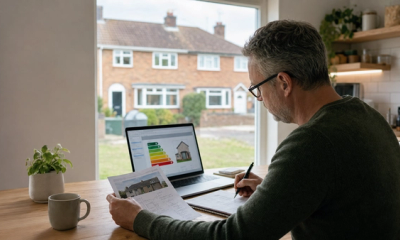
Your EPC rating will also improve with additional insulation, typically by one to two bands for a full installation in an uninsulated loft. This can improve your mortgage options, increase property value, and reduce the cost of any future energy efficiency assessments.
The Warm Homes Plan: Up to £30,000 of Funded Insulation
The Warm Homes Plan is the government's flagship energy efficiency programme in England. Launched in 2025 as a successor to the earlier ECO and GBIS schemes, it provides substantial grants to eligible households for insulation, heating upgrades, and other energy efficiency measures.
Loft insulation is one of the core measures covered by the Warm Homes Plan. For eligible households, the full cost of installation is typically covered, with no contribution required from the homeowner.
Who is eligible?
The Warm Homes Plan uses two main eligibility routes.
The income and EPC route: Your household income must be below £36,000 per year, and your home must have an EPC rating of D, E, F, or G. Homes rated D or below are considered the most in need of improvement.
The deprivation route: Your home falls within deprivation deciles 1 or 2 on the Index of Multiple Deprivation (IMD). This is a postcode-based measure of socioeconomic deprivation and does not require income evidence. Homes in these areas can receive funding regardless of their EPC rating.
Up to £30,000 of funding is available per household across all eligible measures combined. This means that if you also need a new heating system, cavity wall insulation, or other upgrades, the loft insulation may be installed as part of a broader package all at no cost to you.
The scheme is administered through local authorities and delivered by approved contractors. Cucumber Eco is an approved installer and can check your eligibility as part of a free home assessment.
The Warm Homes Local Grant
Separate from the main Warm Homes Plan, the Warm Homes Local Grant is a pot of funding allocated to local authorities to deliver energy efficiency improvements in their areas. It runs until March 2028.
The Local Grant has slightly different eligibility criteria and is aimed specifically at owner-occupiers and private renters in lower-income households. The measures covered include loft insulation, wall insulation, floor insulation, and low carbon heating.
If you are not sure whether you qualify for the main Warm Homes Plan, the Local Grant may offer an alternative route to funded insulation. Cucumber Eco can advise on both schemes and identify the best route for your circumstances.
What About the Boiler Upgrade Scheme?
The Boiler Upgrade Scheme (BUS) is primarily a grant for low carbon heating systems, particularly heat pumps and biomass boilers. However, it is relevant to loft insulation in one important way.
Before a heat pump can be installed, the property must meet a minimum standard of insulation in most cases. An assessor will carry out a heat loss calculation, and if loft insulation is missing or inadequate, it will typically need to be addressed before or alongside the heat pump installation.
If you are considering a heat pump alongside loft insulation, the Warm Homes Plan may fund both together, or the BUS grant of £7,500 can be applied to the heat pump while the Warm Homes Plan covers the insulation. Your installer can advise on the best approach.
EPC Impact and the Home Energy Model
Installing loft insulation will improve your EPC rating. The current SAP (Standard Assessment Procedure) methodology, which underpins EPC calculations, gives significant weight to insulation levels. A home moving from no loft insulation to the recommended 270mm depth can expect an improvement of one to two EPC bands.
This matters for several reasons. EPC band C is increasingly the target for lenders, with many green mortgage products offering preferential rates for homes rated C or above. From 2028, minimum energy efficiency standards for private rented properties are expected to require EPC band C. And for homeowners in band D or below, improving to band C opens up eligibility for the Warm Homes Plan's most generous funding tiers.
The government is transitioning from SAP to the new Home Energy Model (HEM) in the second half of 2027. HEM is designed to be a more accurate reflection of real world energy performance. Insulation is expected to remain a high-value measure under HEM, though the precise impact on individual property ratings will depend on the full specification.
The Step by Step Installation Process
For most homes with accessible loft space, loft insulation installation is a relatively quick and minimally disruptive process.
Step 1: Assessment. An assessor visits the property to check the loft space, measure the existing insulation depth, identify any issues (such as damp, missing breathable membrane, or areas of poor access), and confirm the specification required.
Step 2: Preparation. If any pre-installation work is needed, such as clearing old materials or addressing ventilation issues, this is carried out before the main installation.
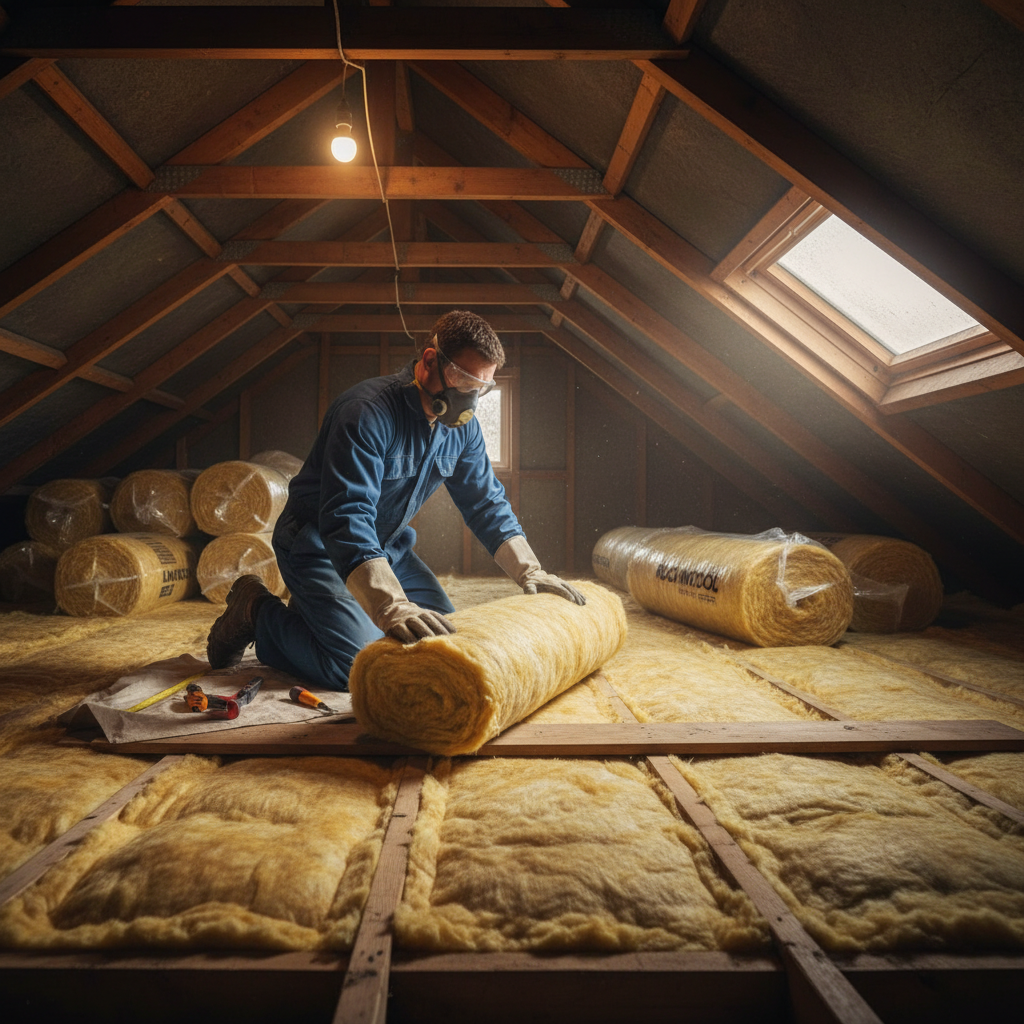
Step 3: Installation. The insulation is laid in two layers for a 270mm depth. The first layer goes between the joists (typically 100mm), and the second layer goes across the joists at 90 degrees (typically 170mm), covering the joist tops to eliminate cold bridging. Around water pipes, tanks, and hatch edges, specific detailing is required to avoid freezing.
Step 4: Water pipe lagging. Any pipes running through the loft space will need to be lagged (insulated) because the loft will now be colder than before. This is usually done as part of the installation.
Step 5: Completion check. The installer walks through the completed installation, checking coverage and depth before signing off.
A typical installation takes between two and four hours for a standard accessible loft. Room-in-roof insulation takes longer, usually one to two days, because of the additional complexity.
What If My Loft Is Inaccessible?
Some lofts are difficult or impossible to access via the standard hatch. In these cases, installers can use a blown insulation technique, feeding loose-fill mineral wool or cellulose fibre through small holes drilled in the ceiling or via the eaves. This is effective but slightly less thermally efficient than laid insulation.
If access is genuinely impossible, a flat roof (which occurs in some extensions) requires a different approach: either cold deck or warm deck flat roof insulation, which is a different product and installation method altogether.
Common Questions and Concerns
Will loft insulation make my home damp? Properly installed loft insulation should not cause damp. In fact, by reducing the likelihood of cold surfaces in the building envelope, it can reduce the risk of condensation. However, it is important that ventilation in the loft is not blocked during installation. Any existing damp or ventilation issues should be addressed first.
What happens to my loft hatch? The hatch itself needs to be insulated, since it is a significant weak point. Your installer should fit an insulated hatch cover as part of the installation.
Can I still use my loft for storage? Yes. With standard cold loft insulation, you can lay boards over the top of the insulation at joist level to create a storage platform. However, it is important not to compress the insulation beneath the boards, as this reduces its effectiveness. Raised loft boarding systems are available specifically for this purpose.
How Cucumber Eco Can Help
Cucumber Eco is an approved installer for the Warm Homes Plan and Warm Homes Local Grant. We carry out free home assessments to check your eligibility, confirm the right specification for your property, and arrange installation with minimum disruption to you.
We are honest about what loft insulation can and cannot do. It is a highly effective measure for most homes, but it works best as part of a broader energy efficiency plan. If you also have uninsulated cavity walls, a draughty front door, or an ageing boiler, we can help you prioritise the measures that will make the biggest difference to your bills and comfort.
Get in touch for a free no-obligation assessment. We serve homeowners across the UK and have helped hundreds of families cut their energy bills through well-specified, properly installed insulation.
Frequently Asked Questions
How long does loft insulation last? Mineral wool loft insulation is effectively a permanent installation. It does not degrade significantly over time and does not need replacing unless it becomes damaged or contaminated. Installations from the 1980s are still performing adequately in many homes, though the depth was typically below current recommendations.
Is loft insulation worth it if I already have some? Almost certainly yes, if your current depth is below 270mm. Topping up from 100mm to 270mm is a low-cost job that typically pays back within three to five years and may be fully funded under the Warm Homes Plan.
Will it reduce noise from rain on the roof? To some extent. The additional material absorbs sound energy, and many homeowners report noticeably quieter bedrooms after installation. It is not a dedicated acoustic treatment, but the benefit is real.
What is the difference between glass wool and rock wool? Both are types of mineral wool and perform similarly for thermal insulation purposes. Glass wool is typically lighter and comes in rolls. Rock wool (also called stone wool or Rockwool, which is a brand name) is denser and slightly better for acoustic performance. For standard loft insulation, either is appropriate.
Can I install loft insulation myself? Technically yes, if you have an accessible loft and are comfortable working in a confined space. The material is available from builders merchants. However, if you are eligible for a funded scheme, there is no financial reason to do it yourself, and a professional installation will be properly specified and signed off.
What should I do after getting loft insulation installed? Most homeowners find the change in their home's thermal performance is immediately noticeable. We recommend checking your smart meter or energy bills in the following months to see the impact, and considering what other measures might be worth doing next. Many of our customers find that loft insulation is the first step in a broader programme of home upgrades.