The Boiler Upgrade Scheme, the Warm Homes Plan, and the Warm Homes Local Grant have combined to make 2026 the most financially accessible year yet to install a heat pump in the UK. Here is everything you need to know.
If you have been considering switching from a gas boiler to a heat pump, 2026 may be the year the numbers finally stack up in your favour. A convergence of government funding, falling installation costs, and a genuine policy push from Westminster has created conditions that simply did not exist two or three years ago. The Boiler Upgrade Scheme (BUS) is still running and offering meaningful grants. The Warm Homes Plan is bringing serious money into the home energy retrofit space. And the Warm Homes Local Grant is opening up pathways for households that might previously have been locked out of support altogether.
This guide cuts through the noise. We will explain what each scheme actually offers, who qualifies, what a heat pump installation typically costs in 2026, and why the long-term case for making the switch has never been stronger. Whether you own a detached farmhouse in Yorkshire or a semi in the suburbs of Bristol, there is likely a funding route that applies to you.
What Is a Heat Pump and Why Does It Matter for UK Homes?
A heat pump is a device that moves heat from outside your home to inside it, rather than burning fuel to generate heat from scratch. Air source heat pumps (ASHPs) extract warmth from the outdoor air, even when temperatures drop below freezing. Ground source heat pumps (GSHPs) draw heat from the ground via a series of pipes. Both types use electricity to run, but because they move heat rather than create it, they are dramatically more efficient than gas boilers.
In practice, a modern air source heat pump operating in the UK climate will deliver between 2.5 and 4 units of heat for every unit of electricity it consumes. This ratio is known as the coefficient of performance (COP). Compare that with a condensing gas boiler, which at best converts around 90p in every pound of gas into usable heat. As the UK electricity grid continues to decarbonise, with a growing proportion of power coming from wind, solar, and nuclear sources, the carbon footprint of running a heat pump falls year on year without any further action on your part.
For the UK to meet its legally binding net zero target by 2050, the heating of homes must be decarbonised. Buildings currently account for around a fifth of the country's total greenhouse gas emissions. Heat pumps are widely regarded as the primary technology for achieving that transition at scale, and government policy is increasingly aligned behind making that happen.
The Boiler Upgrade Scheme: What It Offers in 2026
The Boiler Upgrade Scheme (BUS) was introduced to help homeowners in England and Wales cover the upfront cost of replacing fossil fuel heating systems with cleaner alternatives. It provides a grant paid directly to your installer, which is then deducted from your final bill, meaning you never need to handle the funding yourself.
As of early 2026, the BUS provides grants of up to £7,500 for air source heat pumps and up to £7,500 for ground source heat pumps and water source heat pumps. This represents a significant financial contribution towards an installation that might total between £8,000 and £15,000 depending on the size of your home and the complexity of the work involved.
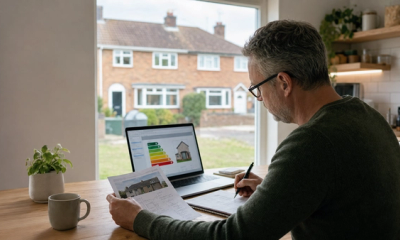
To be eligible for the BUS, your property must be in England or Wales (Scotland has its own equivalent schemes), and it must already have a valid Energy Performance Certificate (EPC) without a recommendation to add loft or cavity wall insulation. This requirement is designed to ensure that heat pumps are installed in homes that are sufficiently insulated to benefit from them, and it is worth noting that sorting out any outstanding insulation recommendations before applying can actually make your home warmer and more efficient regardless of what heating system you use.
Your installer must be registered under the Microgeneration Certification Scheme (MCS) to apply for the grant on your behalf. At Cucumber Eco, we work with MCS accredited installers across the country, ensuring that the process from initial survey to final installation is straightforward and fully compliant.
The Warm Homes Plan: The Bigger Picture
Beyond the Boiler Upgrade Scheme, the government's Warm Homes Plan represents the most ambitious home retrofit programme the UK has seen in a generation. Announced as a central plank of the current government's energy and climate policy, the Warm Homes Plan aims to upgrade millions of British homes over the coming years, with a focus on improving insulation, upgrading heating systems, and reducing energy bills for households across the income spectrum.
The plan channels funding through a combination of direct grants, low interest loans, and local authority delivery programmes. Its ambition is to make warm, energy efficient homes the norm rather than the exception, and to ensure that the cost of achieving that standard does not fall entirely on individual households.
For homeowners, the Warm Homes Plan underpins much of the wider support landscape. It provides the political and financial context within which schemes like the BUS and the Warm Homes Local Grant operate. It also signals a long term commitment from government to support the transition away from fossil fuel heating, which matters when you are considering whether to make a significant investment in your home.
One of the most important aspects of the Warm Homes Plan for many households is its attention to fuel poverty. The plan includes targeted support for lower income households and those living in properties with poor energy efficiency ratings, recognising that the people who stand to benefit most from better insulation and cleaner heating are often those least able to afford the upfront cost of achieving it.
The Warm Homes Local Grant: Support Through Your Local Authority
The Warm Homes Local Grant is a key delivery mechanism within the broader Warm Homes Plan. It is administered through local authorities, who receive funding allocations to support eligible households in their areas with energy efficiency upgrades and low carbon heating installations.
This is significant because it means the route to funding is local rather than purely national. Local councils have discretion in how they deploy their allocations, which has resulted in a patchwork of provision across England. Some councils are running active programmes with dedicated teams to help residents navigate the process. Others are at earlier stages of implementation. The picture is improving, and awareness among homeowners is growing.
The Warm Homes Local Grant is particularly relevant for owner occupiers and private landlords with properties at EPC band D or below, and with a household income below a defined threshold. Eligible upgrades can include insulation measures, heat pumps, solar panels, and other low carbon technologies. In some cases, grants can cover the full cost of installation, making this one of the most generous support routes available.
The application process varies by local authority, but the starting point is always to check what your council is currently offering. Some councils have online portals. Others work through referral organisations and approved installers. Cucumber Eco can help you identify whether you might qualify and point you towards the right contact in your area.

What Does a Heat Pump Installation Actually Cost in 2026?
Cost is consistently cited as the primary barrier to heat pump adoption in UK surveys, and it is worth being clear about what the real numbers look like once available grants are taken into account.
A typical air source heat pump installation for a three bedroom semi detached home in the UK will cost in the region of £10,000 to £14,000 before any grant support. This includes the heat pump unit itself, any necessary upgrades to radiators or the installation of underfloor heating, the hot water cylinder, and all associated labour and commissioning costs.
After applying the BUS grant of £7,500, the net cost to the homeowner falls to somewhere between £2,500 and £6,500 for a straightforward installation. For homes that qualify for the Warm Homes Local Grant, additional funding may reduce the out of pocket cost further still, and in some cases to zero.
It is also worth noting that installation costs in the UK have been falling as the market matures. More installers are now trained and accredited. Supply chains for heat pump equipment have improved. Competition among manufacturers has increased, and the technology itself has advanced considerably. Units available today are quieter, more compact, and more efficient in cold weather than those available just five years ago.
The running cost picture has also improved significantly. The gap between electricity and gas prices per unit has narrowed compared to the worst of the energy crisis years, and the higher efficiency of heat pumps means that well designed installations in reasonably insulated homes can deliver heating bills comparable to, or lower than, what you might expect from a modern gas boiler. The savings are most pronounced in well insulated properties, which is why pairing a heat pump installation with any recommended insulation work makes strong financial sense.
Is My Home Suitable for a Heat Pump?
This is the question we are asked most often, and the honest answer is that suitability depends on the specific characteristics of your home rather than any single rule of thumb. That said, the range of homes that can be successfully heated by a heat pump has expanded considerably as the technology has improved.
Air source heat pumps work well in detached and semi detached houses, bungalows, and increasingly in well insulated terraced homes and flats. They require outdoor space for the external unit, typically a wall or ground mounted position with reasonable airflow around it. They are most efficient when paired with low temperature heat distribution systems such as underfloor heating or oversized radiators, though many homes with standard radiators can also be successfully retrofitted with only modest upgrades.
Ground source heat pumps are generally better suited to larger properties with garden space for the ground loop, or access to a borehole. They tend to be more expensive upfront but offer very stable performance because ground temperatures remain consistent throughout the year, even during cold snaps that can reduce the efficiency of air source units.
The best way to establish whether your home is suitable is to commission a proper heat loss survey from a qualified engineer. This assessment calculates exactly how much heat your home loses in cold weather and determines the appropriate size and type of heat pump needed to meet that demand. A reputable installer will always carry out this survey before recommending a system, and it is a prerequisite for a well designed installation that will keep your home comfortably warm throughout a UK winter.
The Long Term Case for Switching Now
Some homeowners ask whether it makes sense to wait before switching from a gas boiler to a heat pump. They wonder whether the technology will improve further, whether costs will come down more, or whether the policy landscape might become even more favourable. These are understandable questions, but the evidence increasingly points in one direction: the time to act is now.
Grant funding is always finite. The BUS has a budget, and while that budget has been extended and replenished, there is no guarantee that grants at current levels will be available indefinitely. The Warm Homes Local Grant is similarly subject to funding cycles and local authority allocation decisions. Households that act sooner rather than later are more likely to access the full level of support currently on offer.
There is also the regulatory trajectory to consider. Future standards for new boiler installations and for properties sold on the open market are likely to tighten over the coming years. Proactively upgrading now, on your own terms and with grant support, puts you well ahead of any future requirements rather than scrambling to comply when grants may have reduced or deadlines are imminent.
Then there is the simple comfort argument. A well designed and properly installed heat pump system provides consistent, controllable warmth throughout the home. Modern heat pumps integrate with smart controls that allow you to manage your heating from a phone app, set different temperatures in different rooms, and optimise your usage around the cheapest electricity tariff periods. Many households who have made the switch report that the comfort and control they now have over their heating is a significant quality of life improvement, entirely separate from the financial and environmental benefits.
Choosing the Right Installer
The quality of your heat pump installation matters enormously. A poorly designed system, with an undersized unit or inadequate heat distribution, will underperform regardless of how good the underlying technology is. The installer you choose will have more impact on the real world performance of your system than almost any other factor.
When assessing installers, look for MCS accreditation as a baseline requirement. This is non negotiable if you want to access the Boiler Upgrade Scheme. Beyond that, look for companies that conduct thorough heat loss surveys, provide detailed system designs, and can demonstrate a track record of successful residential installations. Ask for references from previous customers, and do not be shy about requesting real world performance data if the installer can provide it.
Beware of any installer who tries to rush you through the process, skips the heat loss survey, or quotes a price without having assessed your home in detail. A heat pump installation is a significant investment and deserves the same level of care and diligence you would expect from any major building or engineering project.
Heat Pumps and Solar Panels: A Natural Partnership
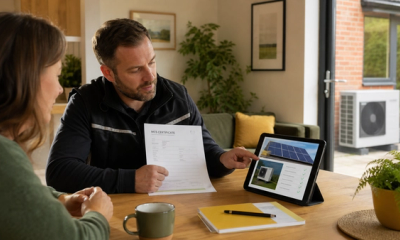
One topic that comes up repeatedly in conversations with homeowners considering heat pumps is solar photovoltaic (PV) panels. Because heat pumps run on electricity, pairing them with a solar PV system can meaningfully reduce running costs by generating some of the electricity you need from your own roof.
In practice, the combination works best when you have a battery storage system as well. Solar generation peaks in the middle of the day during summer, while heating demand is highest in the morning and evening during winter. A battery allows you to store surplus solar generation and use it when you need it most, rather than exporting it to the grid for a relatively modest return.
The economics of a combined heat pump, solar PV, and battery system are compelling over a ten to fifteen year horizon, particularly for households with higher than average energy consumption. With electricity prices remaining elevated compared to historical norms, the ability to self generate a proportion of your electricity is an increasingly attractive proposition.
Next Steps: How to Get Started
Getting started with a heat pump installation does not need to be complicated. The process typically follows these stages: an initial conversation to understand your home and your circumstances; a home energy assessment to review your current EPC and identify any insulation improvements that should be addressed first; a heat loss survey conducted by a qualified engineer; a system design and quotation; grant application (your installer handles this on your behalf for the BUS); and finally, installation and commissioning.
For the Warm Homes Local Grant, the process starts slightly differently, with a check on your eligibility based on your income, your property's EPC rating, and your local authority's current programme status. We can help you navigate this initial stage and connect you with the right people in your area.
The key message is this: the financial case for installing a heat pump in 2026 is materially better than it has ever been. The grants are real, the technology is mature, the installer market is competitive, and the long term trajectory of energy policy points firmly towards electrified heating. Waiting may mean missing out on the current level of support. Acting now means benefiting from it.
Summary: Key Points to Remember
The Boiler Upgrade Scheme offers up to £7,500 towards a heat pump installation in England and Wales, paid directly to your installer. The Warm Homes Plan is the overarching government programme driving home energy upgrades across the country. The Warm Homes Local Grant provides additional support for lower income households and those in less energy efficient homes, administered through local authorities. A typical air source heat pump installation after the BUS grant can cost as little as £2,500 to £6,500 for a straightforward job. The technology is proven, the installer market is growing, and the case for switching from a gas boiler has never been stronger. A proper heat loss survey by a qualified engineer is essential to ensure your system is correctly sized and designed. Pairing a heat pump with solar PV and battery storage can significantly reduce running costs over the long term.
If you would like to understand your options in more detail, get in touch with the team at Cucumber Eco. We can help you understand what grants you may be eligible for, what your home needs to be ready for a heat pump, and how to find a quality installer in your area. The path to a warmer, greener, and cheaper to run home is clearer in 2026 than at any point in recent memory.