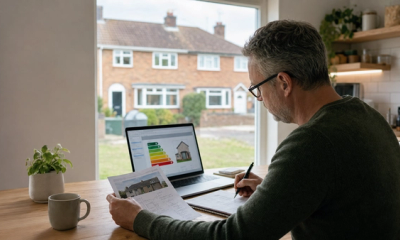
A clear guide to heat pump running costs in 2026, covering SCOP ratings, smart tariffs, real-world cost comparisons, and the funded routes available through the Warm Homes Plan and Boiler Upgrade Scheme.
Heat pumps are one of the most talked about home heating upgrades in the UK right now. The government has made them central to its net zero strategy, installers are busier than ever, and more households are considering making the switch from gas boilers. But one question comes up more than any other: what will a heat pump actually cost me to run?
This guide cuts through the confusion. We cover SCOP ratings and what they mean for your bills, how smart tariffs can dramatically reduce running costs, real world comparisons between heat pump and gas boiler running costs in 2026, and the funded routes that can make the switch far more affordable.
What Is a Heat Pump and How Does It Work?
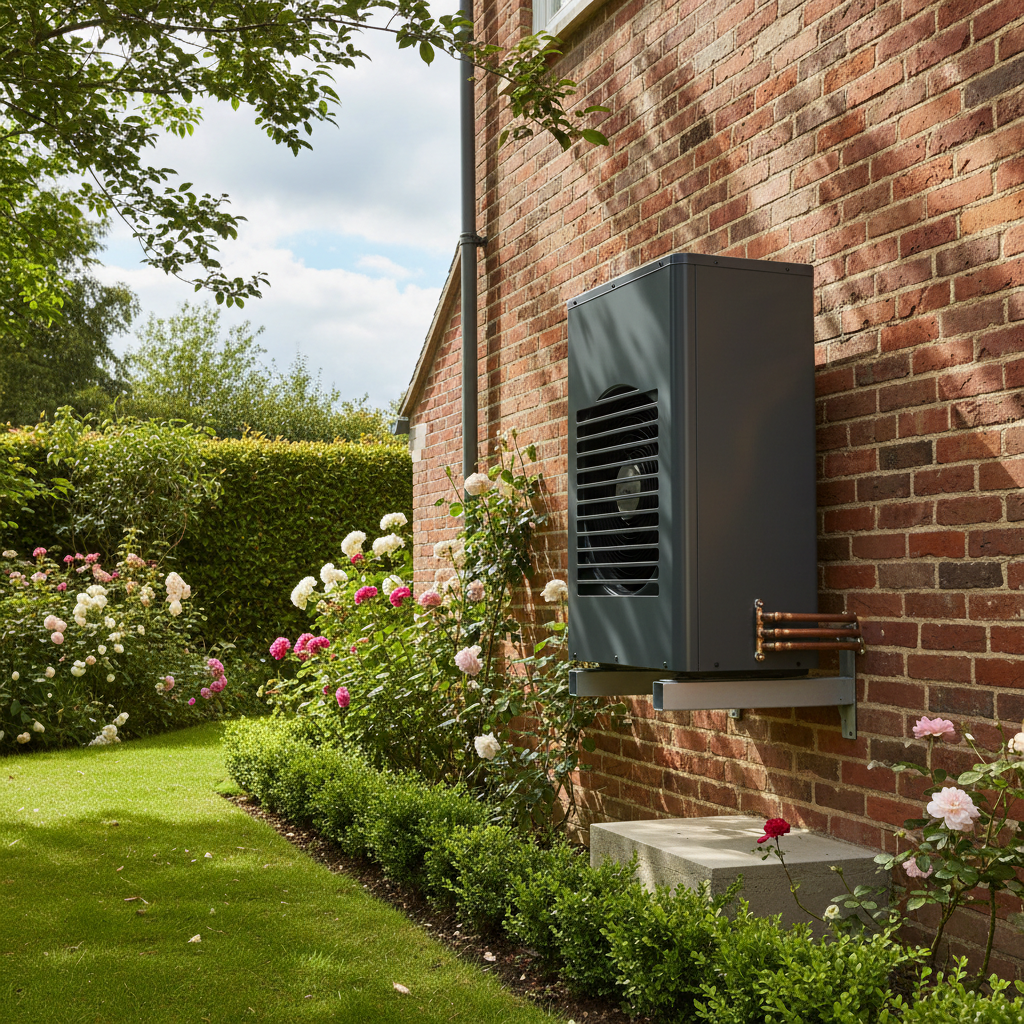
An air source heat pump works by extracting heat from the outside air and using it to warm your home and hot water. It does not generate heat by burning fuel. Instead, it moves heat from one place to another using a refrigeration cycle, which is why it can deliver more energy than it consumes.
For every 1 unit of electricity a heat pump uses, it typically delivers 2.5 to 4 units of heat. This ratio is called the Coefficient of Performance, or COP. Over an entire heating season, the average is described as the Seasonal Coefficient of Performance, or SCOP.
Understanding SCOP: Why It Matters for Running Costs
SCOP is the single most important number when calculating heat pump running costs. A heat pump with a SCOP of 3.0 uses one third of the electricity compared to the heat it delivers. A model with a SCOP of 4.0 is even more efficient, using just a quarter.
Modern air source heat pumps typically achieve a SCOP of between 2.5 and 3.5 in UK conditions, depending on the outdoor temperature, how well insulated your home is, and the flow temperatures your heating system runs at. Ground source heat pumps, which extract heat from the ground, consistently achieve higher SCOP figures, often between 3.5 and 5.0, because ground temperatures remain more stable year round.
The key lesson is that a lower flow temperature means a higher SCOP. If your radiators are oversized or you have underfloor heating, your heat pump can operate at lower temperatures and deliver better efficiency. This is why an assessment of your existing heating system is an important part of any heat pump installation.
What Does a Heat Pump Cost to Run in 2026?
Electricity prices in the UK are higher per unit than gas. As of early 2026, the Ofgem price cap sits at approximately 24p per kWh for electricity and 6p per kWh for gas. This means a heat pump consuming electricity at 24p, with a SCOP of 3.0, effectively delivers heat at a cost of 8p per kWh. This is broadly comparable to a gas boiler running at around 90 per cent efficiency, which delivers heat at approximately 6.7p per kWh.
For a typical semi-detached home with an annual heating demand of around 12,000 kWh:
A gas boiler at 90 per cent efficiency would cost approximately £800 to £900 per year to run.
A heat pump with a SCOP of 3.0 at standard electricity rates would cost approximately £960 to £1,100 per year.
A heat pump with a SCOP of 3.5 at standard electricity rates would cost approximately £825 to £940 per year.
A heat pump running on a dedicated low rate electricity tariff at 10p per kWh with a SCOP of 3.0 would cost approximately £400 to £460 per year.
The tariff you are on makes an enormous difference. This is where smart tariffs become critically important.
Smart Tariffs and Heat Pumps: The Game Changer
Several energy suppliers now offer tariffs specifically designed for heat pump owners. These tariffs offer cheaper electricity during off-peak hours, typically overnight, when grid demand is low and renewable energy generation is often high.
Octopus Energy offers the Cosy Octopus tariff, which provides cheaper electricity for six hours per day. Combined with a smart heat pump controller or a thermal store, homeowners can shift much of their heating load to these cheaper periods. Many heat pump owners on smart tariffs report annual running costs that are meaningfully lower than their previous gas heating bills.
The combination of a high-SCOP heat pump, good home insulation, and a smart tariff is where the economics of heat pump ownership become genuinely compelling.
Real World Running Cost Examples
It is worth being clear that running costs vary considerably depending on the size of your home, the level of insulation, the age and type of heat pump, and your energy supplier. The examples below are indicative for 2026 conditions.
A well insulated three bedroom semi-detached home in the Midlands, fitted with a Vaillant arotherm+ heat pump and on the Cosy Octopus tariff, reported an annual electricity bill for heating and hot water of approximately £650 in the 2024 to 2025 heating season. Their previous gas bill for heating alone was £1,100.
A detached Victorian property in the South West, less well insulated, running a Mitsubishi Ecodan at standard electricity rates, reported annual heating costs of around £1,400. They noted that upgrading loft and cavity wall insulation had reduced this from an initial £1,800.
These examples illustrate that insulation quality is as important as the heat pump itself.
Comparing Heat Pump Running Costs to Other Heating Systems
Gas boiler: Typically £700 to £1,000 per year for a well insulated home at current price cap rates.
Oil boiler: Typically £1,000 to £1,500 per year depending on oil prices, which are volatile.
Electric storage heaters: Typically £1,200 to £1,800 per year at standard electricity rates.
Air source heat pump at standard rates: Typically £800 to £1,200 per year for a well insulated home with a good SCOP.
Air source heat pump on a smart tariff: Typically £400 to £750 per year for the same home.
Ground source heat pump: Typically £350 to £650 per year, benefiting from consistently high SCOP and often paired with solar panels.
The trajectory matters too. Gas prices have historically been volatile and are tied to global commodity markets. Electricity prices, while currently higher per unit, are expected to fall relative to gas as more renewable generation comes online, and as network costs are rebalanced.
The Warm Homes Plan: Funded Heat Pumps in 2026
The government's Warm Homes Plan is the primary route to a funded or heavily subsidised heat pump in England. The scheme, which replaced and expanded previous grant programmes, provides up to £30,000 per household for energy efficiency upgrades including heat pump installation.
To qualify, households need to meet income criteria (typically annual household income under £36,000) and have an EPC rating of D, G, E, or F, or live in an area that falls within the lower deprivation deciles on the Index of Multiple Deprivation. The scheme is delivered through local authorities and approved installers.
Scotland, Wales, and Northern Ireland have their own equivalent schemes. Eligibility criteria and funding levels differ, so it is worth checking what is available in your area.
The Boiler Upgrade Scheme
For households that do not qualify for the Warm Homes Plan, the Boiler Upgrade Scheme (BUS) continues to offer grants. As of 2026, the BUS provides a £7,500 grant towards the cost of a new air source heat pump, and £7,500 for a ground source heat pump.
The scheme is open to most owner-occupied homes in England and Wales that are replacing a fossil fuel heating system. There are some conditions around insulation standards and EPC ratings. Your installer claims the grant on your behalf and deducts it from the installation price, so you never see the money directly.
What Does Heat Pump Installation Cost?
Before grants, a typical air source heat pump installation in 2026 costs between £8,000 and £15,000 depending on the size of the property, the complexity of the installation, and the brand of heat pump chosen. Ground source heat pumps are more expensive to install, typically £15,000 to £35,000, because of the groundworks required.
After the BUS grant of £7,500, a mid-range air source heat pump installation might cost £5,000 to £8,000. For households eligible for the Warm Homes Plan, the cost could be zero or close to it.
Heat Pumps and Your EPC Rating
Switching from a gas boiler to a heat pump will typically improve your EPC rating. Heat pumps score well under the SAP methodology because they use less primary energy than gas systems and have lower carbon emissions. A home that moves from EPC band D to band C after a heat pump installation may also become more attractive to buyers and lenders, since many mortgage providers now offer green mortgage products at preferential rates.
The government is moving to a new Home Energy Model to replace SAP in the second half of 2025. The new model is expected to be better at reflecting the real world performance of heat pumps, potentially improving ratings further for homes that switch from gas.
Maintenance and Reliability
Modern heat pumps are reliable machines with few moving parts. Most manufacturers offer warranties of between 5 and 10 years, and well maintained units can last 20 years or more. Annual servicing is recommended and typically costs between £80 and £150, similar to a boiler service.
Heat pumps do not require annual gas safety checks. However, they do need periodic checks on refrigerant levels and filter cleaning, which a qualified F-Gas engineer should carry out as part of a service.
Is a Heat Pump Right for Your Home?
Heat pumps work best in homes that are reasonably well insulated and have a heating system designed for lower flow temperatures. They can work in older properties, but may require radiator upgrades or the addition of underfloor heating in some rooms. A good installer will carry out a full heat loss calculation before recommending the right sized unit.
Properties with solid stone walls or poor insulation may see less favourable running costs until insulation is upgraded. In these cases, doing the insulation work first, or at the same time, makes the most sense financially.
How Cucumber Eco Can Help
At Cucumber Eco, we carry out full home assessments before recommending any technology. We will work through your heating requirements, your current insulation levels, and your eligibility for funding, to give you a clear picture of what a heat pump would cost you to run, what it would cost to install after any grants, and when you would break even.
We are MCS-accredited and work with leading heat pump brands including Vaillant, Mitsubishi, and Samsung. We also help customers get onto the right tariff and set up smart controls to maximise efficiency from day one.
If you are curious about whether a heat pump makes sense for your home, get in touch for a free no-obligation assessment. We are here to give you honest answers, not just to sell you something.
Frequently Asked Questions
Can a heat pump heat my home on the coldest days of the year? Yes. Modern air source heat pumps are rated to operate efficiently down to minus 20 degrees Celsius, well below anything typically experienced in the UK. At very low outdoor temperatures, the COP will be lower, but the heat pump will still provide warmth.
Will my bills definitely go down if I switch to a heat pump? Not automatically. Bills depend on the efficiency of the heat pump installation, the insulation level of your home, and the electricity tariff you are on. On a smart tariff in a well-insulated home, most households see lower bills. On a standard tariff in a poorly insulated home, bills may be similar to or slightly higher than gas.
Do I need to upgrade my radiators? Not always. A heat loss calculation will determine whether your existing radiators are large enough to work with the lower flow temperatures a heat pump uses. Many homes need one or two radiators upgraded, while some need none.
How long does installation take? A typical air source heat pump installation takes two to three days. Ground source installations take longer due to the groundworks, typically one to two weeks.
Is there any disruption to my hot water supply during installation? There will be a period without hot water during the changeover, usually less than a day. Your installer will plan this to minimise disruption.
How do I know if I qualify for the Warm Homes Plan? Eligibility depends on your household income, your property's EPC rating, and your location. Cucumber Eco can check your eligibility as part of a free home assessment. Get in touch and we will walk you through the options.