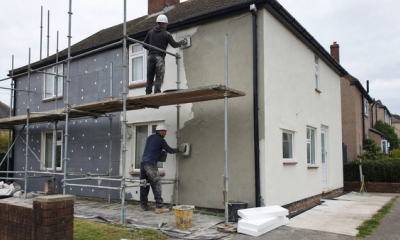
Millions of UK homeowners qualify for free government-funded home improvements worth up to £30,000. Find out which upgrades you can claim at no cost.
Millions of homeowners across the UK are sitting on a government grant worth up to £30,000 and most of them have no idea it exists. Free home improvements, funded entirely by the government, are available right now through the Warm Homes Plan and the Warm Homes: Local Grant. You pay nothing. No loans. No repayments. No catch.
The schemes exist because the UK government has committed to improving the energy efficiency of millions of homes before 2030. The energy used to heat inefficient homes accounts for a significant share of national carbon emissions, and the government has decided that funding upgrades directly is more effective than leaving it to individual homeowners.
The result is a remarkable situation where qualifying households can receive thousands of pounds worth of professional home improvements at zero cost. The seven measures below are the most commonly funded and the most impactful.
1. Loft Insulation: The Single Biggest Impact for the Lowest Disruption
Up to 25% of a home's heat escapes through an uninsulated roof. Loft insulation is consistently the most cost-effective single upgrade available, cutting heat loss dramatically and reducing energy bills from day one.
The process is straightforward. A team arrives, lays 270mm to 300mm of mineral wool insulation across the loft floor, and the job is done in a few hours. There is no mess in the main living areas and no redecoration required. Most installations are completed in a single day.
For eligible households, the entire cost of supply, installation, and post-installation certification is covered. The typical value of a full loft insulation installation is £600 to £900 when self-funded. Under the Warm Homes Plan, you pay nothing.
Who qualifies: Properties with less than 100mm of existing loft insulation (or bare joists), EPC D to G, eligible household.

2. Cavity Wall Insulation: Filling the Gap That Has Been Losing Your Heat
Most UK homes built between the 1920s and 1990s have cavity walls: two skins of brick with a gap between them. That gap was originally designed to prevent damp, but it also allows warm air inside the house to be replaced constantly by cold air from outside.
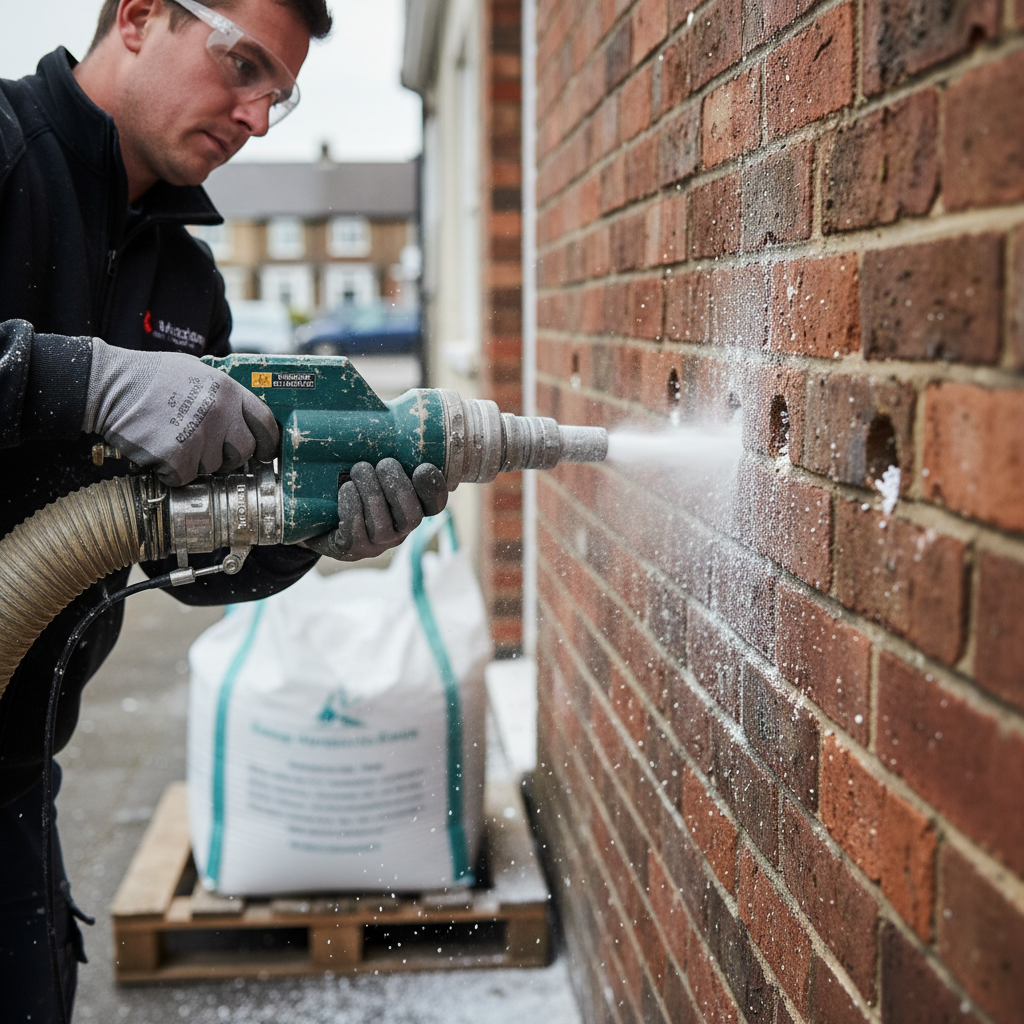
Cavity wall insulation fills that gap with mineral wool or foam beads, stopping the convection loop and cutting heat loss through the walls by up to 35%. For a typical semi-detached property, this translates to annual savings of £150 to £300 on energy bills.
The installation process involves drilling small holes in the external mortar, injecting insulation material, and then repointing the holes. The work is typically completed in a few hours and leaves no visible trace on the exterior of the property.
Who qualifies: Properties with unfilled cavity walls confirmed by a pre-installation survey, EPC D to G, eligible household.
3. Internal Wall Insulation: For Solid Wall Homes Built Before 1920
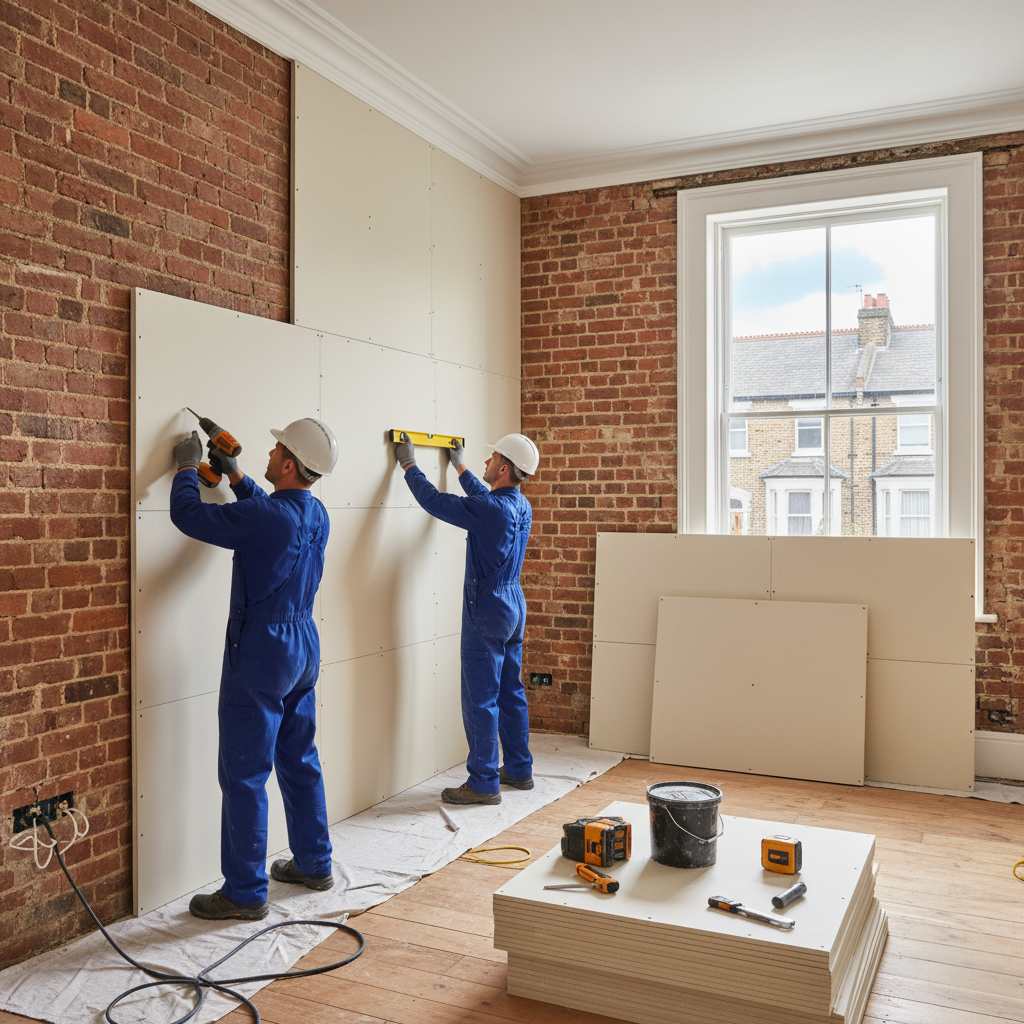
For solid wall properties, typically Victorian and Edwardian homes built before 1920, cavity wall insulation is not an option because there is no cavity to fill. Instead, internal wall insulation is fitted to the inside face of external walls.
Panels of insulated plasterboard are bonded to the internal surface, reducing heat loss through the walls significantly. This is a more involved process than cavity wall insulation and requires some redecoration afterwards, but the thermal improvement is substantial. Heat loss through solid walls can be reduced by up to 50%.
Internal wall insulation is one of the more expensive funded measures, with a typical market value of £8,000 to £12,000 depending on property size. Under funded schemes, eligible households receive this work at no cost.
Who qualifies: Properties with solid walls (pre-1920 typically), EPC D to G, eligible household meeting income or area criteria.
4. Air Source Heat Pumps: Replacing Gas Boilers With Clean, Efficient Heating
An air source heat pump extracts warmth from outside air and uses it to heat your home and hot water. Even in winter, UK outdoor temperatures contain enough energy for a heat pump to work effectively. Modern heat pumps operate efficiently down to temperatures of minus 20 degrees Celsius.
The key benefit is efficiency. A gas boiler converts one unit of energy into roughly one unit of heat. A heat pump converts one unit of electricity into three to four units of heat. When combined with solar panels or a green electricity tariff, a heat pump can heat a home with near-zero carbon emissions.
Under the Boiler Upgrade Scheme, qualifying households can receive a £7,500 grant toward a heat pump installation. Under the Warm Homes Plan, the full installation cost can be covered for lower-income households. A typical air source heat pump installation has a market value of £10,000 to £18,000.
Who qualifies: Properties suitable for a heat pump (most houses qualify), eligible household. The Boiler Upgrade Scheme has no income test.
5. Solar Panels: Generate Free Electricity From Your Roof
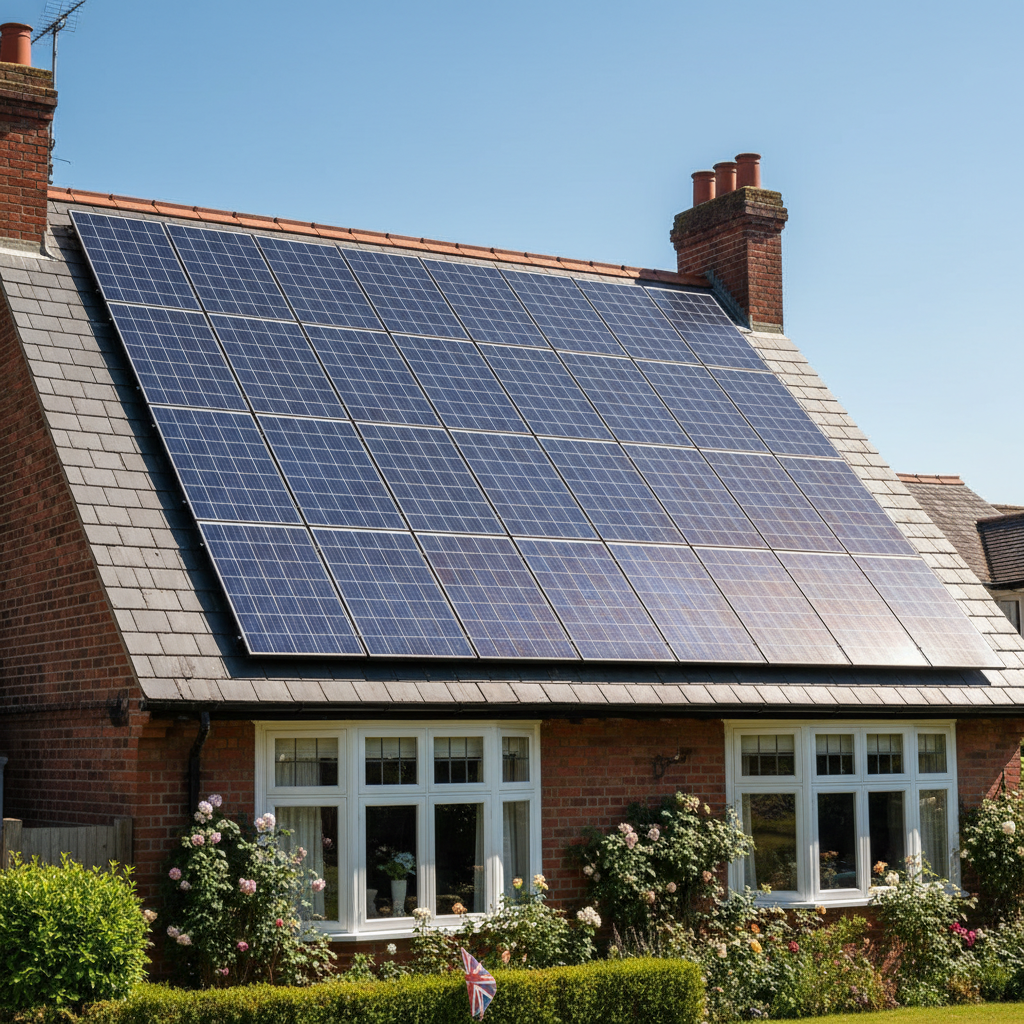
Solar photovoltaic panels turn daylight into free electricity. Funded properties can receive a full solar panel system, typically 6 to 12 panels, at no cost. Any electricity you generate but do not use is exported back to the grid and you receive a payment for it through the Smart Export Guarantee.
Combined with a battery storage system, solar panels can cover a significant portion of your annual electricity use. Bills for households with solar plus battery often fall by 60 to 80%.
Solar panels have a lifespan of 25 to 30 years and require minimal maintenance. Panels installed under funded schemes are fully certified, warranted, and registered with the relevant authorities so you can access export payments from day one.
Who qualifies: Properties with suitable roof aspect (south, east, or west facing), eligible household.
6. Room in Roof Insulation: For Homes With Converted Lofts
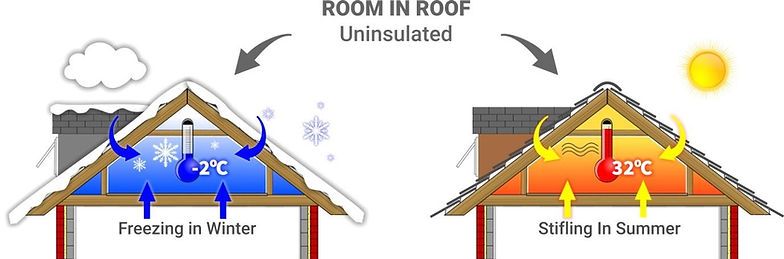
Standard loft insulation is laid on the floor of the loft. But if your loft has been converted into a room, whether a bedroom, office, or bathroom, the insulation needs to go between the rafters and under the sloped ceiling instead. This is room in roof insulation, and it is one of the most effective measures for older conversions.
Uninsulated room in roof spaces can account for significant heat loss, especially in older properties. Cold bedrooms in converted lofts are one of the most common comfort complaints in UK housing stock. Once insulated properly, the temperature difference is immediate and significant.
This measure is particularly valuable in two-storey homes where the loft room is used as a bedroom. Getting the temperature right in that space significantly improves comfort and reduces heating demand for the whole house.
Who qualifies: Properties with a converted loft that lacks proper insulation, EPC D to G, eligible household.
7. Smart Heating Controls
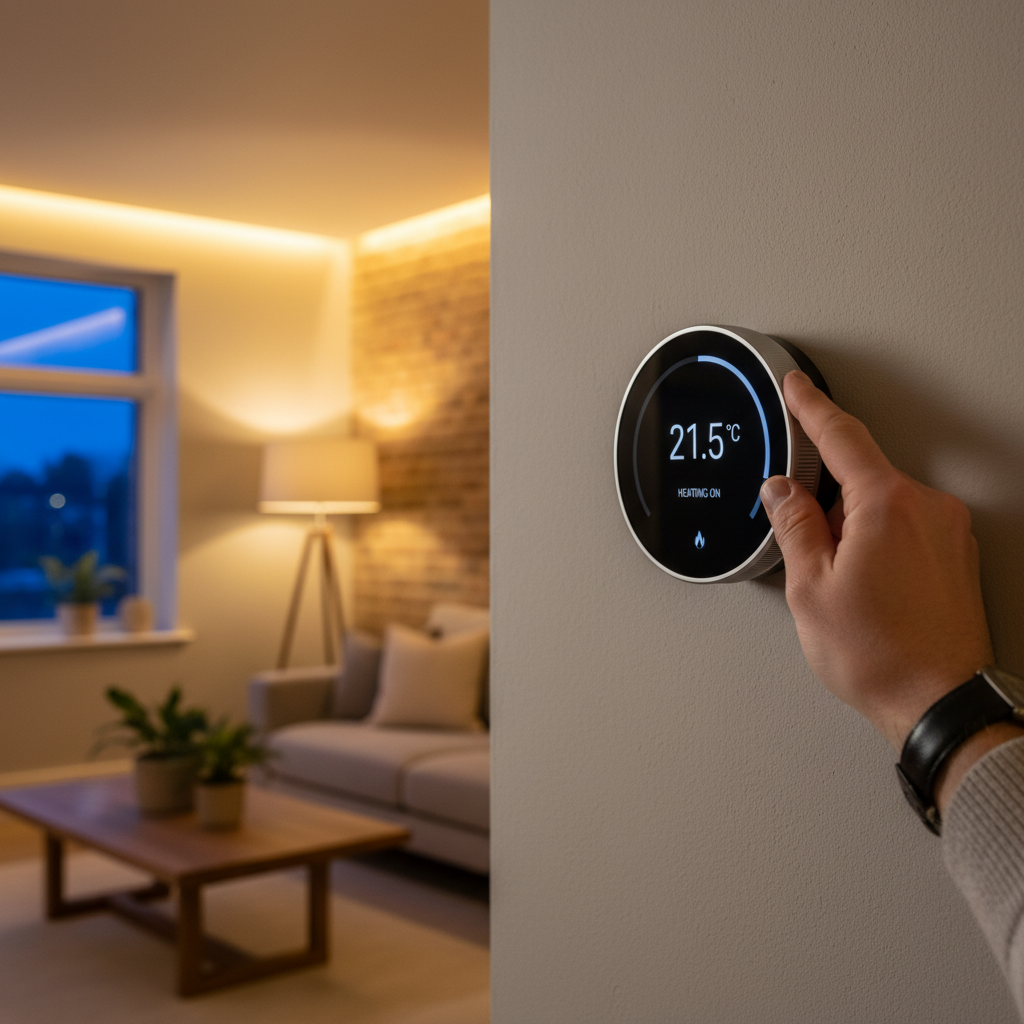
Smart heating controls allow you to manage your heating system remotely, set different temperatures for different rooms, and create schedules that match your actual routine rather than heating the whole house all day.
Studies consistently show that households using smart controls reduce their heating use by 10 to 30% without any reduction in comfort. The controls pay for themselves quickly, and for eligible households, the cost of supply and installation is covered entirely.
The latest systems include learning thermostats that adapt to your behaviour over time, zone controls that let you heat individual rooms independently, and integration with solar and battery systems so your heating runs on your own generated electricity whenever possible.
Who qualifies: Households with an existing compatible heating system, EPC D to G, eligible household.
Who Is Eligible for These Free Home Improvements?
Eligibility for funded home improvements is based on a combination of household income, property EPC rating, and location. The main qualifying routes are:
Warm Homes Plan: Households with a gross income of £36,000 or less, OR households in IMD deciles 1 to 2 (no income check required). Property must be EPC D to G. Grants of up to £30,000 are available.
Warm Homes: Local Grant: Delivered by local authorities, this route also targets households with income of £36,000 or less, or those in the lowest two income deprivation deciles. Property must be EPC D to G. Contact your local council to find out if funding is available in your area.
Both schemes cover England. Devolved equivalents exist in Scotland, Wales, and Northern Ireland with slightly different eligibility criteria.
Tenants can apply for Warm Homes Plan and Warm Homes: Local Grant funding with their landlord’s permission. Landlords can also apply directly and are fully funded for the first eligible property they put forward.
Apply Now While Funding Is Available
The Warm Homes Plan is running now, with funding available for eligible households across England. Installer capacity is limited and demand is high, so those who check their eligibility sooner are more likely to secure an early installation slot.
If you have not checked your eligibility yet, now is the time. It costs nothing, takes two minutes, and could unlock thousands of pounds of fully funded home improvements.
Get your free eligibility check from Cucumber Eco. No obligation, no commitment.
Frequently Asked Questions
Do I have to pay anything back?
No. These are grants, not loans. You pay nothing upfront and nothing afterwards. There is no repayment obligation of any kind.
How long does it take from application to installation?
It varies by measure and installer availability. Simple measures like loft insulation can be installed within weeks of a survey. More complex measures like heat pumps typically take 6 to 12 weeks from survey to installation.
Will the work disrupt my home?
Most measures are low disruption. Loft insulation, cavity wall insulation, solar panels, and smart controls cause minimal disruption. Internal wall insulation is more involved and will require some redecoration of the affected rooms.
Can I choose which improvements I want?
A survey will identify which measures your property needs and qualifies for. You can discuss the options with your assessor, but the funded package is determined by the survey results and scheme rules.
Is there a deadline to apply?
The Warm Homes Plan is running now. The Warm Homes: Local Grant runs to March 2028. Applying sooner is always advisable as installer capacity is limited.
Do landlords qualify?
Yes. Landlords can apply for funded improvements on their rental properties. The first property is typically fully funded. Subsequent properties may be partially funded depending on the scheme and local authority.