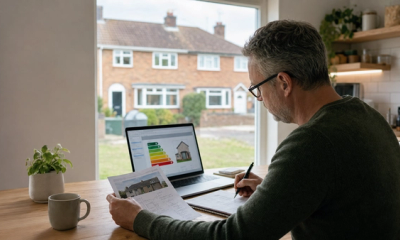
Energy bills have been punishing households across the UK. Free energy consultancy exists and could unlock thousands of pounds in funded home improvements, but most people have never heard of it. This guide explains everything you need to know.
Energy bills have been punishing households across the UK for years. Between rising wholesale gas prices, an ageing housing stock, and the creeping cost of keeping a home warm, millions of families are spending far more than they should on energy every single year. What most people do not know is that professional help is available, at no cost to them, through a service called free energy consultancy.
Free energy consultancy is not a gimmick or a sales tactic. It is a structured, professional service delivered by qualified energy advisors and funded through government grant schemes and energy company obligations. This article explains exactly what free energy consultancy is, who qualifies, what happens during a consultation, which schemes are currently available, and how to access the service today.
What Does Free Energy Consultancy Actually Mean?
Free energy consultancy is a professional assessment of a home by a qualified energy advisor, provided at no charge to the homeowner or tenant. The energy efficiency consultant reviews the property in detail, identifies where heat is being lost, calculates the potential savings from various improvements, and maps out exactly which funded measures the household qualifies for under current government schemes.
It is important to distinguish between a basic energy advice call and a full in-home assessment. A telephone or online advice service can tell you to turn down your thermostat or switch energy tariffs. That has its uses. But a full free energy consultancy involves a qualified energy advisor visiting the property, physically inspecting insulation levels, heating systems, glazing, and hot water provision, and then producing a personalised report that identifies specific funded upgrades and the likely impact on fuel bills.
The in-home assessment is the gold standard of free energy advice. It treats the property as a system, not a list of disconnected appliances, and it produces actionable recommendations rather than generic tips.
Why Is Energy Consultancy Available for Free?
The short answer is that the cost of the consultation is covered by the scheme, not the homeowner. Government grant programmes such as the Warm Homes Plan, the Warm Homes Local Grant, and the Boiler Upgrade Scheme all require a qualified energy advisor to assess properties before funded work can be approved and installed. That assessment is built into the cost of delivering the scheme.
Energy suppliers also fund free energy advice services as part of their regulatory obligations. Under the Energy Company Obligation framework, large energy suppliers are required to support vulnerable and low-income households with energy efficiency improvements. Funding advisor time and in-home assessments is a legitimate way for them to meet those obligations.
This is why genuine free energy consultancy exists and why it is not too good to be true. There is real money behind it, from government and from regulated energy companies, and the purpose is to get funded energy improvements into homes that need them most.
What Happens During a Free Energy Consultation?
A free energy consultancy follows a structured process. Here is what to expect at each stage:
- Initial eligibility check. Before booking an in-home visit, the advisor will run a quick check on income, the property's EPC rating, and postcode. This confirms which schemes are in play and whether a full assessment is worthwhile.
- In-home survey. The energy efficiency consultant visits the property and physically inspects insulation levels in the loft and walls, the age and condition of the heating system, the quality of glazing, and the hot water setup. They will also check for draughts and note the property construction type.
- EPC assessment. If the property does not have a current Energy Performance Certificate (EPCs are valid for 10 years), the advisor can carry out a new assessment. Many older properties have outdated or no EPC, and an accurate current rating is essential for accessing most funded schemes.
- Funding identification. Based on the survey data, the advisor maps the household against available schemes. This includes the Warm Homes Plan, the Warm Homes Local Grant, the Boiler Upgrade Scheme, and any relevant local authority or energy company funding streams. The report sets out which schemes apply and how much each measure could be worth.
- Measure recommendations. The advisor produces a ranked list of specific improvements, ordered by their likely impact on the energy bill and the upfront cost to the household. This gives homeowners a clear picture of where to start and what the biggest wins are.
- Installation coordination. If the household qualifies for funded improvements, the energy advisor connects them with certified installers. They manage the paperwork, scheme applications, and scheduling so that the homeowner does not have to navigate the system alone.
- Post-installation EPC. Once the work is complete, an updated Energy Performance Certificate is produced and lodged on the national register. This is important for the homeowner's records, for any future sale of the property, and for demonstrating compliance with scheme requirements.
Who Qualifies for Free Energy Consultancy?
Eligibility for free energy consultancy is broader than most people expect. The following groups are typically in scope for a full funded assessment:
- Homeowners with an EPC rating of D, E, F or G. Most funded schemes require the property to be below a C rating, meaning there is genuine room for improvement.
- Private renters with landlord permission. Tenants living in cold, inefficient homes can access free energy advice and, with the landlord on board, may be able to unlock funded improvements to the rental property.
- Households with an income under £36,000 per year. This is the income threshold for the Warm Homes Plan. Income is assessed at the household level across all adult earners.
- Properties in IMD deprivation deciles 1 or 2. The Index of Multiple Deprivation measures local area disadvantage. Households in the most deprived postcodes can qualify for the Warm Homes Plan without any income test at all.
- Properties off the gas grid. Homes that rely on oil, LPG, or electric heating are among the most expensive to run and are frequently prioritised for funding.
- Landlords with rental properties below EPC C. With the government's proposed Minimum Energy Efficiency Standards requiring all new tenancies to meet EPC C by 2030, landlords have a strong incentive to understand their options now. A free energy consultancy can map the route to compliance and identify available funding.
What Improvements Can Be Recommended and Funded?
A free energy consultancy can identify and help access funding for a wide range of home improvements. The specific measures available depend on the property type, current EPC rating, and which scheme the household qualifies for. Common funded measures include:
- Loft insulation. One of the most cost-effective upgrades available, capable of reducing heat loss through the roof by up to 25 per cent.
- Cavity wall insulation. Suitable for properties built with a cavity between two layers of brick, typically post-1920 construction.
- Internal wall insulation. For solid wall properties, typically Victorian or Edwardian homes, where cavity wall insulation is not possible. Internal insulation boards can significantly improve thermal performance.
- Air source heat pumps. Available through the Boiler Upgrade Scheme with a £7,500 grant and no income test. Heat pumps extract warmth from outdoor air and are significantly more efficient than gas or oil boilers.
- Solar PV panels. Generate electricity from daylight, reducing reliance on grid energy and providing ongoing savings on electricity bills.
- Battery storage. Allows solar-generated electricity to be stored and used when the sun is not shining, maximising the value of a solar PV installation.
- Smart heating controls. Programmable and remotely controllable thermostats that allow households to heat only when and where needed.
- First-time central heating. For properties that have never had a gas or electric central heating system, installation can be funded for eligible households.
The Warm Homes Plan: Up to £30,000 in Fully Funded Upgrades
The Warm Homes Plan is the current flagship government scheme for improving the energy efficiency of low-income and lower-rated homes. It offers up to £30,000 of funded home improvements per property, covering insulation, heating upgrades, solar panels, and associated measures. This is not a loan. There is nothing to repay.
To qualify, the household must meet one of two criteria. Either the combined household income must be £36,000 per year or below, or the property must be located in a postcode falling within IMD deprivation deciles 1 or 2. In the latter case, there is no income test at all. In both cases, the property must currently hold an EPC rating of D, E, F or G.
The scheme covers a broad range of measures, which means a single property could see multiple improvements installed as part of one funded project. For example, a cold terraced house with inadequate loft insulation, solid walls, and an ageing boiler could potentially have internal wall insulation, loft top-up, solar panels, and smart controls all funded in one go.
Free energy consultancy is the gateway to the Warm Homes Plan. A qualified energy advisor will assess the property, confirm eligibility, calculate the likely funding package, and manage the application process.
The Boiler Upgrade Scheme: £7,500 Towards a Heat Pump
The Boiler Upgrade Scheme (BUS) provides a £7,500 grant towards the installation of an air source heat pump in England and Wales. Unlike the Warm Homes Plan, the BUS has no income test. It is open to any eligible homeowner, regardless of earnings.
The grant is deducted from the installer invoice before the homeowner pays, so there is no need to claim money back or wait for a reimbursement. The homeowner simply pays the reduced amount at the point of installation.
The BUS is accessed through Ofgem-registered installers, and a free energy consultancy can help identify whether a heat pump is the right choice for a particular property, whether the existing insulation levels are adequate to make the heat pump efficient, and which registered installers are available in the local area.
In some cases, the BUS can work alongside the Warm Homes Plan. A household might use Warm Homes Plan funding to insulate the property first, and then apply for the BUS to upgrade the heating to a heat pump once the fabric of the building is in good enough shape to make that viable.
The Warm Homes Local Grant: Delivered Through Your Local Authority
The Warm Homes Local Grant is a parallel funding stream delivered by local authorities rather than centrally by government. It targets fuel-poor households and low-income owner-occupiers and private renters, and it runs through to March 2028. Eligibility criteria and the specific measures available can vary by local authority, which is one more reason why a free energy consultancy service with knowledge of local funding is so valuable.
A good energy advisor will be aware of what is available in a given area and can layer local grant funding on top of national schemes where that is possible, maximising the total value of improvements the household receives.
How Is Free Energy Consultancy Different From a Sales Visit?
This is an important distinction and one that genuinely matters. A free energy consultancy from a qualified, impartial energy advisor is not the same as a sales visit from a company trying to sell you a specific product.
In a genuine free energy consultancy, the advisor has no financial interest in recommending any particular measure or installer. Their job is to assess the property objectively, identify what it actually needs, and explain which funded routes are available. If the household does not qualify for funding, a good energy consultant will say so clearly rather than pushing a sale anyway.
This impartiality is what gives free energy advice its real value. Homeowners can trust that the recommendations they receive are genuinely in their interest, not driven by installer margins or product commissions. Look for energy advisors who hold recognised qualifications and who are transparent about how the service is funded.
Signs of a reputable free energy consultancy include a clear explanation of which schemes the advisor works with, no pressure to make a decision on the day, written recommendations following the visit, and the ability to arrange your own installer if you prefer.
How to Access Free Energy Consultancy
Accessing a free energy consultancy is straightforward. Here are the steps:
- Check your EPC rating. Visit epcregister.com and enter your postcode. If your property has an EPC, you will be able to see its rating and when the certificate was issued. If the certificate is more than 10 years old or does not exist, this will be confirmed during your free consultation.
- Check your postcode on the IMD map. The government publishes deprivation data by postcode. If your area falls within deciles 1 or 2 on the Index of Multiple Deprivation, you may qualify for the Warm Homes Plan without any income check.
- Contact a qualified energy consultancy. Visit cucumbereco.co.uk to speak with a qualified energy advisor. They will talk through your situation and confirm whether a free in-home assessment is appropriate.
- Book your free in-home assessment. The visit typically takes between one and two hours. The advisor will inspect the property, review documents such as energy bills, and gather the information needed to produce your personalised report.
- Review your personalised funding report. Following the visit, you will receive a written report setting out which improvements are recommended, which schemes you qualify for, the estimated cost to you (which may be zero), and the likely impact on your annual energy bill.
Take Action While Funding Is Available
Energy bills are high, homes are cold, and most people have no idea that professional, funded advice is available to them at no cost. Free energy consultancy exists precisely to bridge that gap. It connects households with the funding they are entitled to, identifies the improvements that will make the biggest difference, and guides the process from assessment through to installation.
The Warm Homes Plan, the Warm Homes Local Grant, and the Boiler Upgrade Scheme represent a genuine and significant pot of money for eligible households. But the window does not stay open indefinitely. Scheme budgets are finite, the Warm Homes Local Grant runs to March 2028, and demand for funded improvements is rising.
A free consultation costs nothing but an hour of your time. If your home is EPC D or below, or if your household income is under £36,000, the conversation is worth having. Visit cucumbereco.co.uk today to find out whether you qualify and to book your free energy assessment.