From April 2026 the £7,500 Boiler Upgrade Scheme grant covers air to air heat pumps for the first time. This complete guide explains what they cost, how much you save against electric, oil, LPG and gas heating, and whether they are right for your home in 2026.
Until April 2026 the £7,500 Boiler Upgrade Scheme was reserved for air to water and ground source heat pumps. Air to air systems, the type that look and feel like a high specification air conditioning unit, were excluded from grant funding even though they deliver the same low carbon heating outcome at a fraction of the install cost. That has now changed. Following the most significant overhaul of the scheme since its launch, air to air heat pumps are eligible for the full £7,500 grant alongside the long standing routes, and for many UK households this opens up the cheapest and fastest way to switch off fossil fuel heating in 2026.
This guide covers everything you need to know about air to air heat pumps under the new rules. What they are, how they work, what they cost to install and run, who they suit best, who should still look at air to water, and how to make the most of the funding now available.
What Is an Air to Air Heat Pump?
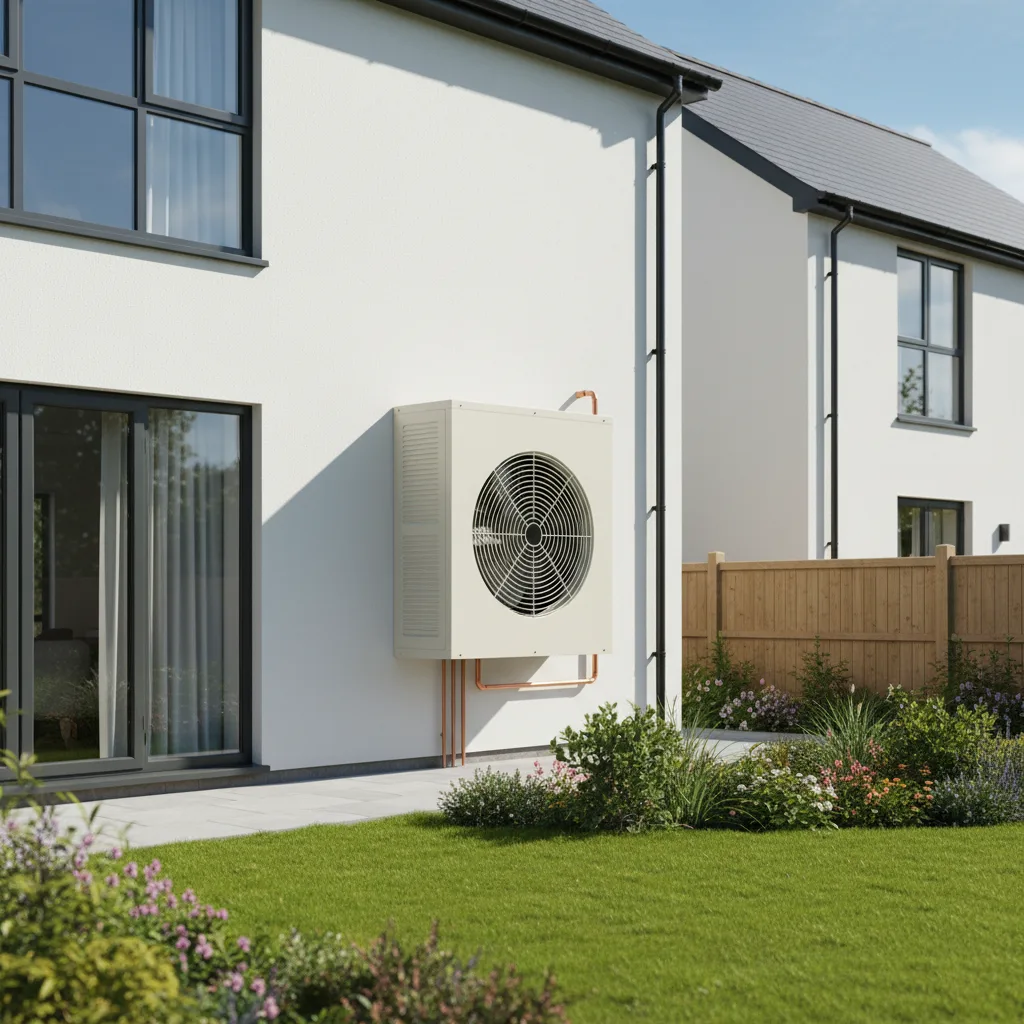
An air to air heat pump moves heat from outside the building into the rooms you live in by passing refrigerant through an outdoor unit and one or more indoor wall mounted, ceiling mounted or floor mounted units. The indoor units blow warm air directly into the room, in much the same way that a modern air conditioning system can deliver cool air. In fact most air to air heat pumps are reverse cycle units, meaning they can heat in winter and cool in summer from the same hardware.
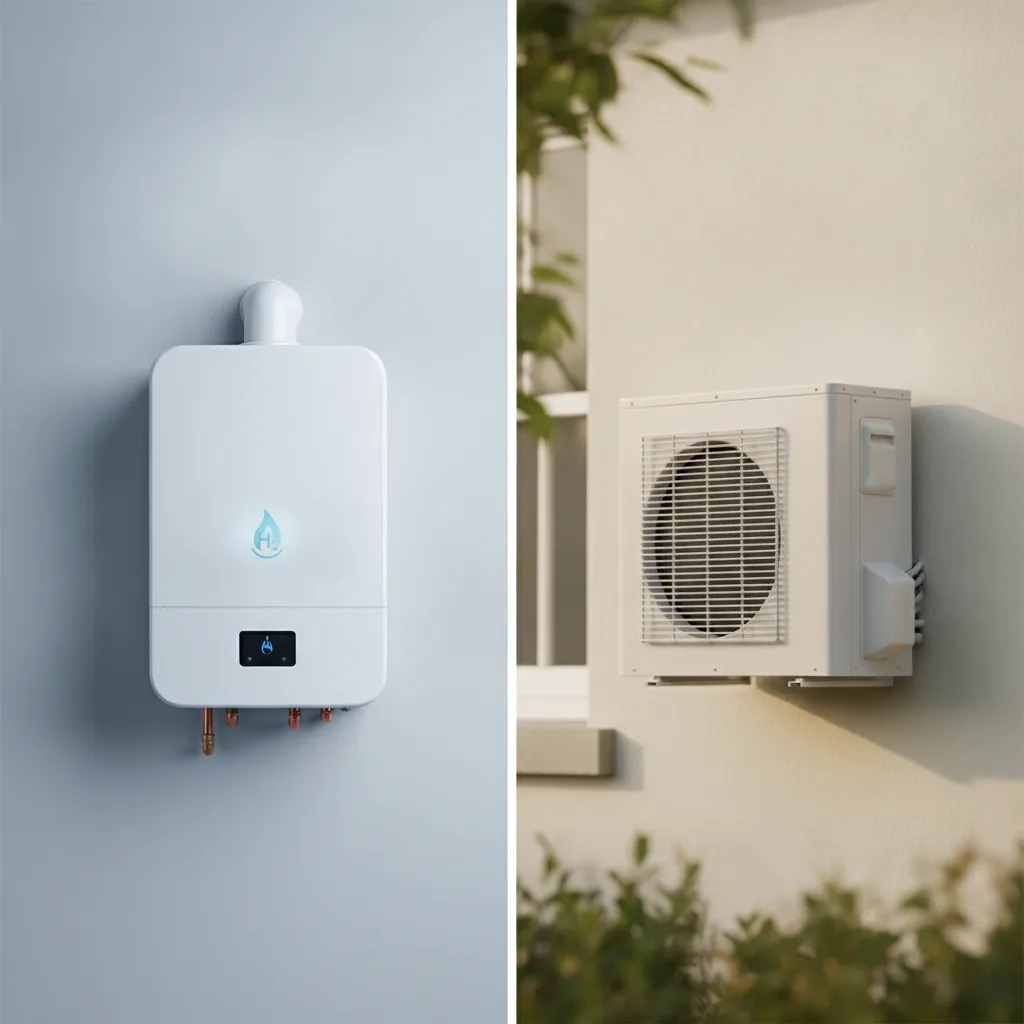
The key difference between air to air and air to water is what the system delivers heat to. An air to water heat pump heats a tank of water that then circulates through radiators or underfloor heating, exactly like a boiler. An air to air system skips the water loop entirely and delivers heated air straight into the room.
Because there is no water circuit, no cylinder is required for space heating, no radiators are required, no pipework runs through the floor and no buffer tank is needed. Installation is faster, less invasive, and considerably cheaper than a like for like air to water swap.
Why the April 2026 Boiler Upgrade Scheme Reform Matters
The Boiler Upgrade Scheme has been the headline grant for low carbon heating since 2022. It pays £7,500 toward an air source heat pump or a biomass boiler in eligible off gas grid properties. There is no income test and no EPC band requirement, which makes it the most accessible grant on the market.
Three changes took effect in April 2026.
The first is that air to air heat pumps are now eligible for the same £7,500 payment as air to water systems. This had been the single largest gap in the scheme since launch. The Climate Change Committee, the Energy Saving Trust, and several MCS bodies had all argued that excluding air to air was holding back uptake in flats, smaller properties, and homes where ripping out radiators was disproportionate. The Department for Energy Security and Net Zero accepted the case in late 2025 and confirmed the change as part of the spring 2026 amendments.
The second change is the removal of the previous EPC requirement. Until April 2026 a property had to have valid loft and cavity wall insulation recommendations addressed before a grant would be approved. This created delays of weeks or months while owners commissioned the additional measures. From April 2026 the EPC pre work requirement has been scrapped. The grant can now be applied for directly without holding it up behind insulation surveys.
The third change is a budget uplift. The 2026 to 2028 budget was increased to £1.5 billion to support higher install volumes, with installer payments now released within ten working days of MCS commissioning sign off.
These three changes taken together mean that air to air heat pumps with the new £7,500 grant typically cost the homeowner less out of pocket than a new combi boiler swap. For the right property, the maths is now genuinely compelling.
What Does an Air to Air Heat Pump Cost in 2026?
Costs depend on the number of indoor units required, the layout of the property, the brand and the complexity of the install. As a general guide for a mid range MCS approved system the following ranges apply.
For a single zone install, where one outdoor unit serves a single indoor head in one room, expect £2,500 to £4,500 fitted before grant. After the £7,500 grant the homeowner contribution is zero, with the surplus typically covering one or two additional rooms.
For a multi split serving three to five rooms from one outdoor unit, expect £6,500 to £11,000 fitted before grant. After the £7,500 grant the homeowner contribution is between zero and £3,500.
For a whole house multi zone system in a four bedroom detached property serving six to eight rooms, expect £12,000 to £18,000 fitted before grant. After the £7,500 grant the homeowner contribution is £4,500 to £10,500.
For comparison, an air to water heat pump with new radiators and a hot water cylinder for the same four bedroom detached property typically lands at £14,000 to £22,000 fitted before grant, with the homeowner contribution at £6,500 to £14,500 after the same £7,500 payment.
The smaller the property and the lower the heat demand, the better air to air looks against air to water on both install cost and disruption.
Running Costs Compared to Other Heating Types
The case for air to air on running costs depends entirely on what you are switching from. The numbers below are based on October 2026 cap pricing of around 24p per kWh for electricity, 6.5p per kWh for gas, around 8p per kWh equivalent for heating oil, and around 11p per kWh equivalent for LPG.
Switching from direct electric panel heaters or storage heaters delivers the largest saving. A SCOP of 4.0 air to air system uses one quarter of the electricity that direct resistance heating uses for the same heat output. For a typical two bedroom flat using £1,400 a year on direct electric heating, the air to air system runs at around £350 a year, an annual saving of just over £1,050.
Switching from heating oil delivers the second largest saving. Oil heating in a typical three bedroom semi runs at around £1,800 a year. An air to air system covering the same heated space lands at around £900 to £1,100 a year, an annual saving of £700 to £900.
Switching from LPG delivers similar savings to oil, sometimes higher. A typical three bedroom semi on LPG runs at £2,000 a year, with the air to air equivalent at £900 to £1,150, an annual saving of £850 to £1,100.
Switching from mains gas is the closest comparison and the most nuanced. A modern gas combi running at 88% efficiency in a well insulated home costs around £950 a year for heating in a three bedroom semi. An air to air system in the same property lands at £850 to £1,000 a year. The headline saving is small, often within £100 either way, but the carbon saving is substantial, the cooling capability is included free, and the grant covers most of the install cost.
Who Air to Air Suits Best
Four scenarios in particular play to the strengths of air to air heat pumps.
The first is flats and apartments. Air to air installs need only a single small outdoor condenser, which can usually be wall mounted on a balcony or external wall with the freeholder's consent, plus one or two slim indoor units. There is no need for a hot water cylinder for space heating, no need to break into communal pipework, and no need for radiators. For one and two bedroom flats the system can often be installed and commissioned in a single day.
The second is single storey bungalows. The straight runs from outdoor to indoor unit are short, the heat demand per indoor unit is low, and the lack of upper floors means a multi split system can serve the entire property efficiently from one outdoor unit.
The third is properties currently heated by direct electric, storage heaters, or underused central heating. The running cost saving against direct electric is so large that the pay back on the homeowner contribution is typically under three years, sometimes under two. Storage heater replacement is the single highest impact retrofit available in many older flats and ex council properties.
The fourth is off gas grid properties heated by oil or LPG. Where the existing radiators are old or undersized, where the cylinder is at end of life, and where no internal pipework needs preserving, ripping out the wet system entirely and switching to air to air can cost less than a like for like oil boiler replacement after the grant.
Who Should Still Look at Air to Water
Air to air is not the right answer in every property. Three scenarios in particular still favour air to water.
The first is large family homes with existing wet central heating in good condition. If the radiators are correctly sized for low flow temperatures, or can be upsized, retaining the wet system and adding an air to water heat pump usually delivers a better through life outcome. The radiators are silent, the heat is even, and the existing distribution can be preserved.
The second is properties with high hot water demand. Air to air does not heat hot water directly. If hot water demand is high, a separate heat pump cylinder, an electric immersion, or a small dedicated air source water heater is needed. Air to water systems integrate hot water and space heating in a single unit, which is simpler for households with multiple bathrooms.
The third is heritage and listed properties. Wall mounted indoor heads can be visually intrusive in rooms with original cornicing, picture rails, or panelled walls. In these properties a discreet underfloor or upgraded radiator wet system fed by an air to water heat pump usually preserves the interior better.
Hot Water Options Alongside Air to Air
Because air to air does not produce hot water for taps, a separate solution is required. Three options dominate.
The cheapest and simplest is to retain an existing gas combi solely for hot water. This is permitted under the new rules and can be sensible as a transition strategy for one to two years while the rest of the home is decarbonised. Running costs for hot water alone on a modern combi are around £150 to £250 a year for a typical three bedroom home.
The second option is a dedicated air source hot water cylinder, sometimes called a heat pump cylinder or a hot water heat pump. These standalone units use the same heat pump principle to heat a 200 to 250 litre cylinder. Installed cost is typically £2,500 to £4,000. Running cost is around £200 to £300 a year for a four person household.
The third option is direct electric immersion heating, often paired with a smart tariff to heat the cylinder overnight on the cheapest unit rate, then top up during the day with solar PV if fitted. Running cost is around £350 to £550 a year depending on tariff and usage.
For households with solar PV plus battery, direct immersion heating with smart diversion is often the lowest running cost option overall.
Cooling Capability
Almost every air to air heat pump on the UK market is reverse cycle, meaning the same outdoor unit can deliver cool air in summer at the flick of a button. As UK summers get hotter and bedrooms increasingly fail to drop below comfortable sleeping temperatures overnight, this is becoming a meaningful secondary benefit rather than a luxury.
Running cost for cooling is typically lower than running cost for heating because outdoor temperatures are closer to indoor target temperatures. A typical three bedroom home running an air to air system in cooling mode for the hottest two months of summer adds around £80 to £120 to the annual electricity bill.
This is one cost that simply cannot be replicated by a gas boiler, an oil boiler, or an air to water heat pump.
How the New Grant Application Works
Under the post April 2026 rules the grant journey is significantly faster than before.
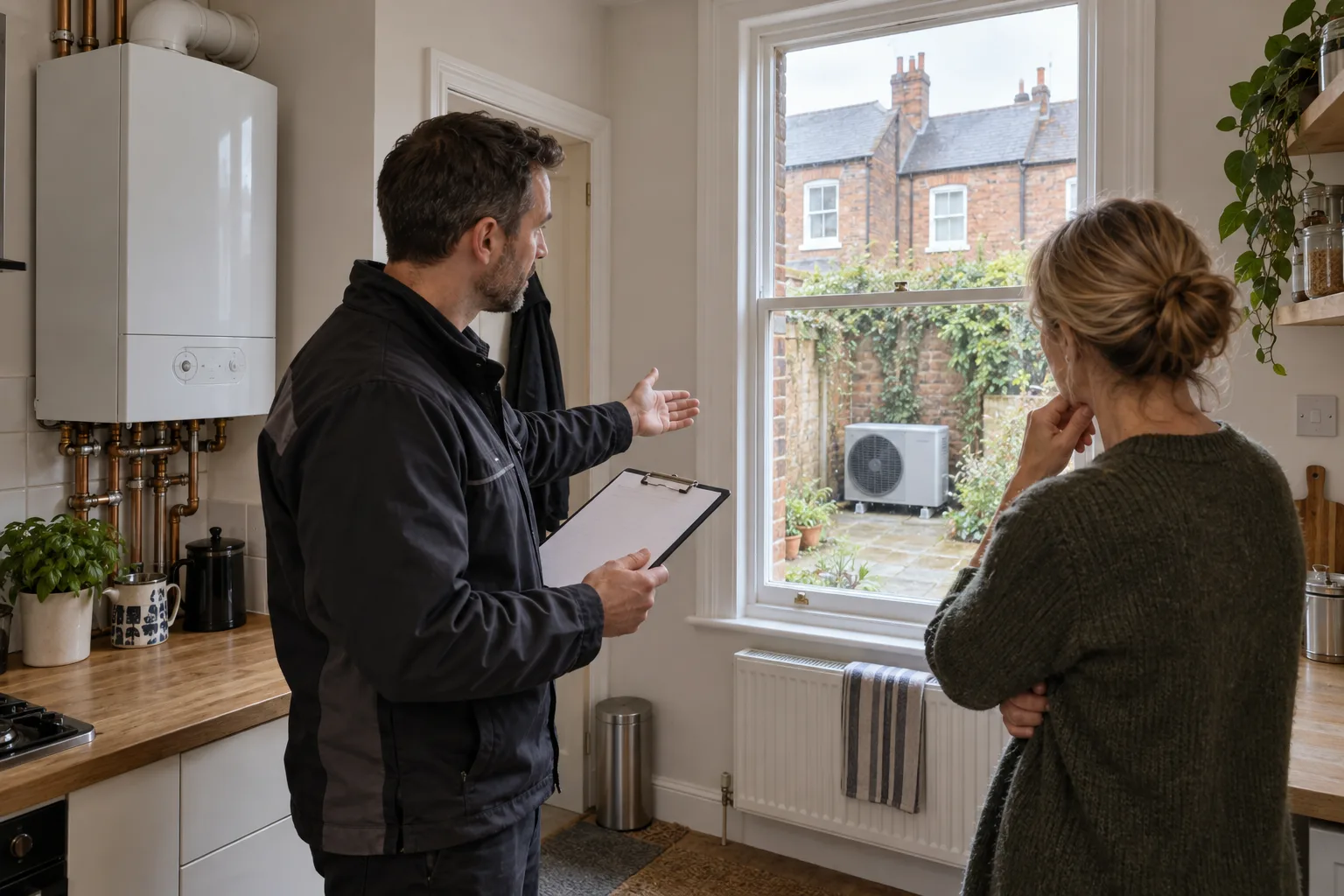
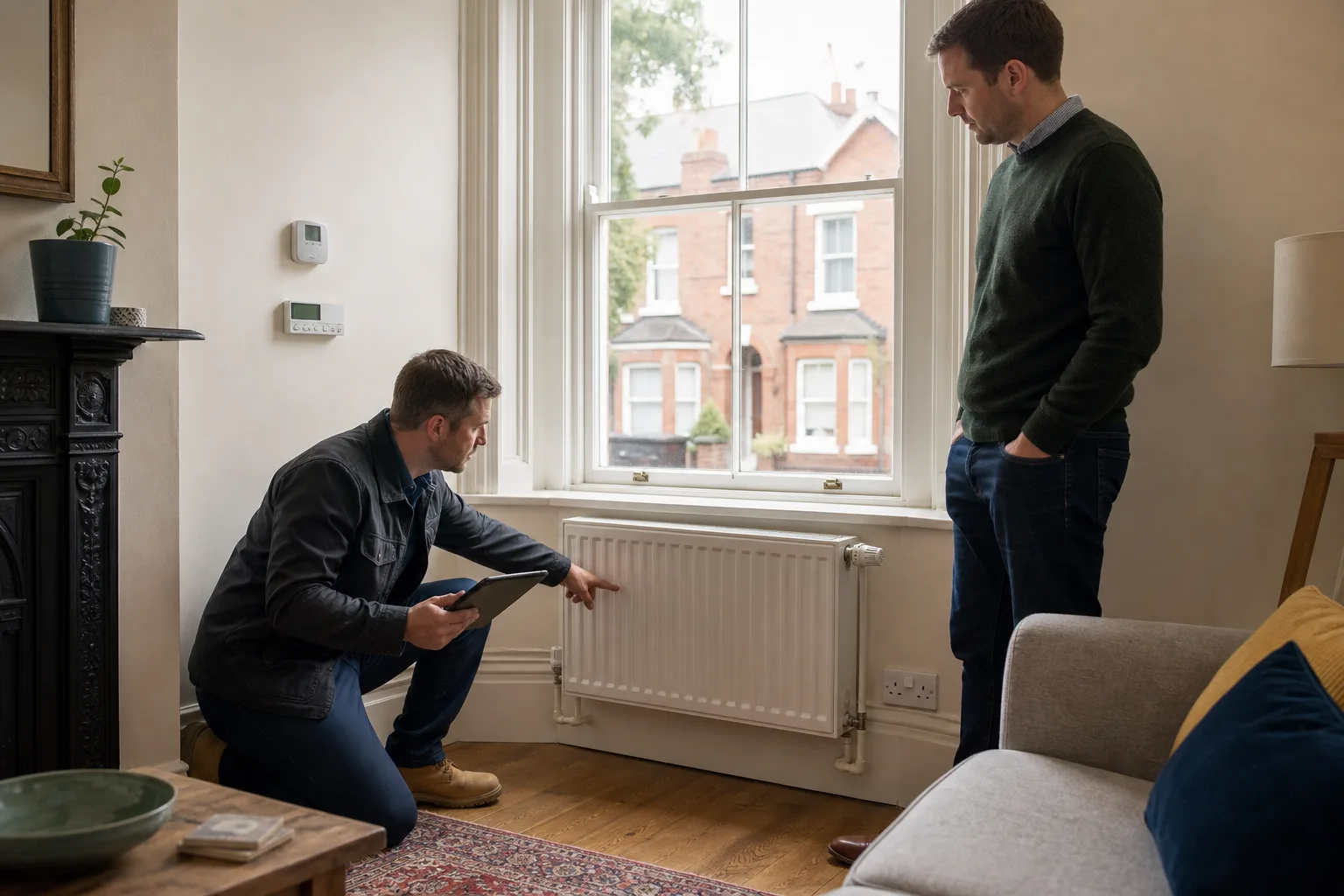
Step one is the home survey. An MCS accredited installer visits the property, assesses heat loss, agrees the indoor unit positions, and quotes for the work.
Step two is the grant application. The installer submits the application to Ofgem on the homeowner's behalf. There is no longer a requirement to demonstrate insulation upgrades have been completed, which removes the previous bottleneck.
Step three is grant approval. Approval is typically issued within 10 working days under the new processing timeline.
Step four is install and commissioning. Most air to air installs are completed in one to three days depending on the number of indoor units.
Step five is MCS sign off and grant payment. The £7,500 is paid directly to the installer, who deducts it from the homeowner invoice. The homeowner only ever pays the net figure.
For households without the ability to pay the balance up front, several MCS installers now offer 0% finance through third party providers, subject to status. This is offered on an introducer basis only and is fully FCA regulated.
How Air to Air Fits with the Warm Homes Plan
The £7,500 Boiler Upgrade Scheme is one of three main funded routes for low carbon heating in 2026. It runs alongside the Warm Homes Plan and the Warm Homes Local Grant.
The Warm Homes Plan is the largest of the three. It offers up to £30,000 of funding per eligible household for a whole house upgrade including insulation, heating, ventilation, and renewables. Eligibility is based on household income at or below £36,000, or a property in Index of Multiple Deprivation deciles one or two, with an EPC of D to G. Where a household qualifies, air to air heating can be funded as part of the whole house package without the £7,500 cap of the Boiler Upgrade Scheme.
The Warm Homes Local Grant runs to March 2028 and is administered by local authorities. Eligibility and measure mix vary by area but air to air is now broadly accepted under the same April 2026 changes that brought it into the Boiler Upgrade Scheme.
The Boiler Upgrade Scheme is available for eligible installations in England and Wales, subject to the property, technology and installer rules. Residential air-to-air installations have a £2,500 grant category. An MCS-certified installer applies; see Ofgem's current guidance.
How Air to Air Performs Under the Home Energy Model in 2027
The Home Energy Model is the new EPC methodology arriving in the second half of 2027. It replaces the current SAP based EPC with a four metric system measuring fabric efficiency, heating system efficiency, smart readiness, and energy cost. The reformed certificates will be valid for ten years from the date of issue.
Under the current SAP based EPC, gas boilers achieve a higher rating than electric heating systems on a like for like fabric basis because electricity is priced higher than gas per kWh in the model's standard cost assumptions. This penalises heat pumps and rewards gas, which is widely accepted as one of the methodology's biggest weaknesses.
The Home Energy Model corrects this by separating the heating system efficiency metric from the energy cost metric. A heat pump with a SCOP of 3.5 or higher will score green on the heating system metric. A gas boiler will not. For landlords this matters because the Minimum Energy Efficiency Standard tightens to a C minimum from October 2030. Under the reformed methodology, properties with gas boilers and no fabric upgrade will struggle to reach C, while properties with heat pumps will reach C far more easily.
Air to air heat pumps with a SCOP of 4.0 or higher, which is achievable with most modern multi split systems in a reasonably insulated property, score very strongly under the heating system metric. For landlords with smaller properties, flats, or off gas grid stock, air to air is now arguably the most cost effective route to a C rated portfolio by 2030.
Common Mistakes to Avoid
Five mistakes come up repeatedly when households are evaluating air to air systems.
Undersizing the outdoor unit to save on cost. A correctly sized outdoor unit is the difference between a system that hits its rated SCOP and a system that runs hard, cycles often, and burns through compressors prematurely. Always size to the actual heat loss of the property, not to the cheapest available kit.
Treating it as air conditioning rather than heating. Air to air heat pumps are heating systems first and cooling systems second. The system controls, the indoor unit positions, and the commissioning settings should all be optimised for winter heating. Cooling is a free secondary benefit, not the primary use case.
Ignoring hot water in the planning. Hot water is a separate decision and one that needs answering before install day, not after. Always finalise the hot water solution as part of the design.
Over installing indoor heads. Most properties do not need an indoor head in every room. Bedrooms can often share a unit on a hallway or landing position with adequate door circulation. Cutting two indoor heads from the design typically saves £1,000 to £1,800.
Choosing a non MCS installer to save on cost. The £7,500 grant requires MCS commissioning. Saving £500 on a non MCS install loses £7,500 on the grant. Always confirm MCS accreditation before committing.
Frequently Asked Questions
Are air to air heat pumps eligible for the £7,500 Boiler Upgrade Scheme grant? Yes, from April 2026. They were excluded until that point. The full £7,500 is now available under the same rules as air to water systems.
Do I need an EPC to apply for the grant? No. The previous EPC pre work requirement was removed in April 2026. The grant can be applied for directly with no insulation prerequisite.
Can I keep my existing gas boiler for hot water? Yes. Many households retain a combi boiler for hot water only as a transition. This is permitted and can be a sensible interim arrangement.
How disruptive is the install? Less disruptive than any other heating change. There are no radiators to remove, no pipework runs through floors, no cylinder upgrade needed. Most installs complete in one to three days.
Will an air to air heat pump cool my home in summer? Yes. Almost every model on the UK market is reverse cycle and can deliver cooling at the flick of a button.
Is air to air suitable for a flat? Yes. Flats are one of the strongest use cases. Single outdoor unit, slim indoor units, fast install, and the lowest install cost of any heat pump option.
Will it heat my whole house in winter? Yes, provided the system is correctly sized to the heat loss of the property and the indoor units are correctly positioned. A multi split with three to five indoor heads can comfortably heat a typical three bedroom semi.
Get a Free Air to Air Heat Pump Assessment
Cucumber Eco offers a free no obligation home assessment for any household considering an air to air heat pump under the new April 2026 grant rules. Our consultants will confirm eligibility for the £7,500 Boiler Upgrade Scheme, check whether the Warm Homes Plan or Warm Homes Local Grant offers a better route for your circumstances, model the installed cost and the running cost, and provide a fully MCS compliant quote with any 0% finance options that may apply.
Book your free consultation at cucumbereco.co.uk and one of our team will be in touch within one working day.
Factual corrections checked 11 September 2026. Original publication date retained.