From 28 April 2026 hybrid heat pumps are no longer eligible for the £7,500 Boiler Upgrade Scheme grant. Here is what changed, why it matters for gas heated homes, where hybrids still make sense, and the lower cost routes worth considering before you commit.
Heat pump policy in the United Kingdom has shifted again. From 28 April 2026, the Boiler Upgrade Scheme (England and Wales) (Amendment) Regulations 2026 confirmed that fossil fuel hybrids are not eligible for the £7,500 grant. The change has not been widely covered, but it has sharp implications for any homeowner currently weighing a partial transition to a heat pump while keeping their gas boiler in place.
If you have been told that a hybrid system is the cheaper, easier route into low carbon heating, you need to read this before you sign anything.
This guide covers what a hybrid actually is, what changed in April 2026, why the policy moved, where hybrids still make sense for a small minority of homes, and the funded alternatives that almost always work out better for households on the gas grid in 2026.
What is a hybrid heat pump?
The Microgeneration Certification Scheme defines a hybrid as a heat pump that operates alongside a supplementary heat source under a single master controller. In almost every domestic case in the United Kingdom, that supplementary source is a gas combi or system boiler.
The system runs in two or three modes. In mild and moderate weather the heat pump handles the heat load on its own. As outdoor temperature drops, a control logic decides when the gas boiler should take over or run alongside the heat pump. The point at which the boiler kicks in is called the bivalent point.
Hybrid configurations come in two flavours. A factory matched hybrid is sold as a single product, with the heat pump and boiler designed to work together by the manufacturer. A retrofit hybrid pairs a brand new heat pump with an existing gas boiler that you already own. Both arrangements share the same regulatory status under the Boiler Upgrade Scheme from 28 April 2026 onwards.
What changed on 28 April 2026
The Boiler Upgrade Scheme Amendment Regulations 2026 came into force on 28 April 2026. The headline updates that most homeowners have heard about are the £2,500 grant for air to air heat pumps and the removal of the EPC requirement before installation. Less reported, but just as important, is the explicit confirmation that hybrids remain ineligible.
Ofgem property owner guidance version 5 sets it out plainly. Heat pumps installed alongside a separate fossil fuel boiler, including retrofit hybrids, and heat pumps that include an integrated fossil fuel boiler such as gas or oil, are ineligible for the Boiler Upgrade Scheme. You cannot keep a fossil fuel heating system alongside a BUS funded installation.
In practice this means three things.
- If you install a heat pump under the BUS, your gas boiler must be removed at the point the heat pump goes live. The grant cannot fund a system that is designed to keep a gas backup in place.
- If a hybrid was previously sold to you as a £7,500 funded option, that promise no longer stands from 28 April 2026.
- The Boiler Upgrade Scheme is now, in effect, a full electrification grant only. Air to water, air to air, ground source, and water source heat pumps qualify. Hybrid combinations do not.
The Boiler Upgrade Scheme remains funded through to March 2030, with a total budget of £2.7 billion confirmed under the Warm Homes Plan. The scheme has not shrunk, it has just sharpened its focus.
Why did the policy change
The official line is that the BUS exists to reduce dependence on fossil fuels for home heating. A hybrid keeps the gas boiler in the loop. That conflicts with the scheme's purpose, even when the heat pump does most of the work in mild weather.
Three practical reasons sit underneath the policy.
Real world running splits often favour the boiler
Without rigorous controls and a competent installer, hybrid systems can default to the gas boiler far more than the design assumes. Once the heat pump has to compete with a cheaper unit cost of gas at 5.7p per kWh against electricity at 24.7p per kWh under the April 2026 Ofgem cap, the system controller often hands work to the boiler at flow temperatures that the heat pump could handle perfectly well. The promise of low carbon heating then gets quietly diluted.
Carbon savings are smaller than headline figures suggest
A heat pump fully replacing a gas boiler delivers most of the lifetime carbon saving in the first heating season. A hybrid might cut emissions by between 40 and 60 per cent depending on how the system is set up, the building fabric, and how the controller is configured. The Boiler Upgrade Scheme is paid for by levy money. Spending £7,500 of public funds to capture a partial saving when the same money could fund a complete switch on a different property is hard to justify from a programme value perspective.
The Home Energy Model is coming
From the second half of 2027 the Home Energy Model replaces SAP for new and existing dwellings under a four metric system covering fabric performance, heating system, smart readiness, and energy cost. Hybrid systems perform inconsistently under the new heating system metric because the rating reflects the actual fuel split delivered in real homes. Funding hybrids in 2026 would risk leaving owners with a property that loses its heating system credit in 2027 when the assessment changes.
Where hybrids still legitimately make sense
A hybrid is not pointless. There are still narrow situations where a bivalent system is the right answer for a household. The funding question simply has to be decoupled from the engineering question.
Very large or hard to insulate properties on the gas grid
For a home with a peak heat loss above 24 kW, fitting a single heat pump can be either physically difficult or commercially unattractive. Two heat pumps in cascade are increasingly common, but a single 12 kW heat pump alongside an existing boiler can sometimes be the most realistic short term step where total full electrification is genuinely impractical for now.
Phased retrofits where fabric work happens after heating
If a household needs to install heating quickly but is committed to a deep insulation upgrade in the following year or two, a hybrid can buy time. The heat pump handles most of the load in mild weather while fabric works progresses. Once insulation is in place, the bivalent point drops and the boiler switches off. The homeowner can then commission the installer to remove the boiler and convert the system to heat pump only.
Off gas grid hybrids using oil are different
Some manufacturers sell hybrid systems that pair a heat pump with an oil boiler in off gas grid homes. These are also ineligible for the BUS in 2026, but the case for the off gas grid hybrid is even weaker because the alternative is a £7,500 grant for a fully electric heat pump plus a temporary uplift to £9,000 for oil and LPG households under the April 2026 amendment regulations. If you are off gas, take the higher grant and electrify completely. The numbers almost always work.
What does a hybrid cost in 2026
The cost picture varies widely because so much depends on the existing installation, the radiators, the cylinder, and the controls. Industry figures from Checkatrade, Energy Saving Trust references, and Worcester Bosch indicate the following typical ranges for installed cost across the United Kingdom in 2026.
- Factory matched hybrid using a new boiler and new heat pump: £9,000 to £14,000.
- Retrofit hybrid pairing a new heat pump with an existing well maintained boiler: £7,500 to £11,000.
- Hybrid with major associated work such as new radiators, a new cylinder, or upgraded controls: £14,000 to £20,000 and occasionally higher on large properties.
Compare those numbers to a typical air to water heat pump install through the BUS. The Energy Saving Trust and Octopus Cosy fleet data put the median post grant cost of a full electrification at £4,459 to £8,500 once the £7,500 has been deducted from a typical installed price. In other words, the unfunded hybrid is now the more expensive option in most cases.
How a hybrid actually performs on the meter
Manufacturers publish strong COP figures when a heat pump is operating at the design point. The Vaillant aroTHERM Plus carries a SCOP of 4.88 in low flow temperature mode. The Daikin Altherma 3 H HT achieves a SCOP up to 5.43 at lower flows. The Mitsubishi Ecodan range sits around SCOP 4 to 4.5 in well controlled installations.
Real world data tells a more grounded story. The Energy Saving Trust 2024 field trial of 742 heat pump installations across the United Kingdom recorded an average SCOP of 2.9, with well insulated homes averaging 3.4 and the bottom quartile at 2.3.
In a hybrid the metered efficiency depends heavily on how the controller manages the bivalent point. A well configured hybrid in a moderately insulated semi might deliver an effective seasonal performance factor of around 2.6 to 2.8 across the whole heating system, blending the heat pump and the gas boiler. A poorly configured one can drop below 2.0 because the boiler runs more than it should.
At the April 2026 Ofgem price cap of 24.7p per kWh for electricity and 5.7p per kWh for gas, a hybrid at SPF 2.6 produces useful heat at roughly 9.5p per kWh from the heat pump portion and 6.7p per kWh from the gas portion. A full electric heat pump at SCOP 3.4 produces useful heat at around 7.3p per kWh. Once you factor in the £7,500 grant differential, a full electrification beats most hybrid installations on whole life cost in 2026.
MCS rules tightened, then relaxed, then tightened again
The MCS standard for heat pump design, MIS 3005-D, was reissued in February 2025 as version 1.0. It included a long awaited update to the way hybrid systems are sized and approved.
The most significant change was the removal of the requirement that the heat pump must be able to deliver 100 per cent of the calculated heat load on its own. In its place the standard now requires that the heat pump shall be selected to meet a minimum of 55 per cent of the calculated heat load of the building at a 55°C flow temperature, at design conditions.
The standard also requires that the controls philosophy must be capable of prioritising the heat pump. In practice that means the boiler should be a topping up unit, not a default heat source. The controller has to be able to keep the heat pump as the lead system whenever it can meet the load.
These rules make a compliant hybrid achievable from a design standpoint. They do not, however, change the funding picture. The Boiler Upgrade Scheme rules sit above MCS design rules, and BUS funding is what determines whether a hybrid is realistic for a typical homeowner.
The funded alternatives that almost always beat a hybrid in 2026
If you are considering a hybrid because the price tag of a full conversion looks daunting, you are not seeing the full picture. The 2026 funding landscape has been deliberately reshaped to make full electrification cheaper than partial measures.
Boiler Upgrade Scheme
The BUS gives £7,500 for an air to water or ground source heat pump in any owner occupied or privately rented property in England or Wales from 28 April 2026. The income test was never part of the scheme. The EPC requirement has been removed. The grant is shown as an upfront discount on your installer quote rather than something you have to claim back.
Boiler Upgrade Scheme uplift for off gas grid
Households on oil or liquid petroleum gas qualify for a temporary uplift to £9,000 under the April 2026 amendment regulations. This uplift is designed to steer rural and off grid homes away from oil hybrid systems and into full electrification.
Boiler Upgrade Scheme for biomass boilers
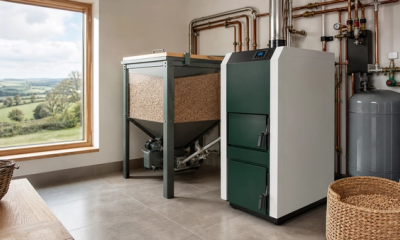
A £5,000 grant remains available for biomass boilers in eligible rural off gas grid homes, although uptake is small.
Boiler Upgrade Scheme for air to air heat pumps
From 28 April 2026 air to air heat pumps qualify for £2,500. This is particularly useful for homes that are heated electrically already, or where wet system retrofit is cost prohibitive. We covered the implications in our 27 April 2026 piece on air to air heat pumps.
Warm Homes Plan and Warm Homes Local Grant
If household income is £36,000 or less, or the property sits in IMD deciles 1 or 2, or the household is on a qualifying benefit, the Warm Homes Plan and Warm Homes Local Grant can fund a full upgrade with no contribution. Heat pumps, insulation, solar, and smart controls are all in scope. The plan is funded at £13.2 billion across the parliament with a goal of upgrading 5 million homes by 2030.
Smart Export Guarantee and tariff stacking
Pairing a heat pump with solar and a battery, then taking a smart tariff such as Cosy Octopus, Intelligent Octopus, British Gas Export and Earn Plus, or E.ON Next Export Premium can reduce running costs further. Our 28 April 2026 solar export tariffs piece compares the rates that pay the most for surplus solar in the current price cap window.
How to decide if you are right at the edge
The hybrid decision tree for a homeowner on the gas grid in 2026 looks like this.
- Is the household income £36,000 or below, or in an IMD 1 or 2 postcode, or on a qualifying benefit? If yes, talk to a Warm Homes Plan delivery partner. A fully funded full heat pump conversion is on the table. Hybrid is irrelevant.
- Is the heat loss above 24 kW with no insulation pathway available within the next two heating seasons? If yes, a hybrid may be the right physical solution, knowing it will be self funded.
- Are major fabric upgrades planned within 18 months but heating must be replaced now? If yes, a hybrid can buy time, with a planned conversion to heat pump only once insulation is in place.
- Anything else? Take the £7,500 BUS grant and install a full heat pump. The numbers, the running costs, and the carbon outcome all favour full electrification at this point.
Watch outs when an installer pushes a hybrid
A small minority of installers still sell hybrids hard, often because they make installation easier and protect their boiler servicing income. Three warning signs are worth flagging.
They tell you a hybrid still qualifies for the £7,500 grant
After 28 April 2026 this is incorrect. The Ofgem property owner guidance version 5 is unambiguous. If an installer is still quoting on this basis, they are working from outdated information.
They suggest you can leave the boiler in place during the BUS install and remove it later
The BUS rules require that the fossil fuel heating system is removed at the point the heat pump becomes operational. Any plan to defer removal in order to claim funding falls outside the scheme.
They underplay the need for fabric upgrades
A heat pump in a poorly insulated home does not have to fail, but it will run hotter and less efficiently than designed unless flow temperatures are kept manageable. The April 2026 BUS amendment removed the EPC requirement, but it did not remove the physics. Insulation still matters. Glazing still matters. A whole home retrofit assessment is the right starting point on any older property.
What the next 18 months will probably bring
The heat pump market is moving quickly. Three trends are already visible in 2026 and will accelerate.
- High temperature heat pumps continue to mature. Models that can deliver 70 to 75°C flow without rebuilding the radiator circuit are increasingly mainstream, narrowing the case for hybrids in older houses with cast iron rads.
- Tariff innovation pushes electric running costs down faster than gas costs. The Octopus Cosy Apr to Jun 2026 tariff offers an off peak rate of 14.53p per kWh, well below the 24.7p single rate cap.
- The Home Energy Model brings Heating System into its own assessment metric from the second half of 2027. Heat pumps will be properly rewarded under the new scheme. Hybrids will not.
The direction of policy is consistent. Gas is being progressively de prioritised in housing. Cucumber Eco's view, based on the data and the funding landscape as it stands in May 2026, is that any homeowner currently on the gas grid weighing a partial transition should look very seriously at a full heat pump install before committing to a hybrid.
Speaking to Cucumber Eco
If you are on the gas grid and have been told a hybrid is your best route, our team will run a free home assessment, model the BUS pathway, the Warm Homes Plan pathway if applicable, the Smart Export Guarantee earnings, and the projected SCOP and running cost on a full heat pump install. You will see the full picture before you commit. There is no charge and no obligation.
The April 2026 changes have made the funded route to full electrification stronger and clearer. A hybrid in 2026 is, in most cases, the more expensive way to do less.