A practical 2026 guide to smart heating controls for UK homes. It explains what controls to fit, what they can save, how grant routes treat smart controls, and why control design matters before a heat pump.
Why smart heating controls are worth a fresh look in 2026
Smart heating controls are one of the most practical upgrades in a home energy plan because they sit between comfort, running costs and future heating changes. They do not insulate a wall, replace a boiler or generate electricity, but they decide when heat is used, where it is used and how hard the heating system has to work.
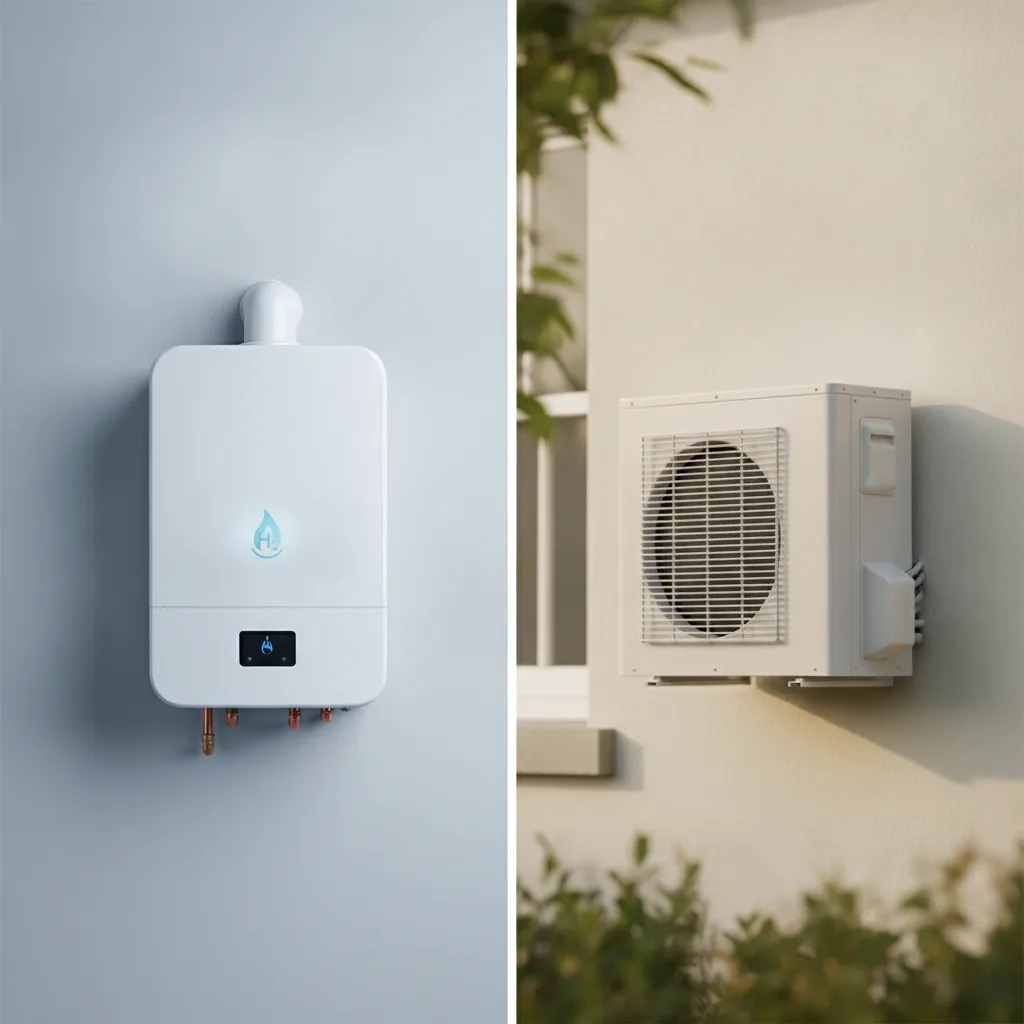
That matters more in 2026 than it did a few years ago. Energy prices are still high, many homes are preparing for better insulation, and more households are comparing gas boilers with air source heat pumps. A good control setup can help a home use less heat today and give a future heat pump a better chance of running steadily.
The important point is that smart controls are not a magic bill cutter on their own. They work best when the basics are right. The heating system needs a clear schedule, a sensible room temperature, working radiator controls and a homeowner who understands how the system behaves. The smart part should make that easier, not more confusing.
This guide explains what to fit, what it can save, when grants may help, and how to avoid buying a system that looks clever but does not match the property.
What counts as smart heating controls
The phrase smart heating controls can cover several different products. Some are simple app based thermostats. Others control individual rooms, learn warm up times, respond to outdoor temperature or connect to a heat pump controller.
For most homes, the useful parts are:
- A room thermostat that stops the heating once the chosen room reaches temperature.
- A programmer or schedule that sets when heating and hot water should run.
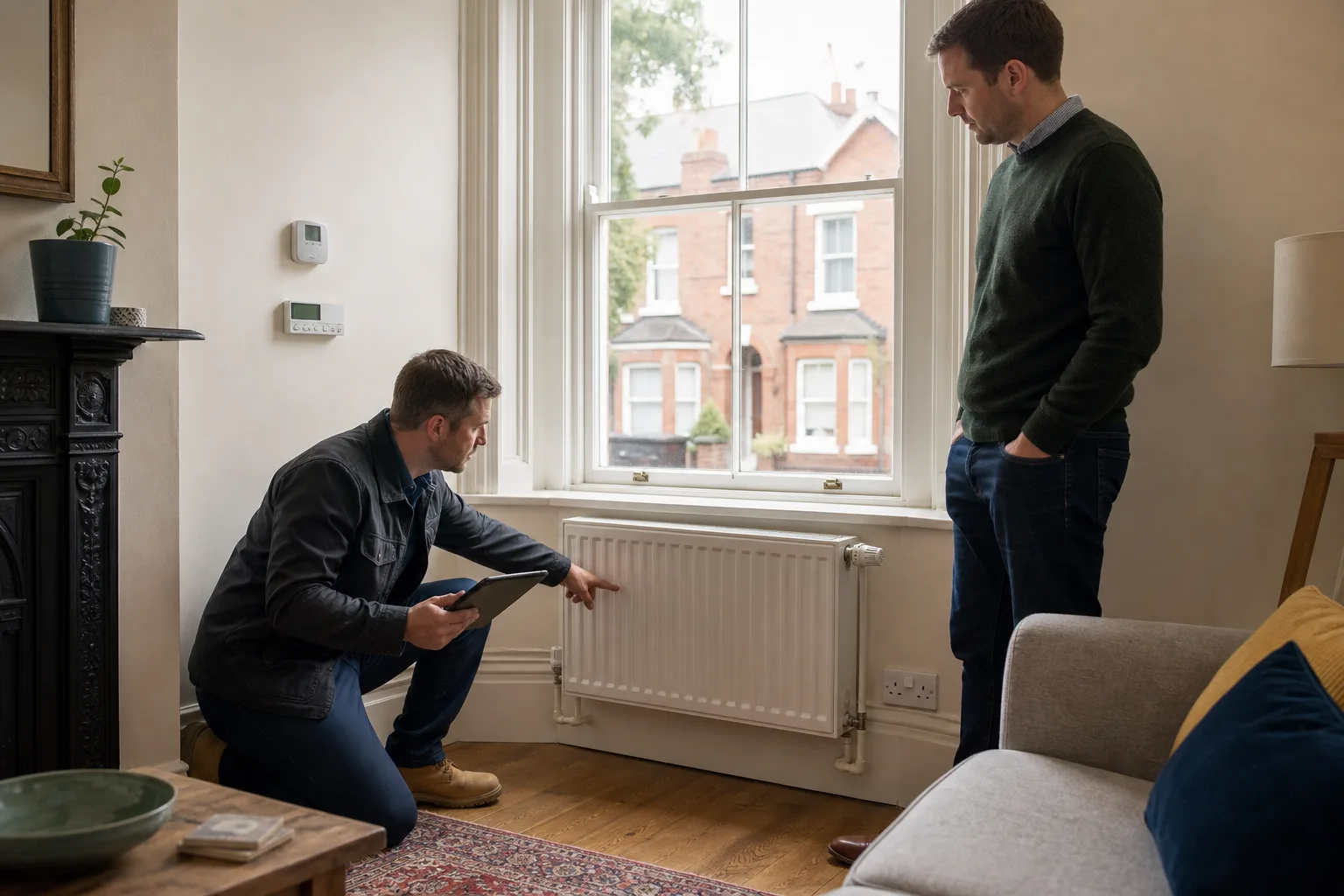
- Thermostatic radiator valves that reduce heat in rooms that do not need as much warmth.
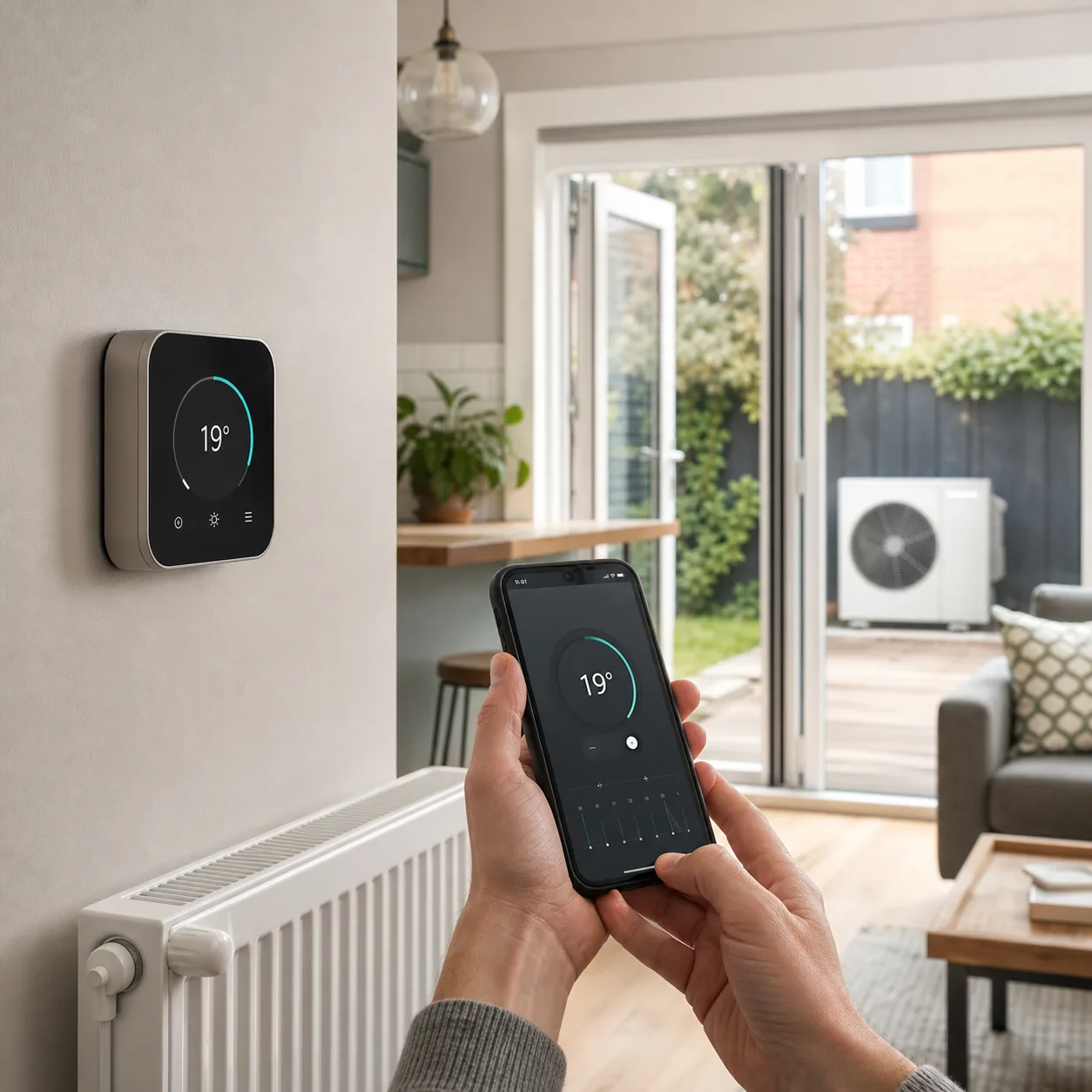
- A smart thermostat or app control that lets the household adjust settings remotely.
- Optional room by room controls for homes with different occupancy patterns.
- Weather compensation or load compensation where the heating appliance supports it.
Energy Saving Trust says a central heating system should normally include a programmer, at least one room thermostat and thermostatic radiator valves. It also says some controls can connect to the internet and learn heating habits. That is the foundation. The best smart system is still built on those simple pieces.
What smart controls can save
Energy Saving Trust states that installing a programmer, thermostat and thermostatic radiator valves can save about £110 a year in Great Britain. It also gives typical installed costs of about £550 where a home has no heating controls and needs the full set, or about £410 where a programmer and thermostat already exist and the upgrade is adding radiator valves.
Those figures are useful, but they should be treated as typical guidance rather than a promise. Actual savings depend on the current controls, how warm the home is kept, how many hours the heating runs and whether unused rooms are being heated.
A home with no working thermostat can often see the biggest improvement because the boiler or heat pump stops guessing. A home that already has a good schedule and well used radiator valves may save less from a smart thermostat alone. The value may be convenience, comfort and better preparation for later retrofit work.
Current energy price context
Ofgem lists the price cap unit rates for 1 July to 30 September 2026 as 26.11 pence per kWh for electricity and 7.33 pence per kWh for gas for an average Direct Debit customer. Standing charges are listed as 57.19 pence a day for electricity and 29.04 pence a day for gas.
This does not mean every household pays exactly those rates. Ofgem is clear that unit rates and standing charges vary by region, payment method and meter type. It does show why controls still matter. Every hour of wasted heating has a real cost, and the most affordable heat is the heat the home did not need to use.
Smart controls are not a substitute for insulation. If a home loses heat quickly, controls will only manage the loss. They cannot make a thin loft, empty cavity or draughty floor perform like a properly improved building fabric. In most retrofit plans, controls should sit alongside loft insulation, cavity wall insulation, draught reduction and heating system design.
Grant funding for smart controls
The Warm Homes Local Grant is the clearest current route where smart controls may appear as part of a funded package. GOV.UK says the scheme is available in England and can fund improvements for eligible low income households in private homes with EPC D, E, F or G. The homeowner guidance lists wall insulation, loft insulation, underfloor insulation, air source heat pumps, smart controls and solar panels as examples of what a council might suggest after a survey.
The key phrase is after a survey. A household does not usually pick a shopping list and ask the council to pay for each item. The council or delivery partner assesses the property, checks eligibility and agrees suitable measures.
Eligibility usually depends on the home being in England, privately owned, and having an EPC of D to G. GOV.UK also says household income must usually be £36,000 a year or less, although postcode and benefit routes can also apply.
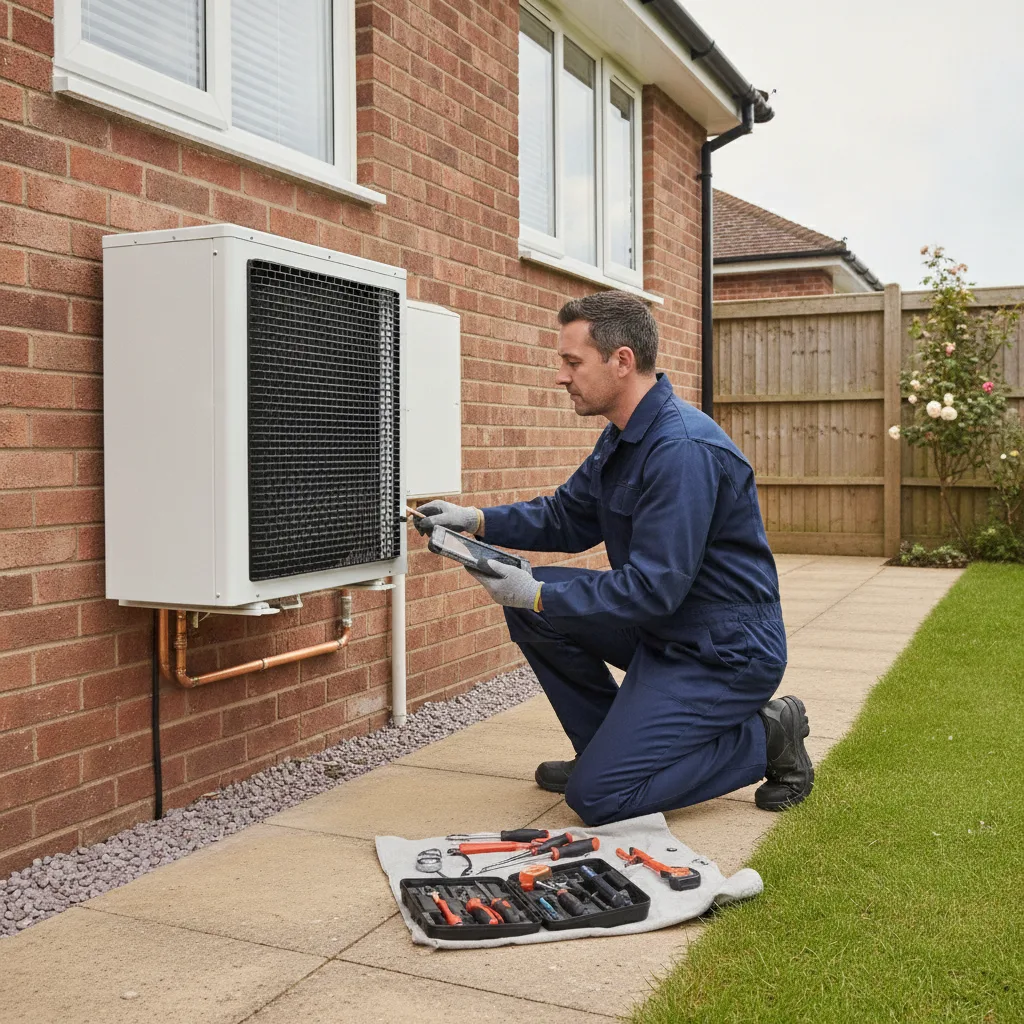
The Boiler Upgrade Scheme is different. It is mainly about replacing fossil fuel heating with eligible low carbon heating. GOV.UK confirms grant values from 21 July 2026, including £7,500 for many air to water heat pump installs, £2,500 for air to air heat pumps, £7,500 for ground source heat pumps in many cases, and £5,000 for biomass boilers. It is not a stand alone smart controls grant. Controls matter because a proper heat pump installation needs controls that suit the system, but the grant category is the heating appliance.
Why controls matter before a heat pump
A heat pump works best when it can provide steady heat at a lower flow temperature. That is a different behaviour from many gas boiler habits, where people often run short bursts of hotter water through radiators.
MCS guidance explains that heat pump efficiency is affected by the heat source temperature and the flow temperature delivered by the heat pump. In simple terms, lower heating water temperature helps efficiency when the home and emitters are suitable. MCS guidance also discusses weather compensation, which adjusts flow temperature as outdoor conditions change.
This is where controls can help or hurt. A control setup that constantly turns a heat pump fully off and then demands a rapid warm up can create higher flow temperature demand. A setup that supports steady operation, sensible set points and good zoning can help the system run more smoothly.
Before replacing a boiler with a heat pump, ask the installer how the controls will work in normal life. The answer should cover room temperatures, schedules, hot water, radiator valves, weather compensation and what the customer should avoid changing after handover.
What Approved Document L says about controls
Approved Document L 2026 supports Part L of the Building Regulations in England. The GOV.UK page was published on 24 March 2026. The document includes control expectations for dwellings and covers existing heating and hot water systems.
The official document says wet heating systems should use suitable room control, such as a thermostat in a room served by the heating circuit plus individual thermostatic room control for heat emitters outside the thermostat room. It also says work on existing systems should incorporate controls, and where a boiler is replaced, boiler controls should meet the relevant wet heating system standards.
This matters because controls are not just nice accessories. They are part of modern heating quality, compliance and handover. If a quote for heating work ignores controls, that quote may be incomplete.
What to fit in a typical gas boiler home
For a home staying with a gas boiler for now, the practical aim is controlled comfort without overheating.
- Fit or confirm a working room thermostat.
- Use a programmer with separate weekday and weekend schedules where needed.
- Fit thermostatic radiator valves outside the thermostat room.
- Set lower radiator valve settings in bedrooms and rooms used less often.
- Use a smart thermostat only if the household will actually use the app or learning features.
- Ask about load compensation or weather compensation if replacing a boiler.
Energy Saving Trust advises setting the room thermostat to the lowest comfortable level, usually 18 to 21 degrees Celsius. That range is a guide, not a rule for every person. Older residents, babies and people with health conditions may need warmer rooms.
Avoid the common habit of turning the thermostat up high to heat the home faster. MCS heat pump guidance makes the same point for heat pumps, noting that changing set points dramatically does not make the system react significantly quicker and can lead to overshoot.
What to fit in a heat pump home
For an air source heat pump, controls need to support low temperature, steady operation.
- Keep the main controller and thermostat simple enough for the household to understand.
- Use weather compensation where the installer designs and commissions it properly.
- Avoid aggressive schedules that demand large temperature jumps.
- Use room by room control carefully so it does not starve the system of flow.
- Keep radiator valves open enough in the main heated spaces.
- Make sure the handover explains what each control does.
A heat pump customer should not be left guessing. If a homeowner does not understand the controls, they may override them, create higher running costs and blame the appliance.
The best installations feel calm. Rooms warm gradually, the system runs for longer periods at lower output, and the control app is used for occasional adjustment rather than constant intervention.
Room by room zoning
Room by room zoning can be useful, especially in larger homes, homes with spare rooms, home offices or uneven heat demand. It can also become expensive and complicated.
The question is not whether zoning is clever. The question is whether it suits the heating system.
In a boiler home, smart radiator controls can reduce heat in rooms that are not being used. That can save energy if the household was previously heating the whole house all day.
In a heat pump home, closing too many emitters can reduce water volume and flow. That can make the heat pump cycle more, run less smoothly or need a buffer arrangement. This does not mean zoning is banned. It means the designer needs to understand the full system.
For many homes, basic thermostatic radiator valves and a clear main thermostat are enough. Add smart radiator controls only where there is a clear use case.
Smart controls and solar panels
Smart heating controls can also help homes with solar panels, but the relationship is often misunderstood.
Solar panels produce electricity when daylight is available. A smart heating control does not automatically make a boiler or heat pump free to run. It can help shift some heat pump operation into daylight hours, but only if the heating system, hot water cylinder and comfort needs allow it.
The best pairing is usually a coordinated home energy plan. Solar panels reduce grid electricity use. A battery can store some excess generation. A heat pump can turn electricity into heat efficiently. Smart controls help decide when heat is needed.
That does not mean every home should buy everything at once. It means the control choice should not block the next step. If a household expects solar panels, a battery or a heat pump later, it should ask whether the control system can integrate cleanly or at least avoid creating a future replacement cost.
What landlords should consider
Landlords need controls that are robust, simple and suitable for tenants. A very clever app controlled system can be a problem if the tenant does not receive access, loses login details or does not understand the heating setup.
For rental homes, the priority should be:
- Clear fixed controls in the property.
- A simple written heating guide.
- Working room thermostat and radiator valves.
- Safe access arrangements for any app based control.
- Settings that keep comfort practical without wasting heat.
Landlords planning EPC upgrades should treat controls as part of the wider package. Better controls may help, but they rarely solve a poor EPC rating by themselves. Fabric measures and heating system upgrades usually carry more weight.
Mistakes to avoid
The most common mistake is buying the smart thermostat before understanding the heating system. Controls should be specified around the boiler, heat pump, hot water cylinder, radiators and household routine.
Other mistakes include:
- Fitting a smart thermostat but leaving radiator valves broken or missing.
- Putting thermostatic radiator valves in the same room as the main thermostat.
- Using large setback temperatures with a heat pump.
- Letting several apps control the same system without a clear master.
- Choosing a brand because it is familiar rather than because it supports the appliance.
- Ignoring the handover and never reviewing the schedule after installation.
A good installer should ask how the home is used. When do people wake up, leave, work from home, cook, sleep and use hot water. Controls should follow life in the home.
A practical buying checklist
Before accepting a quote for smart heating controls, ask these questions:
- What exactly is included in the quote.
- Will I still have manual control if the internet drops.
- Does this work with my boiler, heat pump and hot water cylinder.
- Does it support separate heating and hot water schedules.
- Are radiator valves included or separate.
- Will the installer balance the system afterwards.
- Who sets the first schedule.
- Will I receive a handover and written settings.
- Can this support a future heat pump.
- What happens if I change phone or broadband provider.
The answers are more important than the brand name. A simple system installed well is better than a premium system nobody understands.
Where smart controls fit in a retrofit plan
For most homes, the right order is assessment first, then fabric, then heating design, then controls. In practice, some control upgrades can happen earlier because they are less disruptive than insulation or a full heating replacement.
A sensible plan might look like this:
- Check the EPC and current heating controls.
- Fix obvious gaps, such as no working thermostat.
- Improve loft insulation and draught reduction where needed.
- Review wall, floor and glazing measures.
- Size any future heat pump using room by room heat loss.
- Choose controls that support the final heating plan.
This is especially important for homes considering the Warm Homes Local Grant, Warm Homes Plan measures or the Boiler Upgrade Scheme. Grant work is usually assessed, designed and delivered through specific routes. Buying controls in isolation may not be the best first move if a funded package could change the heating system later.
When smart controls are a good fit
Smart controls are usually worth considering when:
- The home has no proper room thermostat.
- The schedule is hard to use.
- Occupancy changes from day to day.
- Some rooms are regularly heated when empty.
- A heat pump is being planned.
- The household wants remote adjustment.
- A landlord wants a clearer, more reliable heating setup.
They are less compelling when the existing controls are already simple, modern and well used. In that case, the money may be better spent on insulation, radiator upgrades, a hot water cylinder review or a full heat loss assessment.
The bottom line
Smart heating controls in 2026 should be treated as a practical retrofit tool, not a gadget. They can reduce waste, improve comfort and support better heating design. Energy Saving Trust gives a typical saving of about £110 a year for a proper programmer, thermostat and thermostatic radiator valve package, but the real outcome depends on the home.
The best route is to start with the current heating system and the way the household actually lives. If the home may qualify for the Warm Homes Local Grant, check eligibility before paying privately. If a heat pump is planned, make sure the controls are designed around steady low temperature operation. If the home is a rental, keep the controls simple enough for tenants to use confidently.
Good controls do not shout for attention. They quietly stop the home using heat when it does not need to, and they make the rest of the retrofit plan work better.