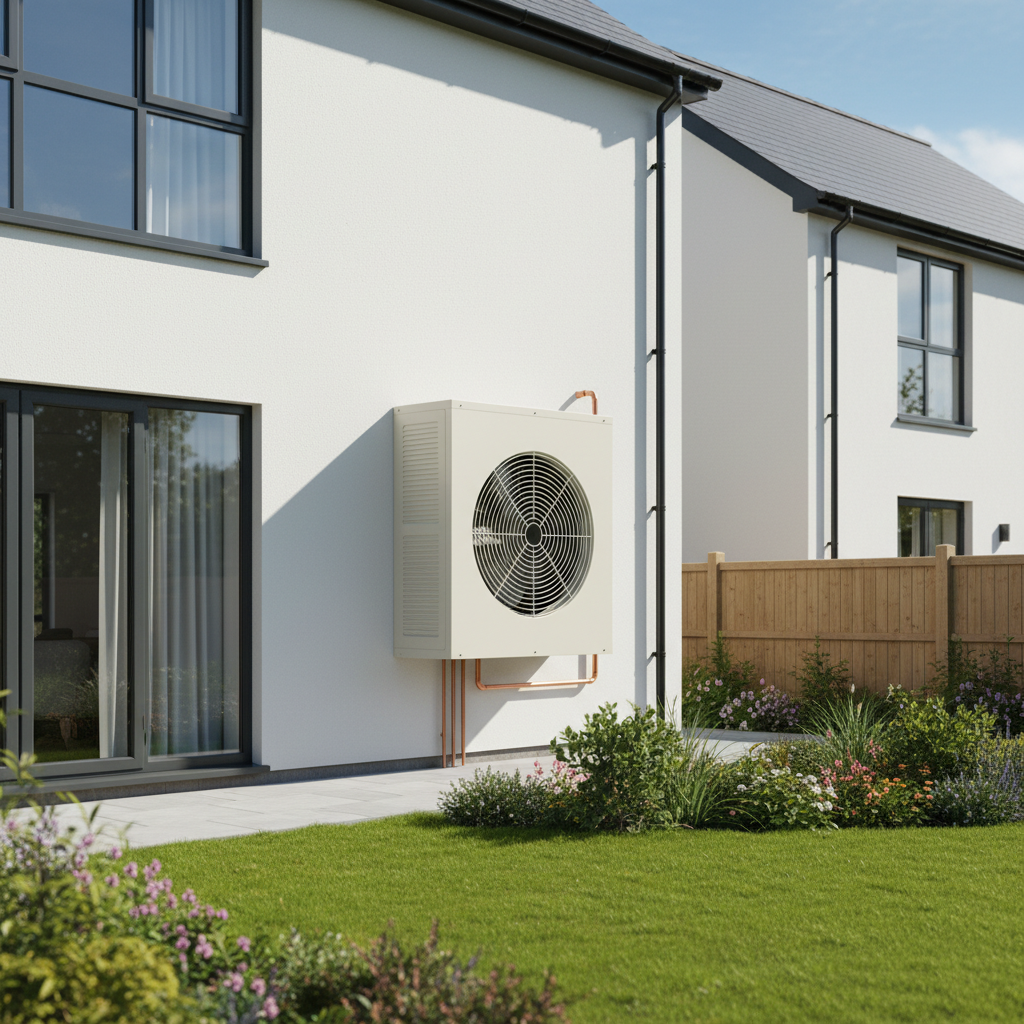
A complete guide to air source heat pumps in 2026, covering installation costs, running costs, SCOP ratings, the Boiler Upgrade Scheme (£7,500), Warm Homes Plan (up to £30,000), and honest guidance on whether a heat pump is right for your home.
Air source heat pumps have moved from niche technology to mainstream consideration for UK homeowners and landlords over the past two years. The Boiler Upgrade Scheme is still open, offering £7,500 off the cost of installation with no income test. The Home Energy Model is arriving in the second half of 2027, and gas boilers will be unable to achieve a C rating on the heating system metric under the new four-metric system. And with energy bills still around 35% higher than before the 2021 crisis, the long-term case for low-carbon heating has never been stronger.
This guide covers everything you need to know about air source heat pumps in 2026: how they work, what they cost, what grants are available, how running costs compare to gas, and whether your home is a good candidate.
How Air Source Heat Pumps Work
An air source heat pump extracts thermal energy from outdoor air and uses it to heat your home and hot water. Even in temperatures as low as minus 15 degrees Celsius, there is usable heat in the air. The heat pump compresses this energy and transfers it inside, typically delivering two to four units of heat for every unit of electricity it consumes. This ratio is called the Seasonal Coefficient of Performance, or SCOP.
A heat pump with a SCOP of 3.5 produces 3.5 kWh of heat for every 1 kWh of electricity used. A gas boiler, by contrast, converts fuel to heat at around 85 to 90% efficiency. Even at current electricity prices, a well-installed heat pump in a well-insulated home can match or undercut gas running costs, particularly when combined with a smart tariff.
Heat pumps work best at lower flow temperatures, typically 35 to 55 degrees Celsius, compared to the 70 to 80 degrees used by older gas systems. This means they pair exceptionally well with underfloor heating and modern low-temperature radiators. Older properties can still use heat pumps effectively, but may require radiator upgrades as part of the installation.
Air Source Heat Pump Costs in 2026
The total installed cost of an air source heat pump in 2026 typically falls between £8,000 and £15,000 before grants, depending on property size, existing system, and whether any additional work is required such as radiator upgrades, cylinder replacement, or improved insulation.
The main cost components are:
- The heat pump unit itself (£3,000 to £7,000 depending on output capacity)
- Installation labour, typically one to two days for a straightforward retrofit
- Hot water cylinder if the existing one is not compatible
- Any radiator or underfloor heating upgrades required
- Electrical work if the consumer unit needs upgrading
After the Boiler Upgrade Scheme grant of £7,500, the net cost for many homeowners falls to between £500 and £7,500. For households eligible for the Warm Homes Plan, the full cost may be covered entirely with no contribution required.
The Boiler Upgrade Scheme (£7,500, No Income Test)
The Boiler Upgrade Scheme (BUS) provides a £7,500 grant towards the installation of an air source heat pump. There is no income test. You do not need to be on benefits or below a certain earnings threshold. The grant is available to any owner-occupier or landlord replacing a fossil fuel heating system with a heat pump.
To qualify, your property needs a valid EPC with no outstanding recommendations for loft insulation or cavity wall insulation (or you need to complete those measures first). Your installer must be MCS-certified and registered to submit BUS claims.
The BUS is currently funded to 2028. There is no guarantee it will be extended at the current level. Applying now locks in the £7,500 and avoids any future reduction in scheme generosity.
The Warm Homes Plan (Up to £30,000 Fully Funded)
For households on lower incomes or in lower-income areas, the Warm Homes Plan can cover an air source heat pump installation at no cost to the homeowner. The scheme provides up to £30,000 per household for qualifying improvements including heat pumps, insulation, and smart heating controls.
There are two eligibility routes:
- Route 1: Household income under £36,000 per year, with an EPC rating of D, E, F, or G.
- Route 2: Living in IMD decile 1 or 2 (the most deprived 20% of postcodes in England), with no income threshold.
Where a heat pump alone does not bring the property to EPC band C, the scheme can fund additional measures such as insulation in the same visit, making it a genuinely whole-home upgrade route.
The Warm Homes Local Grant
Local authorities across England are administering the Warm Homes Local Grant separately from the central Warm Homes Plan. This scheme runs until March 2028 and covers a similar range of measures including heat pumps, insulation, and first-time central heating.
Eligibility varies by local authority, but the scheme broadly targets private renters and owner-occupiers in low-income households with poorly rated properties. Contact your local council or a registered energy assessor to check availability in your area.
Is Your Home Suitable for a Heat Pump?
Most UK homes built after 2000 are well-suited to heat pumps without significant additional work. Older properties can still benefit, but the following factors affect suitability and cost:
- Insulation levels: Heat pumps work most efficiently in well-insulated homes. Properties with good loft insulation, cavity wall insulation, or solid wall insulation lose less heat and therefore require a smaller, less expensive system.
- Radiator size: Larger radiators deliver heat more effectively at lower flow temperatures. Some older properties need radiator upgrades as part of the installation. An MCS installer will assess this during a heat loss survey.
- Hot water demand: Heat pumps heat water more slowly than gas boilers. A well-sized hot water cylinder is essential for consistent hot water availability.
- Available outdoor space: The heat pump unit sits outside, typically on a wall bracket or ground mounting. It requires clearance from boundaries and neighbouring properties.
- Property type: Detached and semi-detached properties are generally the easiest candidates. Mid-terrace and flat installations are possible but may require additional planning or structural assessment.
Heat Pump Running Costs vs Gas in 2026
At standard electricity rates (around 24 pence per kWh in 2026), a heat pump with a SCOP of 3.5 costs approximately 6.9 pence per unit of heat delivered. Gas at approximately 6 pence per kWh and 90% boiler efficiency costs around 6.7 pence per unit. The two technologies are broadly comparable at standard rates.
The calculation changes significantly on a smart tariff. Cosy Octopus, for example, provides electricity at 7 pence per kWh during six cheap periods per day. A heat pump running primarily during cheap periods can deliver heat at around 2 pence per unit, less than a third of the gas equivalent. Households making the switch and moving to a smart tariff are seeing genuine bill reductions in practice.
Over the next five to ten years, the trajectory of gas and electricity prices is likely to diverge further. Gas infrastructure costs will be spread across fewer customers as the grid decarbonises, pushing unit rates up. Renewable electricity generation is increasing, exerting downward pressure on wholesale electricity prices. The long-term economics of heat pumps are strengthening as this transition accelerates.
The Home Energy Model and Why 2026 Matters for Landlords
The Home Energy Model (HEM) will replace the current SAP-based EPC methodology in the second half of 2027. Under HEM, properties will be assessed across four metrics rather than a single A to G band: space heating demand, heating system efficiency, lighting and appliances, and the property's flexibility and responsiveness to the grid.
Gas boilers cannot achieve a C rating on the heating system metric under HEM, regardless of how efficient they are. This means properties currently rated C using gas heating may fall below C under the new system. Landlords planning to meet the MEES 2030 EPC C requirement using a gas boiler as their primary measure are therefore at risk of non-compliance without a system change.
Installing a heat pump now addresses both the current MEES 2030 requirement and the HEM transition in one step. It is the most future-proof compliance route for landlords with solid wall or hard-to-treat properties.
How Cucumber Eco Can Help
Cucumber Eco is a free energy consultancy based in England. We work with homeowners and landlords to identify the funding they qualify for and connect them with certified installers.
For heat pump enquiries, we carry out a no-obligation initial assessment covering BUS eligibility, Warm Homes Plan eligibility, property suitability, and indicative costs. We manage the application process and coordinate with MCS-certified installers on your behalf.
To find out whether your property qualifies and what it would cost after grants, get in touch through our website or call us directly.
Frequently Asked Questions
Can I get a heat pump if my EPC is rated C?
Yes. The Boiler Upgrade Scheme has no EPC requirement. You simply need a valid EPC with no outstanding recommendations for loft or cavity wall insulation, or those measures need to be completed first.
How long does installation take?
A straightforward air source heat pump installation typically takes one to two days. More complex retrofits with radiator upgrades or cylinder replacement may take two to three days.
Does a heat pump work in cold weather?
Yes. Modern heat pumps operate effectively down to minus 15 or 20 degrees Celsius. The SCOP reduces slightly at very low temperatures but the system continues to heat the property.
Will a heat pump add value to my property?
Evidence is still emerging, but properties with low-carbon heating and higher EPC ratings are increasingly preferred by buyers and tenants. Under the Home Energy Model, properties with gas heating may be harder to let above minimum standards from 2030.
Do I need planning permission?
In most cases no. Air source heat pumps are classed as permitted development in England for houses, subject to conditions around size, noise, and position. Your installer will advise on your specific property.
What maintenance does a heat pump need?
Annual servicing is recommended, similar to a gas boiler. The outdoor unit and filters should be checked and cleaned. Most manufacturers offer service plans. There are no gas safety checks, chimney inspections, or combustion-related maintenance requirements.