
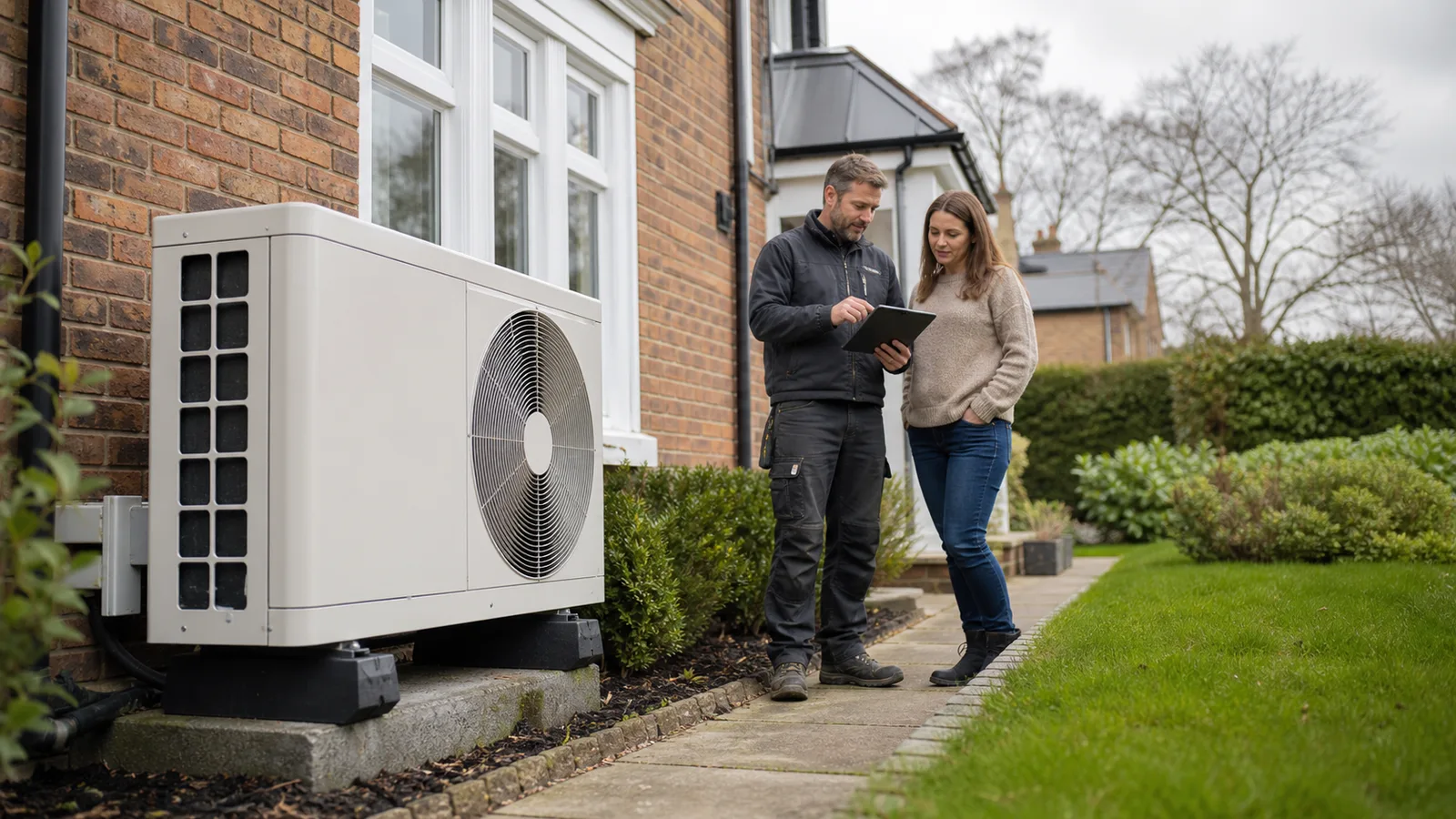
A practical 2026 guide to applying for the Boiler Upgrade Scheme. It explains grant values, who applies, how consent works, what Ofgem and MCS check and what homeowners should prepare before agreeing a quote.
Why this application guide matters in 2026
The Boiler Upgrade Scheme is one of the most important grant routes for households replacing fossil fuel heating. It can make a major difference to the cost of a heat pump or biomass boiler, but it is not a form that the homeowner completes alone. The installer leads the application, the property owner confirms consent and Ofgem checks the claim.
That process is simple when everyone understands the order. It can become frustrating when a quote is vague, the wrong system is chosen, the owner misses the consent message or the installer has not checked eligibility before work is planned.
This guide explains how the application works in 2026, what evidence to prepare and what can delay approval. It is written for homeowners, landlords and small business property owners who want a clear route before agreeing a quote.
The short answer
GOV.UK says the Boiler Upgrade Scheme can cover part of the cost of replacing fossil fuel heating systems with a heat pump or biomass boiler. GOV.UK also says the scheme is open to people in England and Wales.
The current grant values are £7,500 for an air source heat pump, £7,500 for a ground source heat pump, £5,000 for a biomass boiler and £2,500 for an air to air heat pump. GOV.UK says one grant is available per property.
The key point is that the installer applies. The property owner does not submit the main application directly. GOV.UK says the process is to contact MCS certified installers, confirm eligibility, agree a quote and then have the installer apply on the Ofgem website.
Step one is choosing the right type of system
Before thinking about the application, decide whether the proposed system is actually eligible. GOV.UK says the grant can help replace fossil fuel heating systems, including oil, gas, electric and LPG systems.
Ofgem says BUS grants are only available for air to water heat pumps, air to air heat pumps, ground source heat pumps and biomass boilers. GOV.UK says hybrid heat pump systems are not eligible.
That matters because some households ask for a grant after already deciding on a product. The better order is to assess the home, heat demand, hot water need and practical installation route first, then confirm whether the system fits the scheme.
Current grant values
For 2026, the headline grant values are clear.
- £7,500 for an air source heat pump.
- £7,500 for a ground source heat pump.
- £5,000 for a biomass boiler.
- £2,500 for an air to air heat pump.
Those are grant values, not guaranteed final prices. The installed cost depends on the property, heating design, cylinder work, emitters, electrical work, groundworks and any repairs needed before installation.
One grant per property
GOV.UK says one grant is available per property. That means the owner should be careful before consenting to an application.
If two installers submit applications for the same property, Ofgem says the owner can only confirm consent to one of them. Once consent is confirmed for one installer, Ofgem will reject applications from other installers.
The practical advice is simple. Do not consent until the quote, scope and installer choice are settled. Consent is not the same as signing every contract document, but it does allow the scheme application to move forward with that installer.
Who can apply
GOV.UK says eligibility requires the applicant to own the property, including a business property, second home or property rented out to tenants. The owner must also be replacing a fossil fuel heating system.
This is useful for landlords because the scheme is not only for owner occupied homes. It can also apply to rented properties where the other scheme rules are met.
It is also useful for homes that have already received energy efficiency support. GOV.UK says you may still be eligible if you have already had funding to make the property more energy efficient, for example by insulating it.
Properties that can cause problems
GOV.UK lists several property exclusions. Most new build properties are not eligible. Social housing is not eligible. A property that has already received government funding or support for a heat pump or biomass boiler is not eligible.
Self build properties can be eligible, but GOV.UK sets specific conditions. If the property is a self build, the installer should check the evidence before applying.
For biomass boilers, GOV.UK says the property must be off the gas grid, in a rural location and the boiler must have an emissions certificate. GOV.UK also says you cannot get a grant to install a biomass boiler in a self build property.
Why MCS certification matters
Ofgem says a BUS eligible heating system must be installed and commissioned by an installer certified by the Microgeneration Certification Scheme. GOV.UK also directs applicants to contact MCS certified installers for quotes.
This is not a minor admin point. The installer is central to the application and the quality of the design. Ofgem says MCS certification means installers are technically competent and that products used in their installations meet the correct standards.
For the property owner, this means the first check should be whether the installer is certified for the relevant technology. A general heating contractor may be experienced, but that does not automatically mean the BUS route is available through them.
How the application works
GOV.UK sets out the application flow in a few steps.
- Contact suitable MCS certified installers to get quotes.
- Confirm eligibility with the installer.
- Agree a quote with the chosen installer.
- The installer applies on the Ofgem website.
- Ofgem contacts the owner to confirm that the installer is acting on their behalf.
The grant is not usually paid to the owner as cash. GOV.UK says the grant value is taken off the amount paid for installation and shown on the quotation and invoice.
Consent is a common delay point
Ofgem says that after the installer submits an application, Ofgem will contact the property owner to confirm two things. The owner has consented to the installer making the application on their behalf, and the owner meets the relevant eligibility criteria.
Ofgem says if those confirmations are not received within 14 calendar days, the application may be rejected.
That is one of the easiest delays to avoid. The owner should know which email address and phone number will be used, should watch for Ofgem contact and should respond promptly. Landlords should make sure the correct owner contact is listed, not only the tenant contact.
Time limits after approval
Timing also matters after approval. Ofgem says the installer has three months from the moment the application is approved to complete the installation in line with industry standards and scheme requirements. For ground source heat pumps, Ofgem says the period is six months.
If the installer does not complete the work within those time limits, Ofgem says a new application will be needed and the owner will need to confirm consent again.
This means the quote should be realistic. If planning, electrical upgrades, scaffolding, groundworks, tenant access or product availability could create delay, discuss that before the application is submitted.
The 120 day commissioning rule
GOV.UK says the installer must commission and install the heat pump within 120 days of applying for the grant, or it will not be eligible.
This is another reason to avoid premature applications. A grant application should follow a proper survey, clear quote and planned installation route. If the project is still uncertain, rushing the application can create avoidable problems.
Ground source projects need particular planning because boreholes, trenches, access and groundworks can take longer than a standard air source project.
Capacity and technical standards
GOV.UK says the maximum capacity for individual systems is 45kWth. Ofgem also says the new heating system must meet certain technical standards, including minimum efficiency requirements.
Most domestic homes will not come close to the maximum capacity, but the rule matters for larger homes and some business buildings. It is also a reminder that the system must be designed to meet the property need, not simply chosen around the grant value.
Ofgem says heat pumps must be sized to meet the full space heating needs of the property, whether installed alone or with a supplementary heating appliance.
Why insulation still matters
Ofgem says heat pumps perform best in a well insulated home. It also says improving energy efficiency can help reduce running costs and improve comfort.
That does not mean every home must be perfect before applying. It does mean the installer should discuss heat loss, insulation, radiator capacity, underfloor heating, cylinder size, controls and ventilation as part of the design process.
If the home has an EPC, Ofgem says it will include a section suggesting changes that could improve energy efficiency. That can be a useful starting point, although a proper heat loss survey is still needed for heating design.
VAT and private costs
The grant may reduce the installation cost, but it does not remove the need to check the quote carefully. HMRC says a zero rate applies to certain specified energy saving material installations from 1 May 2023 to 31 March 2027, and that from 1 April 2027 those installations revert to the reduced rate of VAT at 5 percent.
VAT treatment can depend on the exact supply. Ask the installer to show how the quote treats the qualifying installation and any additional works.
This is separate from grant eligibility. A measure can be eligible for a grant, eligible for VAT relief, both or neither, depending on the facts.
Running costs should be discussed before consent
Ofgem says the price cap from 1 July to 30 September 2026 is £1,862 per year for a typical direct debit dual fuel customer. It also lists average direct debit unit rates of 26.11p per kWh for electricity and 7.33p per kWh for gas for that period.
Those figures are not a personal bill forecast. They do show why system design and insulation matter. A heat pump uses electricity, so performance, controls and heat loss affect the result.
Before consent, ask the installer to explain the expected seasonal performance, design flow temperature and how the home should be used day to day. A cheaper quote with poor design can become expensive in use.
Documents to prepare before quotes
The application will be smoother if the owner prepares the basics before speaking to installers.
- Current heating system details.
- Fuel type and meter information.
- Property ownership details.
- EPC if available.
- Photos of the boiler or existing heating system.
- Photos of hot water cylinder space.
- Photos of outside locations where equipment could sit.
- Loft, cavity wall or solid wall insulation details.
- Planning constraints if known.
- Preferred installation timing.
This helps the installer decide whether the property is worth surveying and what risks need checking early.
What to ask each installer
Good questions make the grant process safer.
- Are you MCS certified for this technology.
- Which BUS grant value applies to this system.
- What existing heating system is being replaced.
- What heat loss method will you use.
- What flow temperature is the design based on.
- Will the system meet full space heating needs.
- What hot water changes are included.
- What electrical work is included.
- What is excluded from the quote.
- When will you submit the Ofgem application.
The aim is not to interrogate the installer. It is to make sure the scheme application, quote and technical design all describe the same project.
What can delay approval
The most common delays are practical rather than complicated.
- The owner does not respond to Ofgem consent contact.
- The owner details are wrong.
- The installer is not MCS certified for the technology.
- The property has already had relevant heat pump or biomass funding.
- The proposed system is not an eligible technology.
- A hybrid system is proposed.
- The quote does not clearly show the grant discount.
- The installation timetable is unrealistic.
- Biomass eligibility has not been checked.
- The heating design has not been completed before application.
Most of these can be prevented by preparing documents, choosing a suitable installer and reading the quote before consent.
Landlords need an extra access plan
For rental properties, the owner may be eligible but the tenant controls access day to day. This needs planning before the application moves.
The landlord should explain the survey, expected work, heating interruption, hot water changes and any follow up visits. If the tenant is not available for surveys or commissioning, the project can drift beyond the planned timetable.
Landlords should also think about tenant handover. A low carbon heating system needs clear instructions, controls explained and a route for support if something feels wrong after installation.
Internal links for next steps
For a wider plan, compare this guide withheat pump grants,Boiler Upgrade Scheme changes,heat loss surveys,heat pump radiators,hot water cylinders,air source heat pumps,smart heating controls,home insulation grantsandEPC checks before grants.
Those pages help you join the grant application to the practical design work that makes the system succeed.
The bottom line
The Boiler Upgrade Scheme application is not just a voucher request. It is a chain of eligibility, installer certification, quote clarity, owner consent, Ofgem checks, installation timing and final claim.
The safest 2026 approach is to prepare the property information first, get quotes from MCS certified installers, check which grant value applies, confirm the quote shows the grant discount and respond quickly when Ofgem asks for consent.
That keeps the application moving and reduces the risk of finding out too late that the system, property or paperwork does not fit the scheme.