A practical 2026 guide to home insulation grants in England. It explains Warm Homes Local Grant eligibility, VAT relief, common insulation measures, savings checks, landlord points and how to plan the right upgrade order.
Why home insulation grants matter in 2026
Home insulation is still one of the most practical energy upgrades a household can make. It does not depend on people changing how they live every day. It reduces heat loss, makes rooms easier to keep warm and can make future heating upgrades work better.
The grant picture in 2026 is more useful than many people realise, but it is also easy to misunderstand. Warm Homes Local Grant is not a general discount for every household. VAT relief is not the same thing as a grant. A private quote can look attractive, but the right upgrade depends on the property, the Energy Performance Certificate rating, moisture risk, ventilation, access and whether the home is owner occupied or rented.
This guide explains the main funded route for home insulation in England, the VAT position, the measures most often considered, and the order to check before work starts.
The short answer
The main named public route to check in England is Warm Homes Local Grant. GOV.UK says it is for eligible low income households in privately owned homes with an Energy Performance Certificate rating of D, E, F or G. The home can be owned by the person living there or privately rented.
If the household qualifies and the local council has funding available, GOV.UK says the council will arrange a home survey. The council may suggest improvements such as wall insulation, loft insulation, underfloor insulation, air source heat pumps, smart controls and solar panels. GOV.UK says the council then organises and pays for agreed improvement work.
For households that do not qualify for a grant, VAT relief can still matter. HMRC guidance says the installation of specified energy saving materials in residential accommodation is zero rated from 1 May 2023 to 31 March 2027. From 1 April 2027, that relief is due to revert to the reduced rate of 5 percent.
Warm Homes Local Grant eligibility
GOV.UK sets out the core household and property tests. The home must be in England. It must be privately owned. It must have an Energy Performance Certificate rating of D, E, F or G. Household income must usually be £36,000 a year or less, although GOV.UK also says a household may still qualify through a postcode route or because someone in the household receives certain benefits.
That means the first step is not choosing a measure. The first step is checking whether the property and household fit the scheme rules.
The Energy Performance Certificate matters because the grant is aimed at worse performing homes. A home rated C or above should not be assumed to qualify through this route, even if it still feels cold or expensive to heat.
What the grant can cover
GOV.UK says a council survey may suggest wall, loft and underfloor insulation, as well as air source heat pumps, smart controls and solar panels.
The local authority guidance gives more detail on how the scheme is structured. It says £500m was allocated to Warm Homes Local Grant for delivery from April 2025 to March 2028. It also sets a cost cap of £15,000 for energy performance upgrades and a separate £15,000 cost cap for low carbon heating.
Those caps are not the same as a guaranteed household allowance. They are scheme cost controls. The practical result is that each home should be assessed, then matched to a package that makes sense within the scheme rules and local delivery plan.
For a cold home, that may mean loft insulation first. For an older solid wall home, it may mean wall insulation only after damp, ventilation and planning checks. For a home with suitable roof space, solar panels may sit alongside insulation. The survey should decide the package.
VAT relief is separate from grant funding
VAT relief is useful, but it is not the same as getting the work funded.
HMRC guidance says a zero rate applies to the installation of certain specified energy saving materials from 1 May 2023 to 31 March 2027. The same guidance says that from 1 April 2027, the rate will revert to 5 percent.
The insulation section of the guidance covers insulation for walls, floors, ceilings, roofs or lofts, water tanks, pipes and other plumbing fittings. It also explains that relief does not apply to products such as curtains and carpets which are not usually installed simply as insulation.
The key point for homeowners is simple. If you are paying privately, ask the installer to show the VAT treatment clearly on the quote. If the job includes extra building work, ask which parts are covered by the energy saving materials relief and which parts are not.
Start with the building fabric
The safest upgrade plan usually starts with the building fabric. That means the parts of the home that lose heat, such as the roof, walls, floor, windows, doors and gaps around the structure.
Insulation can reduce the heating demand before money is spent on a new heating system. It can also make rooms feel more even in temperature. That matters for comfort, because a lower bill is not the only outcome people care about.
Fabric first does not mean every home needs every measure. It means the home should be assessed in a sensible order. Look at the loft, walls, floor, draughts, ventilation and moisture before deciding that a heat pump, solar panels or smart controls are the next priority.
Loft insulation checks
Loft insulation is often the easiest first check because the roof area is a major route for heat loss and the measure is usually less disruptive than wall or floor work.
Energy Saving Trust says professionally installing 270mm of loft insulation in an uninsulated semi detached home costs around £900. It also says topping up from 120mm to 270mm costs around £750 for a semi detached home.
Those figures are useful benchmarks, not quotes. Actual cost depends on access, insulation depth, loft boarding, water tank insulation, pipe protection, ventilation, wiring and whether old material needs to be moved.
Before installing, check for damp, roof leaks, poor ventilation and downlights. Do not simply cover problems with insulation. A good installer should leave the loft safe, ventilated and accessible where needed.
Cavity wall insulation checks
Cavity wall insulation can be a strong upgrade where the property is suitable. Energy Saving Trust says installing cavity wall insulation for a typical home in Great Britain can cost around £2,700 and can often pay back in five years or less through energy bill savings.
Suitability is the important word. A cavity wall should be inspected before filling. The installer should check wall type, cavity width, existing insulation, exposure to driving rain, damp signs, debris in the cavity, vents, air bricks and the condition of the outer brickwork.
If a home is exposed, damp or badly maintained, cavity wall insulation can be the wrong measure until repairs are made. Grant funding should not be treated as a reason to rush the survey stage.
Solid wall insulation checks
Solid wall homes are common in older housing. Energy Saving Trust says homes built before 1920 are generally more likely to have solid walls. It also says typical solid wall insulation installation costs range between £12,000 and £18,000, and around 33 percent of heat lost in uninsulated homes escapes through the walls.
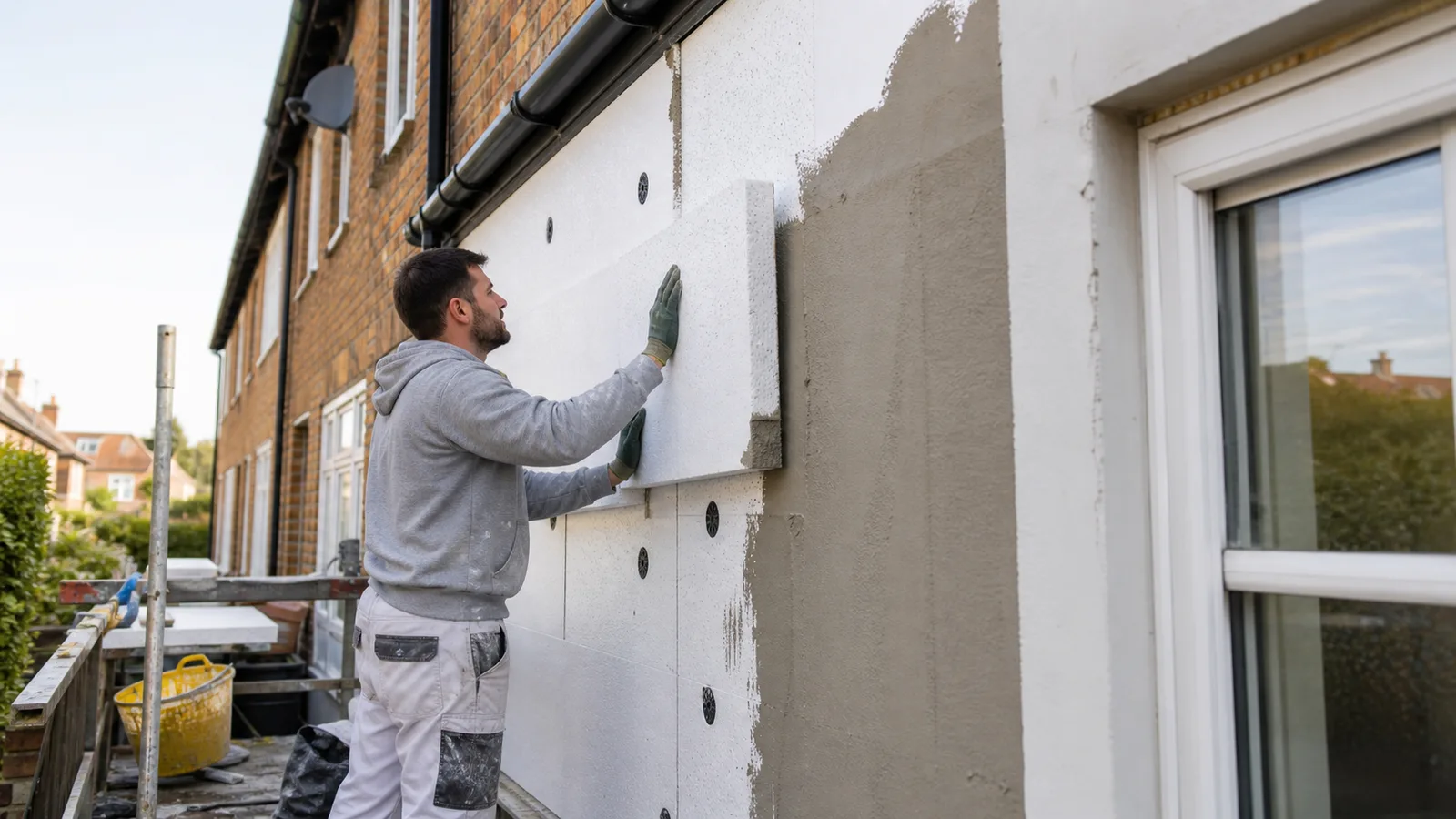
Solid wall insulation can make a large comfort difference, but it is more complex than loft insulation. Internal wall insulation changes room space, sockets, skirting, heating pipe routes and decoration. External wall insulation changes the outside appearance, junctions, rainwater goods, window reveals and sometimes planning risk.
Moisture is critical. Older homes often need careful detailing so walls can dry properly. Ask how the design deals with ventilation, cold bridges, window reveals and existing damp.
Floor insulation checks
Floor insulation is often overlooked because people focus on roofs and walls first. Energy Saving Trust says floor insulation could lower energy bills by around £70 a year in Great Britain and Northern Ireland.
The saving may look smaller than some wall measures, but the comfort effect can be valuable, especially where suspended timber floors feel draughty. The practical checks are access, floor type, ventilation to the underfloor void, damp risk, pipework, cables and whether boards must be lifted.
Most homes only need ground floor insulation, although floors above unheated spaces may also be relevant. The installer should explain the method before work starts.
Doors, draughts and small gaps
Not every improvement has to be a large project. Draught proofing around doors, loft hatches, service penetrations and floor edges can make a home feel better quickly.
This does not replace proper insulation. It supports it. A home can have a well insulated loft and still feel cold if uncontrolled air movement is pulling warm air out of the rooms.
Be careful with ventilation. Sealing every gap without thinking about moisture can create condensation problems. The goal is controlled ventilation, not a sealed box.
Landlord and tenant points
Warm Homes Local Grant can apply to privately rented homes where the scheme rules are met. GOV.UK says eligible homes must be privately owned, either by the person living there or by a landlord.
For landlords, insulation work should be considered alongside Energy Performance Certificate planning, tenant comfort, damp risk, access, permissions and future maintenance. For tenants, the key practical step is to make sure the landlord is involved early because permission and property information may be needed.
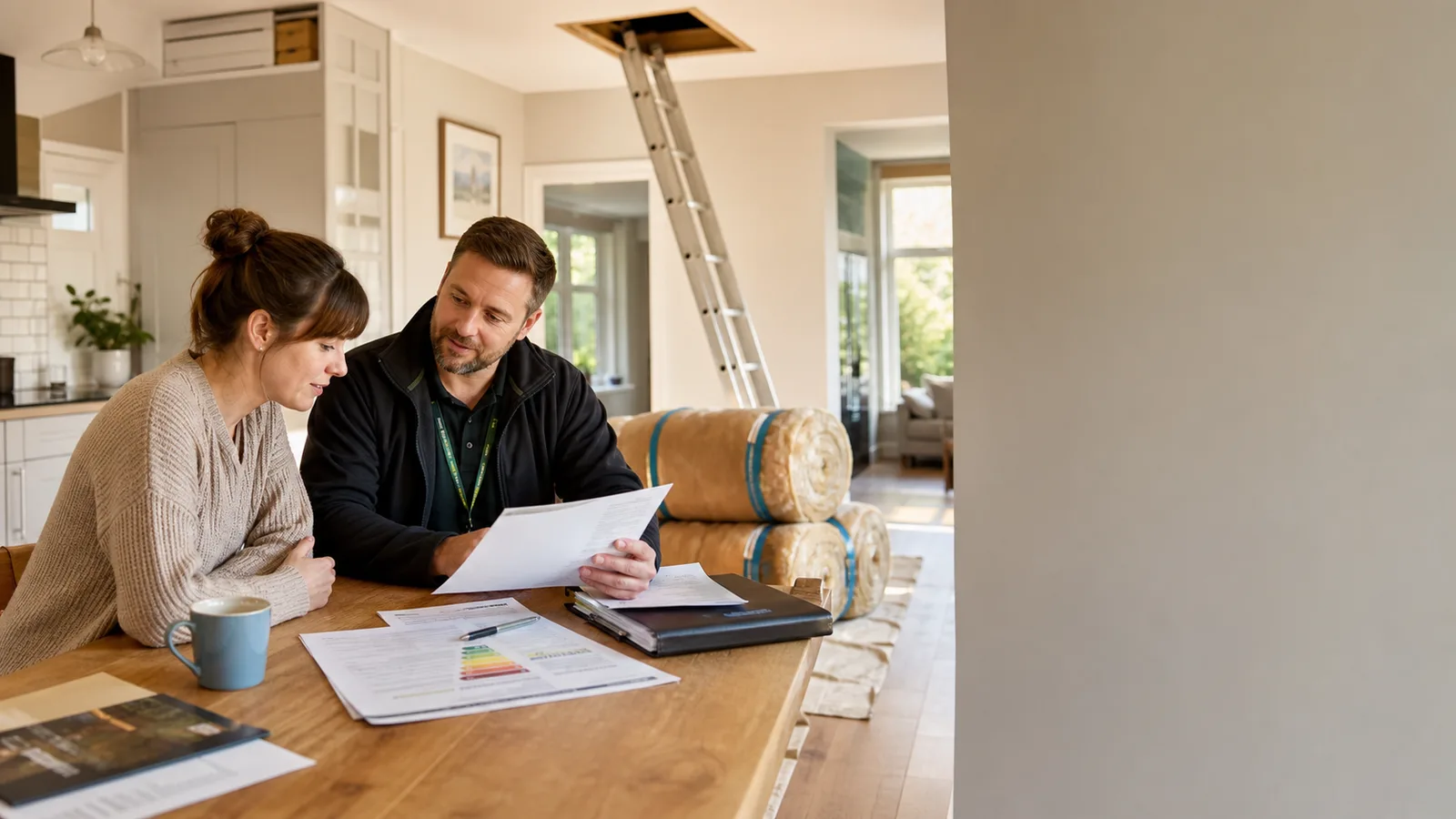
Good documentation helps both sides. Keep the survey, quote, grant paperwork, guarantees, ventilation advice and any updated Energy Performance Certificate.
Price cap context
Insulation decisions should be based on the property, but energy prices give useful context. Ofgem says the price cap from 1 July to 30 September 2026 is £1,862 a year for a typical direct debit dual fuel customer in England, Scotland and Wales. Ofgem also lists average direct debit unit rates for that period of 26.11p per kWh for electricity and 7.33p per kWh for gas.
Those figures do not predict the saving for a particular home. A poorly insulated detached house, a mid terrace, a flat and an older cottage will all behave differently.
The right way to compare options is to ask what heat loss problem each measure solves, what it costs, what grant support is available, and whether it prepares the home for a future heating upgrade.
Documents to gather before applying
Before applying or asking for quotes, gather the basic evidence.
- Your current Energy Performance Certificate if you have one.
- Proof of ownership or landlord details.
- Basic household income or benefit information where relevant.
- Photos of loft access, walls, floors and any damp areas.
- Details of recent insulation, heating or window work.
- Fuel bills or meter information if available.
- Any planning, conservation or listed building constraints.
- Tenant permission or landlord permission where needed.
- Existing guarantees for previous insulation work.
- Notes on cold rooms, draughts, mould or comfort complaints.
This makes the survey more useful and reduces the chance of choosing a measure that does not fit the home.
Questions to ask the installer
Ask direct questions before agreeing to work.
- Which grant or VAT route are you relying on.
- What evidence shows the property is eligible.
- What survey checks have been completed.
- How will damp and ventilation be handled.
- What preparation work is excluded from the quote.
- What guarantees apply to the measure.
- Will the work affect electrics, plumbing or decoration.
- Will a new Energy Performance Certificate be needed.
- What happens if the grant approval changes.
- What maintenance or aftercare does the household need to know.
Clear answers are a good sign. Vague answers are a reason to slow down.
What to upgrade first
There is no single order that fits every home, but a practical sequence is useful.
First, check safety, damp and ventilation. Second, deal with easy heat loss, such as loft insulation and obvious draughts. Third, assess walls and floors with proper survey evidence. Fourth, consider heating controls, solar panels or a low carbon heating system once the heat demand is better understood.
This order reduces the risk of spending money on a heating system that is larger than needed or installing insulation that creates moisture problems.
Internal links for deeper planning
For more detail, compare this guide withWarm Homes Local Grant,home grants,loft insulation,cavity wall insulation,floor insulation,internal wall insulation,room in roof insulation,EPC checks,solid wall insulationandheat loss surveys.
The best result normally comes from matching the measure to the building, not chasing the biggest headline grant.
The bottom line
Home insulation grants in 2026 are worth checking before you pay privately. Warm Homes Local Grant can fund agreed improvements for eligible low income households in privately owned EPC D to G homes in England. VAT relief can also reduce the cost of qualifying installed energy saving materials where a household is paying privately.
The right measure still depends on the survey. Start with the Energy Performance Certificate, check eligibility, inspect the building fabric, and ask for written answers on damp, ventilation, guarantees and VAT before work starts.