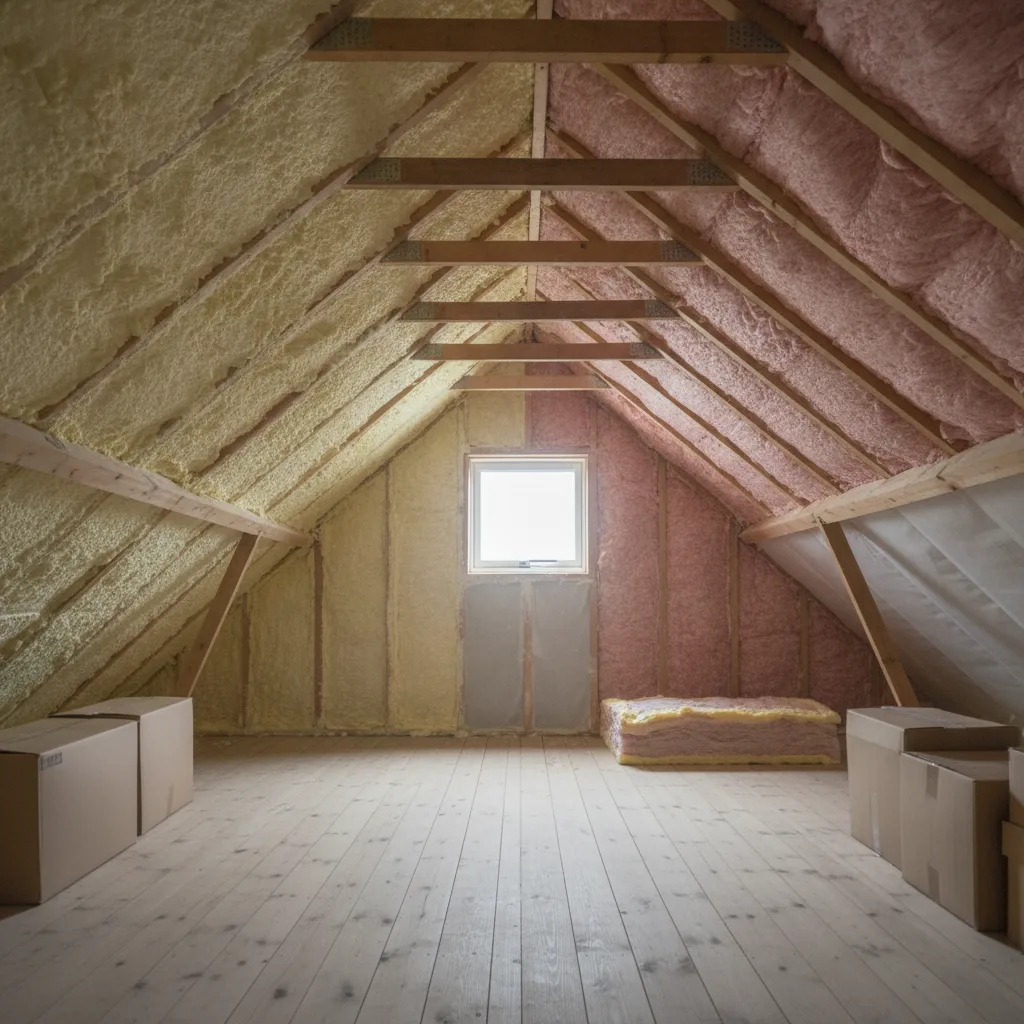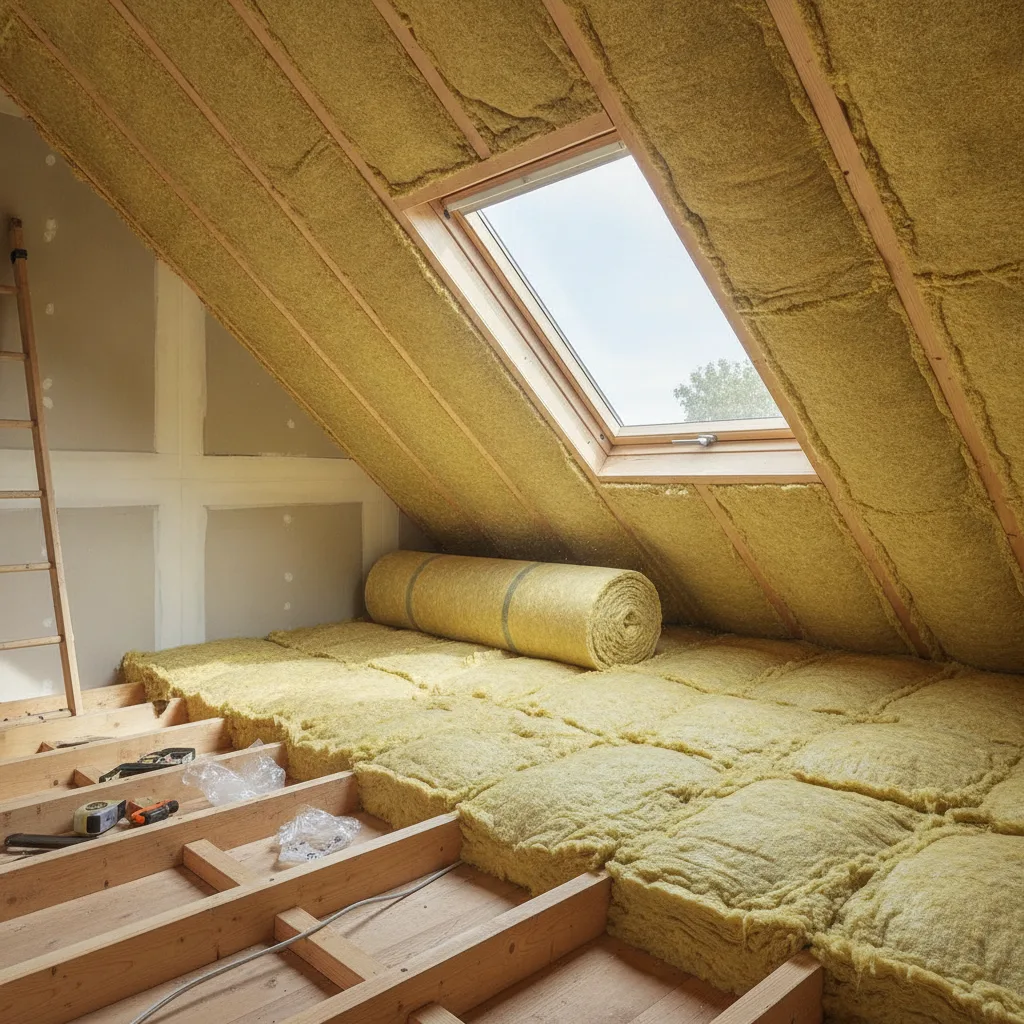
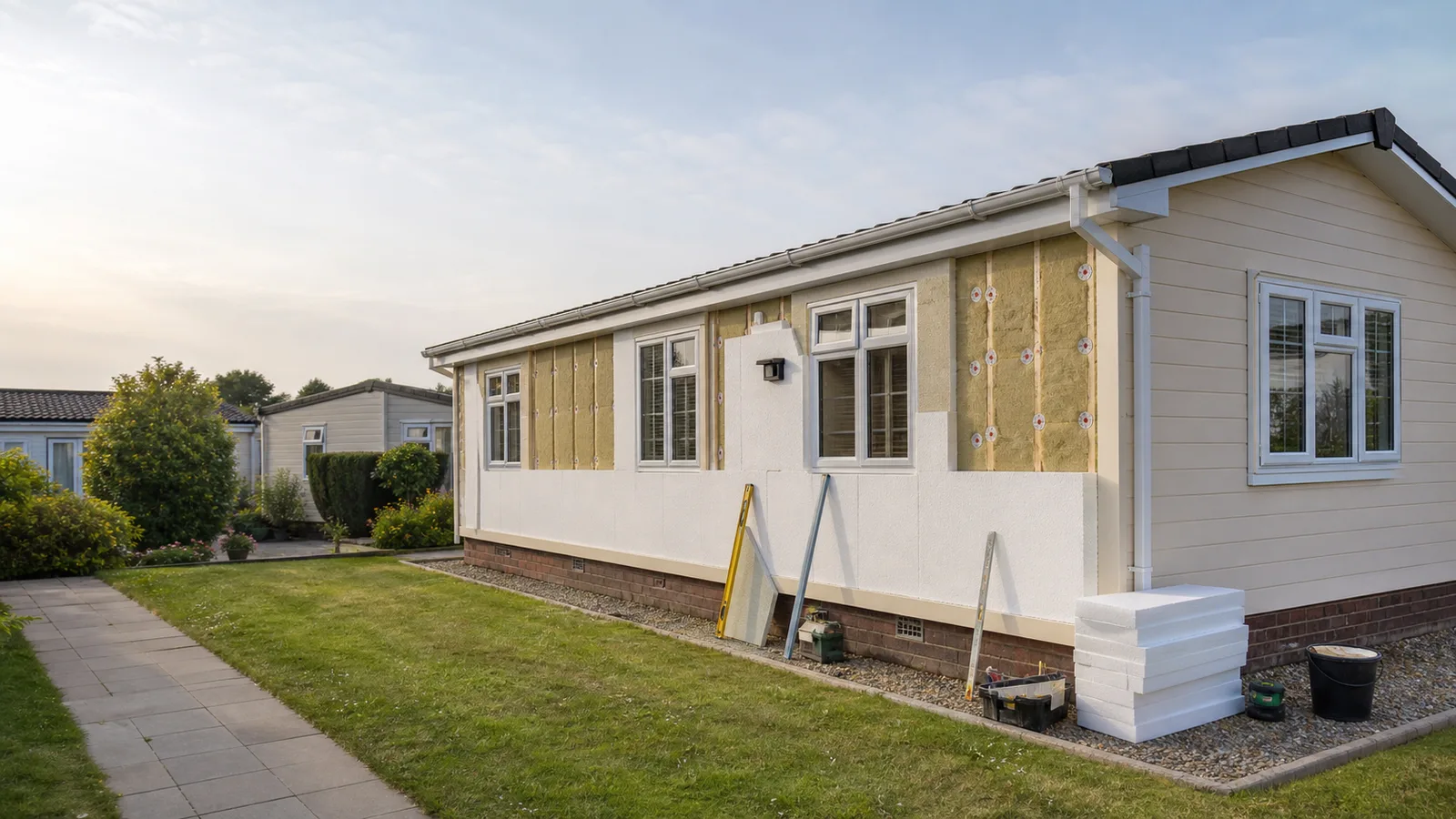
A practical 2026 guide for park home residents and landlords in England. It explains how Warm Homes Local Grant rules apply to park homes, what evidence councils need, which measures may be considered, and how to prepare for a survey.
Why park homes need a different grant check
Park homes can be some of the hardest homes to keep warm. They are usually compact, lightweight and exposed on more sides than a typical terraced or semi detached house. When theinsulationis poor, heat can leave quickly through the walls, floor, roof and gaps around services. That can make a small home feel cold even when the heating is running.
The grant route is also different. Most houses and flats are checked using an Energy Performance Certificate. The DESNZWarm Homes Local Grantguidance says park homes are different because they typically do not have EPCs. Instead, they still need to be assessed so their energy performance can be shown to be equivalent to anEPCband D, E, F or G home.
That detail matters. A park home resident should not assume that noEPCmeans no help. They should also not assume that every park home automatically qualifies. The council or delivery partner needs to check the household, the property and the practical suitability of the proposed measures.
The short answer for 2026
Park homes can be eligible forWarm Homes Local Grantsupport in England, but only where the household and property meet the scheme rules. The DESNZ guidance says the park home must be the permanent residence of the household. It must be equivalent to anEPCband D to G home. It must also be expected to remain in place for the whole guarantee period of the measures being installed.
For owner occupiers, the same guidance says eligible households should receive fully funded upgrades and must not be required to contribute to the cost of the grant funded work. For private rented homes, the rules are different. The first eligible property for a landlord can be fully funded, but later properties in that landlord portfolio require a landlord contribution.
The public GOV.UK application page gives the wider household rules. The home must be in England, privately owned and either owned by the resident or by a landlord. Household income must usually be £36,000 a year or less, although postcode and benefit routes can also apply.
WhatWarm Homes Local Grantis trying to do
Warm Homes Local Grantis part of the widerWarm Homes Plan. DESNZ guidance says £500m was allocated to Warm Homes Local Grant for delivery from April 2025 to March 2028. It also says 74 projects involving 271 local authorities, covering over 97 percent of eligible local authorities in England, have been allocated funding.
The scheme is aimed at low income households in privately owned homes that have poor energy performance. The public GOV.UK page says eligible councils arrange a home survey, then may suggest improvements such as wall, loft and underfloorinsulation,air source heat pumps,smart controlsandsolar panels.
For park homes, that survey step is especially important. A normal house might have a loft, cavity walls or a suspended timber floor. A park home may have a different structure, different access points and different manufacturer constraints. The right answer is the package that suits the actual home, not a standard list copied from a brick house.
The park home eligibility rules
The DESNZ policy guidance gives three park home conditions.
- The park home must be the permanent residence of the household
- The park home must be equivalent to anEPCband D to G home
- The park home must be expected to remain in place for the full measure guarantee period
These rules are practical. The first rule prevents funding being used for a holiday unit or occasional residence. The second rule keeps the scheme focused on inefficient homes. The third rule protects public funding by making sure the upgraded home is expected to remain in use long enough for the measure guarantee to matter.
If a resident is unsure, they should still apply or ask the local scheme for guidance. The assessment is there to confirm the position.
Why park homes do not follow the normalEPCroute
The public GOV.UK eligibility page says homes usually need anEPCof D, E, F or G. The DESNZ guidance then explains the park home exception. Park homes typically do not have EPC ratings, but they must still be assessed to determine an Energy Performance Rating that can evidence equivalence.
That means the survey has to do more than look at a certificate. It needs to understand the park home itself. The assessor may need to consider the age and construction of the unit, the existinginsulation, the heating system, the fuel type, the condition of the envelope and the realistic measures that can be installed.
This is why residents should collect useful information before the survey. Any paperwork about the park home age, manufacturer, previousinsulationwork, heating changes or site rules can help the delivery team make a better decision.
What measures may be considered
The DESNZ guidance lists park homeinsulationas an energy performance measure underWarm Homes Local Grant. It also lists other energy performance measures, including cavity wall insulation, flat roof insulation, internal wall insulation, loft insulation,room in roof insulation, solid or external wall insulation, underfloor insulation, heating controls, hot water cylinder insulation, low energy lighting, solar PV, solar thermal, digital orsmart controls,draught proofing, double or triple glazing, energy efficiency doors and PV batteries.
Not every measure will suit every park home. Some homes may need externalinsulationor floor insulation first. Others may need controls,draught proofingor heating changes. Some may not be suitable for a particular measure because of the structure, available space, site rules or the condition of the home.
The survey should decide what is technically suitable, what improves comfort and what fits the funding rules.
Insulationusually comes first
For many park homes,insulationis the first question because heat loss can be rapid. If the walls, roof and floor lose heat quickly, any heating system has to work harder. Better insulation can make the home feel warmer and can reduce how often the heating needs to run.
The rightinsulationmethod depends on the construction. External wall insulation can improve the thermal layer without taking space from inside the home, but it must suit the park home structure and detailing. Floor insulation can be important where cold air moves below the unit. Roof or ceiling insulation may help if heat is being lost upwards.
Good installation quality matters. Poor detailing can leave cold bridges, trap moisture or cause awkward junctions around windows, doors and services. A park homeinsulationjob should be surveyed and designed carefully, especially where the home is older or has already been altered.
Heating and low carbon options
Warm Homes Local Grantcan include low carbon heating where suitable. The DESNZ guidance separates the funding into an energy performance cost cap and a low carbon heat cost cap. Each is £15,000 per home on average across a project.
The guidance gives examples of low carbon heat measures includingair source heat pumps, ground source heat pumps, shared ground loops, high heat retention storage heaters and biomass boilers. It also lists hybrid heat pumps in specific circumstances for homes currently heated by mains gas only.
Park homes are often off the gas grid, so heating options need a careful survey. Some residents may have electric heating, LPG, oil or older systems. The best option depends on heat loss,insulation, space, controls, hot water needs, electrical capacity and running cost. A grant survey should look at the whole home rather than treating heating in isolation.
Where theBoiler Upgrade Schemefits
TheBoiler Upgrade Schemeis separate fromWarm Homes Local Grant. GOV.UK says current grants include £7,500 towards an air source heat pump, £7,500 towards a ground source heat pump, £5,000 towards a biomass boiler and £2,500 towards an air to air heat pump. GOV.UK also says the scheme does not fund hybrid heat pump systems.
For a park home resident, the important point is not to mix up the schemes.Warm Homes Local Grantis delivered through local authorities for eligible households and properties. TheBoiler Upgrade Schemeis a grant route for eligible low carbon heating installations. A property owner should check which route applies before assuming what will be funded.
If a park home needsinsulationas well as heating,Warm Homes Local Grantmay be the more relevant first conversation because it can consider a package of measures for an eligible household.
Costs and funding limits
Warm Homes Local Grantis not a simple voucher handed to the resident. The DESNZ guidance says local authorities work within twin cost caps. The energy performance cost cap is £15,000 and the low carbon heat cost cap is £15,000. These caps are managed on average across a local project by project closure.
Owner occupiers
For owner occupied homes, eligible upgrades should be fully funded and the household must not be required to contribute. Residents may choose to self fund extra work that is not recommended by the retrofit coordinator or not covered by the grant, but that is separate from the required grant funded package.
Private rented homes
For private rented homes, landlord rules apply. The first eligible property per landlord can be fully funded. Later properties require a 50 percent landlord contribution. The DESNZ guidance also says tenants are not required or expected to contribute to the cost of upgrades.
What residents should prepare before applying
Park home residents can make the process smoother by collecting basic evidence before the survey.
- Proof that the park home is the permanent residence
- Information about household income or eligible benefits
- Any council tax or address evidence requested by the local scheme
- Details of the current heating system and fuel
- Photos of cold areas, draughts, condensation or obviousinsulationgaps
- Any manufacturer or previous works paperwork for the park home
- Information about site rules that may affect external works
The council or delivery partner may ask for different documents, so the exact list can vary. The goal is to help them confirm household eligibility, property eligibility and measure suitability without unnecessary delays.
Whatlandlordsshould check
Landlordswith park homes should check the private rented rules before promising tenants that work will be free. The tenant must meet the household eligibility criteria, and the property must meet the property rules. The landlord may also need to complete declarations and confirm ownership details.
The DESNZ guidance says private rentedlandlordscan receive full funding for one eligible property under the scheme. Any later properties in the same portfolio require a 50 percent contribution. It also says rent should not be increased as a result of upgrades funded by government through the scheme.
For tenants, the practical step is to raise the issue early and keep a record of cold conditions, heating problems and any communication with the landlord or local scheme.
What the survey should look at
A good park home survey should look at the whole home. It should not only ask whether a single product can be fitted. It should consider heat loss, ventilation, damp risk, services, access, electrical capacity, heating controls and the expected life of the home.
Ventilation matters because sealing and insulating a home can change moisture behaviour.Draught proofingandinsulationshould improve comfort, but they should not block necessary ventilation or create damp problems.
The survey should also check whether site rules, ownership arrangements or access restrictions affect the work. Park homes can have practical constraints that are less common in ordinary houses, so the survey should be specific rather than generic.
Common reasons an application may slow down
Applications can slow down when the property evidence is incomplete, when the park home is not clearly the permanent residence, when the household income route is unclear, or when site permissions are needed. They can also slow down if the proposed measure needs further technical checks.
The GOV.UK public page says the local council will usually contact applicants within 10 working days to get more information and arrange a home survey. That first contact is not the same as an installation date. It is the start of the assessment and delivery process.
If the scheme asks for more information, respond quickly and keep copies. Where a landlord or site owner needs to be involved, bring them into the process early so the survey team can confirm what is possible.
Energy prices make heat loss more visible
Ofgem says the energy price cap for a typical direct debit dual fuel household is £1,862 per year from 1 July to 30 September 2026. The same Ofgem page lists average direct debit unit rates of 26.11 pence per kWh for electricity and 7.33 pence per kWh for gas for that period, with figures including 5 percent VAT.
Park homes are not all typical dual fuel households, and many are not heated by mains gas. The price cap figure should not be treated as a personal bill forecast. It does show why reducing heat loss still matters. If a home loses heat quickly, the resident pays more often to replace that heat.
The practical aim is a home that stays warmer for longer. That usually means betterinsulation, fewer uncontrolled draughts, suitable ventilation, clear controls and a heating system that matches the building.
A sensible order of action
Use this order before making decisions.
- Check whether the park home is your permanent residence
- Check the localWarm Homes Local Grantapplication route
- Gather household income, benefit or postcode evidence
- Gather any park home paperwork and site information
- List the current heating system, fuel and comfort issues
- Ask for the survey to considerinsulation, ventilation, controls and heating together
- Confirm whether any landlord or site permission is needed
- Ask what measures are recommended and why
- Check whether the work is grant funded or whether any landlord contribution applies
- Keep copies of documents, survey notes and agreed measures
This order keeps the focus on evidence and suitability. It also helps residents avoid paying for isolated work that may not be the best first upgrade.
Bottom line
Park homes are not excluded fromWarm Homes Local Grantsimply because they usually do not have EPCs. DESNZ guidance says they can be eligible where they are permanent residences, have energy performance equivalent toEPCband D to G, and are expected to remain in place for the full guarantee period of the measures.
The best next step is a proper local assessment. For many park homes, the right package may include park homeinsulation,draught proofing, controls, solar or low carbon heating. The detail should come from the survey, the home condition and the funding rules, not guesswork.
For residents, the key is to apply through the local route, prepare evidence and ask clear questions. Forlandlords, the key is to understand the contribution rules before work is promised. For both, the goal is the same: a warmer, healthier park home that wastes less energy.