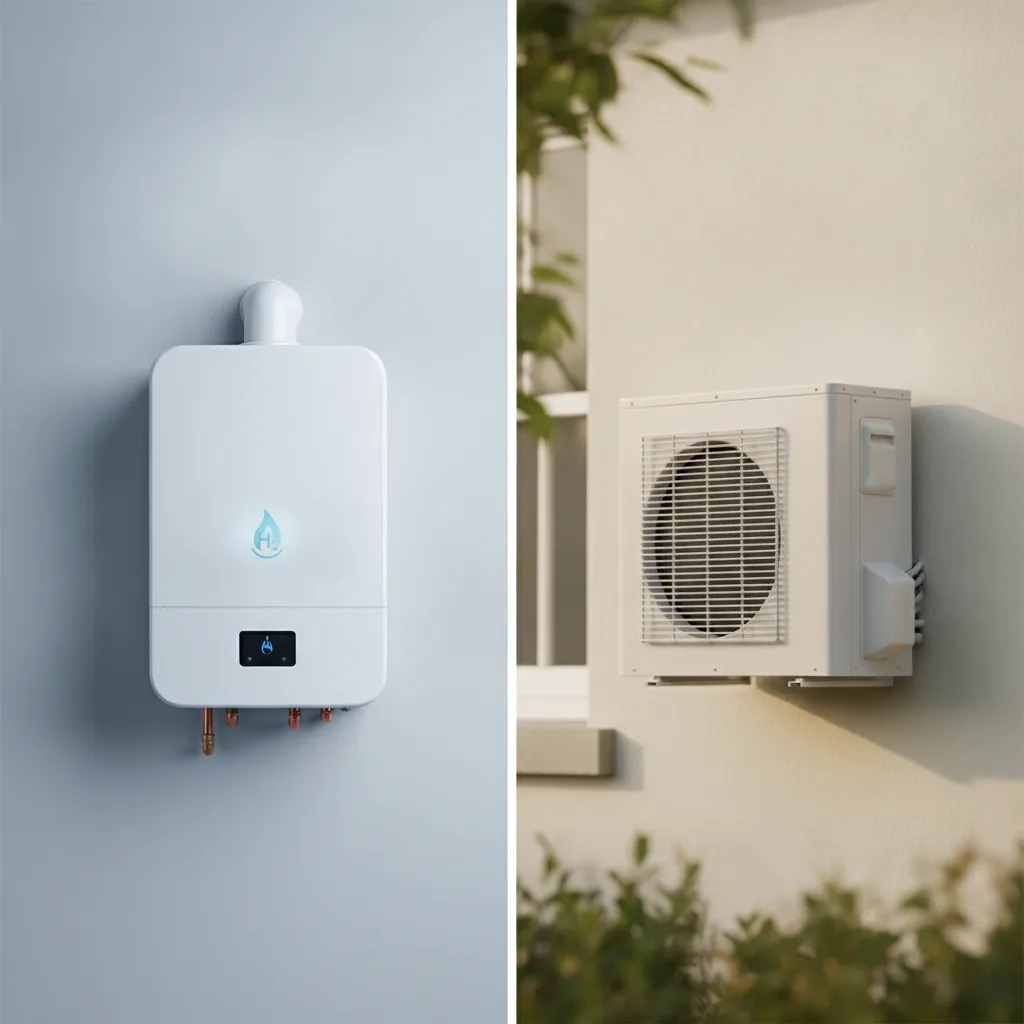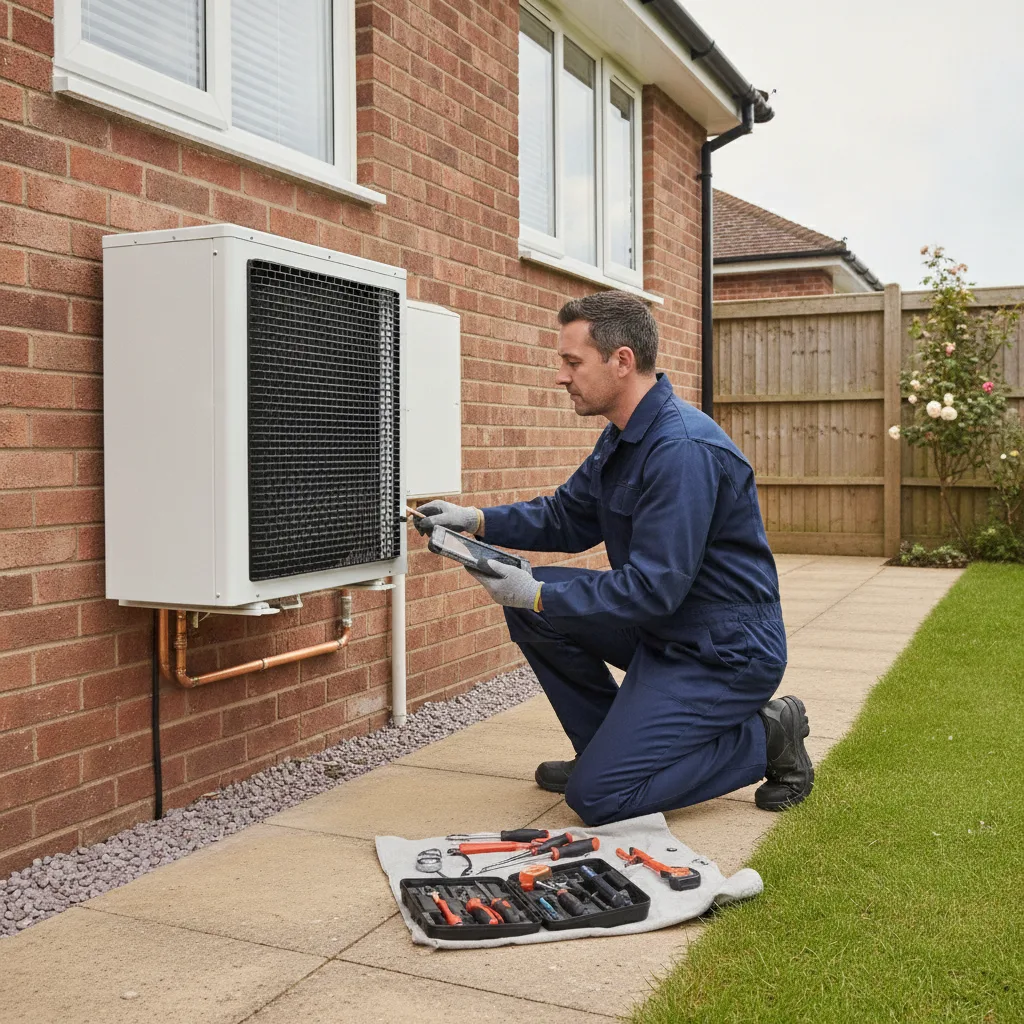
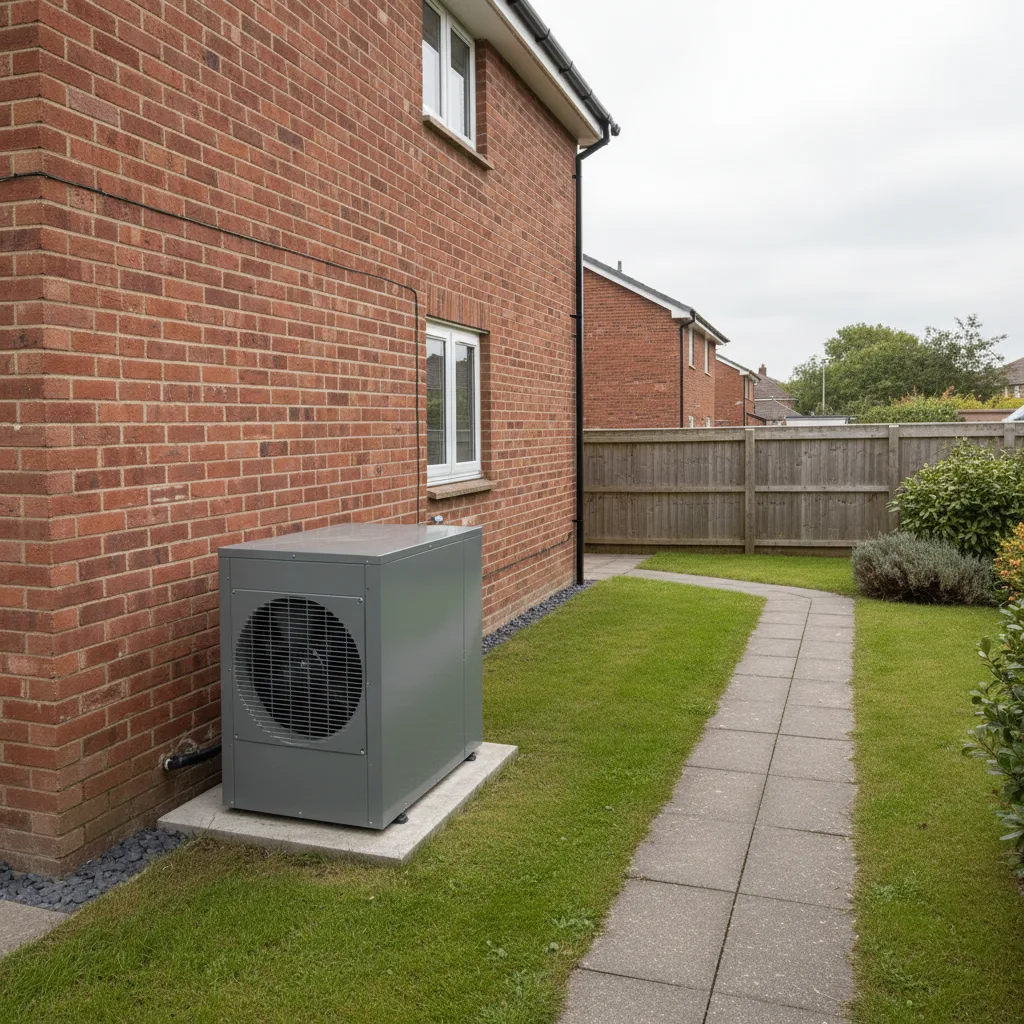
A practical 2026 guide to heat pump noise, planning checks and MCS calculations. It explains what changed in permitted development, how grant routes fit in, and what homeowners should ask before agreeing an installation.
Whyheat pumpnoise rules matter in 2026
Heat pumpnoise has become one of the most common questionshomeownersask before they replace a boiler. Most modern air source heat pumps are quiet when they are sized well, installed in the right place and commissioned properly. The concern is not usually the sound inside the home. It is whether the outdoor unit will be acceptable for neighbours, planners and the permitted development rules.
In 2026 the planning conversation is more useful than it was a few years ago. The rules in England now give more flexibility on where anair source heat pumpcan be placed, including homes with smaller gardens and tighter boundaries. At the same time, the noise calculation is more important because the installer has to show that the chosen position and model can pass the relevant standard.
This guide explains the practical checks before you agree aheat pumpinstallation. It covers the 2026 planning position, the MCS noise method, the main grant routes and the questions to ask before the outdoor unit is fixed in place.
The simple answer forhomeowners
Many homes in England can have anair source heat pumpinstalled without a full planning application, provided the installation meets the permitted development limits and conditions. The key checks are the property type, listed building status, the number and size of outdoor units, the roof position and the noise calculation at a neighbouring habitable room.
That does not mean every installation is automatically permitted. A listed building, a scheduled monument, a planning restriction, an awkward roof position or a failing noise calculation can still mean planning consent is needed. A good installer should identify that early rather than treating planning as an afterthought.
For mosthomeowners, the practical rule is simple. Ask for the unit position, the selectedheat pumpmodel and the noise calculation before the final quote is accepted. If the installer cannot show how the position passes, the risk is being pushed onto you.
What changed in England
TheWarm Homes Planconfirms that the permitted development right for air source heat pumps in England was updated in May 2025. The government says the update gave households more flexibility and means fewer homes should need a planning application.
The changes include allowing heat pumps within 1 metre of the property boundary, increasing the outdoor unit size limit for houses from 0.6 cubic metres to 1.5 cubic metres, allowing 2 units for detached homes, and allowing air source heat pumps that can provide cooling as well as heating. That means some air to air systems can also benefit from permitted development rights when they are used for heating.
This is important for real homes. The old boundary rule often made good installations difficult on terraced homes, semis and small plots. The updated position gives installers more options, but it does not remove the need to think about neighbour impact. In practice, noise design has become the key test.
The MCS noise calculation
MCS 020 a is the planning standard used to calculate the sound pressure level from oneheat pumpat the assessment position. The current MCS document sets a permitted development noise limit of 37 dB A at the relevant assessment position.
This is not the same as standing next to aheat pumpand reading the number on a phone app. The calculation uses the manufacturer's declared sound power, the distance to the assessment point, the direction of the sound, screening from barriers and reflections from nearby hard surfaces. The result is compared with the permitted development noise limit.
The assessment position is normally linked to a neighbouring habitable room. In plain English, that means the installer is checking the expected sound at the neighbour side, not just at your own patio or by the outdoor unit.
Why 37 dB A is not the model noise rating
A common misunderstanding is that theheat pumpitself must have a product rating below 37 dB A. That is not how the calculation works. Manufacturers publish sound data for the outdoor unit, but the planning result depends on the installation location.
A quieter model helps, but distance, screening and reflections can change the result. A unit next to a hard wall, close to a corner or directly facing a neighbour can perform worse in the calculation than the same unit in a more open position. A slightly louder unit in a better location may pass where a poorly placed quiet unit fails.
This is why the design should not start with the cheapest available model. It should start with the heat loss, the required output, the available locations and the neighbour sensitive positions.
What permitted development does not cover
Permitted development is not a shortcut around every planning issue. It only applies if the installation meets the conditions. Homes can still be caught by restrictions such as listed building controls, scheduled monument status, planning conditions or local Article 4 directions.
Some roof positions are also restricted. Local planning guidance commonly notes that units should not be placed on a pitched roof or too close to the edge of a flat roof. Flats and blocks can also have different limits from houses.
If a planning application is needed, that does not automatically mean the project cannot go ahead. It means the position, noise evidence and visual impact need to be submitted and assessed. The earlier this is known, the easier it is to plan the installation properly.
The questions to ask before agreeing the quote
- Which exact outdoor unit model is being proposed.
- What is the manufacturer's sound power level for that model.
- Where will the unit sit on the property.
- Which neighbouring habitable room has been used for the noise check.
- Does the MCS 020 a calculation pass at that position.
- Is the home listed, in a scheduled monument area or subject to a planning restriction.
- Does the unit size meet the permitted development limit.
- Will the installer give you the calculation and design notes before work starts.
If the answer to any of these is unclear, pause before signing. It is much easier to change the design before installation than to move a unit after a complaint or planning issue.
How installers can reduce noise risk
The best way to reduce noise risk is to choose the right unit and position together. Aheat pumpthat is oversized, poorly commissioned or placed in a reflective corner can create avoidable concern. A heat pump that is correctly sized and located away from the most sensitive windows is usually easier to justify.
Good design choices include leaving practical distance where possible, avoiding narrow side passages that reflect sound, avoiding bedroom windows where there is another sensible position, using suitable anti vibration mounts and keeping the airflow clear. Barriers can help in some cases, but they must be designed rather than improvised.
Maintenance matters too. A unit that is kept clear, serviced and running within its intended operating range is less likely to become intrusive. Leaves, blocked airflow and loose fixings can all make an outdoor unit sound worse than it should.
Why correct sizing also affects noise
Noise is not only a planning issue. It is also a design issue. If aheat pumpis too small, it may work harder for longer periods in cold weather. If it is too large, it may cycle on and off more often. Neither outcome is ideal for comfort, running costs or sound.
The right starting point is a room by room heat loss calculation. That helps the installer choose the correct output, flow temperature and emitter plan. It also helps identify whetherradiators,insulationor controls should be improved before the system is commissioned.
This is where noise checks connect with the rest of the retrofit plan. A home with betterinsulation, suitableradiatorsandsmart controlscan often run aheat pumpmore steadily and efficiently. Steady operation is normally better than a system that has to work flat out to catch up.
How theBoiler Upgrade Schemefits in
TheBoiler Upgrade Schemeis still the main national grant for manyheat pumpinstallations in England and Wales. Current Ofgem guidance for applications made on or after 28 April 2026 lists £7,500 for air to water heat pumps and ground source heat pumps, £2,500 for air to air heat pumps in residential properties, and £5,000 for biomass boilers in limited circumstances.
The grant is installer led. In normal terms, the installer applies for the voucher and the grant is taken off the quoted price. That makes installer quality especially important. You are not just buying a product. You are relying on the installer to design a compliant system, provide the right paperwork and meet the scheme standards.
Planning and noise should be checked before the grant path is treated as certain. If the proposed unit cannot pass the planning route and permission is needed, that needs to be built into the timeline.
HowWarm Homes Local Grantfits in
Warm Homes Local Grantis different from theBoiler Upgrade Scheme. It is an England only programme for eligible private homes that need energy saving improvements. GOV.UK says eligible homes must be privately owned, have anEPCof D, E, F or G, and the household income must usually be £36,000 a year or less, with possible routes through postcode eligibility or benefits.
If the home qualifies and the council has funding available, the council arranges a home survey and agrees the measures. GOV.UK lists examples including wallinsulation, loft insulation, underfloor insulation, air source heat pumps,smart controlsandsolar panels.
This matters because the quietest and most efficientheat pumpplan may involve fabric work first. If the home is eligible,Warm Homes Local Grantmay support the wider package rather than treating the heat pump as a standalone purchase.
Why theWarm Homes Planis relevant
TheWarm Homes Planis the wider government strategy behind better home energy performance. It is relevant because it links grants, planning,heat pumprollout and the need to make cleaner heating easier for households.
Forhomeowners, the key takeaway is practical. The policy direction is towards more heat pumps, more flexibility in planning and more support for eligible homes. But the individual installation still has to be designed properly. A national push does not replace the need for a local property check.
That is why the bestheat pumpprojects start with evidence, not assumptions.EPC, heat loss, outdoor space, neighbour positions, planning constraints and funding route should all be checked before the final specification is fixed.
What about running costs
Running cost depends on the home's heat demand, the system efficiency and the electricity tariff. Ofgem lists the April to June 2026 direct debit price cap level at £1,641 a year for a typical dual fuel household, with electricity at 24.67 pence per kWh and gas at 5.74 pence per kWh. From July to September 2026, Ofgem lists electricity at 26.11 pence per kWh and gas at 7.33 pence per kWh.
Those figures do not prove whether aheat pumpwill be cheaper in every home. They do show why efficiency matters. A heat pump with a strong seasonal performance can turn each unit of electricity into several units of heat, but poor design can reduce that advantage.
Noise and running cost are connected here too. If the system has to run hotter than planned becauseradiatorsare too small, it may be less efficient and may work harder. If the controls are badly set, it may be less comfortable and more noticeable. Design detail matters.
Whathomeownersshould ask for in writing
Before installation, ask for a simple pack that includes the heat loss summary, the chosenheat pumpmodel, the outdoor unit location, the MCS noise calculation, grant route, planning assumption and commissioning plan. It does not need to be written in legal language. It does need to be clear enough that you know what is being installed and why.
You should also ask what happens if the calculation fails. The answer might be a different unit, a different location, an acoustic barrier, or a planning application. What should not happen is a vague promise that it will probably be fine.
If you live in a terrace, flat, conservation area or near very close neighbours, this written check is even more important. These homes can still be suitable for heat pumps, but they need careful design.
Red flags before installation
- The quote gives no outdoor unit model.
- The installer has not asked about neighbouring windows.
- The unit position was chosen only because it is easiest for pipework.
- There is no heat loss calculation.
- The installer says planning never matters.
- The installer cannot explain the noise assessment.
- The system is being sold beforeinsulationor radiator suitability has been considered.
Any one of these red flags is a reason to slow down. Heat pumps work best when the project is designed as a heating system, not as a box swap.
A practical order of checks
- Check theEPCand currentinsulation.
- Confirm the existing heating system and hot water setup.
- Complete a room by room heat loss calculation.
- Decide whetherradiatorsor controls need upgrading.
- Shortlist possible outdoor unit locations.
- Run the MCS 020 a noise calculation for the preferred location.
- Check whether permitted development applies.
- Confirm the funding route before booking the installation.
This order prevents common problems. It also helps you compare quotes fairly, because each installer is working from the same basic evidence.
The bottom line
Heat pumpnoise rules in 2026 should not puthomeownersoff low carbon heating. They should make the design better. The updated planning position gives more flexibility, but the MCS noise calculation still matters and should be checked before the job is booked.
For many homes, the rightheat pumpin the right position can pass the planning route, run quietly and qualify for grant support. For homes with tight plots or sensitive neighbours, the answer may be a quieter model, a better location, extra fabric work or a planning application.
The safest approach is to ask for the evidence early. If the heat loss, planning route, noise calculation and funding route all make sense, you can move ahead with much more confidence.