remove bg1

Latest News

The Warm Home Discount Explained: What It Is and Who Can Benefit

s300_220509_Warm_home_discount

As energy costs remain a concern for many households across the UK, government-backed support schemes continue to play an important role in helping people manage their bills. One of the most established and widely used of these is the Warm Home Discount.


The Warm Home Discount is designed to provide direct financial support to households most at risk of fuel poverty. Rather than funding physical home improvements, it offers a straightforward reduction on electricity bills during the winter period, when energy use and costs are typically highest.

In This Article:

What Is the Warm Home Discount?

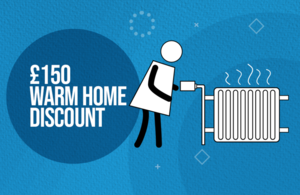
The Warm Home Discount is a government-backed scheme that provides a £150 one-off rebate to eligible households, applied directly to their electricity bill. The discount is designed to help offset higher energy costs during the winter, when heating use typically increases and household budgets are under the greatest strain.


Rather than being paid as cash, the rebate appears as a credit on the electricity account, reducing the amount owed. This approach ensures that the support is used specifically to help with energy costs, rather than being absorbed into general household spending.


The scheme operates across England, Scotland, and Wales and is delivered through energy suppliers. Larger suppliers are required to participate, which helps ensure that support reaches households regardless of which major provider they are with. The Warm Home Discount does not need to be repaid and does not affect entitlement to other benefits or forms of energy support.

Who Is Eligible for the Warm Home Discount?

Eligibility for the Warm Home Discount is designed to target households most at risk of fuel poverty. To achieve this, the scheme is divided into two main groups: the Core Group and the Broader Group.

The Core Group generally includes households where at least one person receives Pension Credit (Guarantee Credit). These households are identified automatically using government data, meaning that eligible customers do not usually need to apply. If identified as eligible, the discount is applied directly to the electricity bill, providing a straightforward and reliable form of support.


The Broader Group includes other low-income households who may not receive Pension Credit but are still considered vulnerable due to income levels, health conditions, or housing efficiency. Eligibility for this group is assessed using a combination of income data and property characteristics, recognising that households in poorly insulated or inefficient homes often face higher energy costs even if their income is modest rather than extremely low.

energy efficient home

Recent reforms have significantly reduced the need for manual applications, with most eligibility now assessed automatically. This has improved access to the scheme and reduced the risk of eligible households missing out due to lack of awareness or administrative barriers.

How the Discount Is Applied

For most eligible households, the Warm Home Discount is now applied automatically, without the need to contact an energy supplier or complete an application. This shift toward automation has made the scheme more reliable and accessible, particularly for older or vulnerable customers.


Once eligibility is confirmed, the £150 credit is applied to the electricity account, typically between October and March. The timing can vary slightly depending on the supplier, but the intention is always to provide support during the winter heating season.


For households with prepayment meters, the discount is usually provided as a top-up, voucher, or credit that can be redeemed at a PayPoint or Payzone outlet, or applied remotely depending on the type of meter. Energy suppliers are required to ensure that customers can access the support in a way that reflects how they pay for their energy.

How the Warm Home Discount Fits with Other Support

The Warm Home Discount is best understood as part of a broader package of energy support, rather than a standalone solution. While it provides immediate financial relief, it does not reduce the amount of energy a household needs to use to stay warm.


This is where longer-term schemes, such as ECO4, play a complementary role. ECO funding focuses on improving the energy efficiency of homes through insulation, heating upgrades, and other measures that permanently reduce energy demand. When combined with the Warm Home Discount, households can benefit from both short-term bill relief and long-term reductions in energy costs.


Other forms of support, such as Cold Weather Payments, Winter Fuel Payments, and local authority hardship funds, may also be available depending on individual circumstances. Together, these measures form a layered approach to tackling fuel poverty, addressing both immediate need and underlying causes.

Why the Warm Home Discount Still Matters

Although £150 may seem modest when compared to annual energy bills, its value lies in timing and targeting. The discount arrives during the coldest months of the year, when energy use peaks and financial pressure is often greatest.

For many households, particularly those on fixed or limited incomes, this support can ease difficult decisions between heating and other essential expenses. It also provides reassurance, reducing anxiety around winter energy costs and helping households maintain safe indoor temperatures.


Importantly, the Warm Home Discount recognises that energy affordability is not just about how much energy is used, but also about income, health, and housing conditions. By focusing on those most at risk, the scheme plays a critical role in protecting vulnerable people during periods of high energy demand.

What Households Should Do Now

Most households do not need to take any action to receive the Warm Home Discount, but it is still important to ensure that information held by energy suppliers and relevant government departments is accurate and up to date. Changes in circumstances, such as a new address or change in benefits, can affect eligibility if records are not current.


If a household believes it may be eligible but has not received confirmation, it is worth checking recent correspondence from their energy supplier or contacting them directly. Suppliers can explain how the discount is applied and whether any further steps are required.


It is also a good time for households receiving the Warm Home Discount to explore whether they qualify for energy efficiency improvements. While the discount helps with immediate costs, improving insulation or upgrading heating systems can deliver lasting benefits that extend well beyond a single winter.

Final Thoughts

The Warm Home Discount is a simple scheme, but its impact should not be underestimated. By providing targeted support at the point when energy costs matter most, it helps protect households who are least able to absorb rising bills.


On its own, the scheme does not solve the challenge of fuel poverty. However, when combined with wider efforts to improve the efficiency of the UK’s housing stock and transition to more affordable energy systems, it plays an important supporting role.


As the government continues to develop long-term strategies such as the Warm Homes Plan, the Warm Home Discount remains a vital reminder that immediate, practical support still matters, especially during winter, when warmth is not a luxury, but a necessity.

About Author

I’m a Second Class Honours, Upper Division Graduate of English Literature and Film Studies student at the University of Manchester, passionate about storytelling, media, and communication. I currently work as a Multi-Channel Marketing Apprentice at Cucumber Eco Solutions Ltd.

Recent Posts

Categories

Tag Cloud