remove bg1

Latest News

Will ECO4 Be Extended? Why a Smooth Transition Matters for UK Homes

eco4-installers-uk-1024x1024
Will ECO4 Be Extended Or Cut Off?

Will ECO4 Be Extended And When Will We Find Out?

As the UK moves deeper into its long-term transition toward cleaner, cheaper, and more efficient homes, the future of the Energy Company Obligation has become a growing point of discussion across the housing, energy, and retrofit sectors. ECO4, the current phase of the scheme, is due to come to an end in March 2026. At the same time, the government is preparing to roll out the Warm Homes Plan, a significantly larger and more ambitious programme intended to address fuel poverty and home energy efficiency at scale.


Rather than representing a simple handover from one scheme to another, this moment raises an important question: how does the government ensure continuity while changing direction? The answer matters not just for policymakers, but for households currently relying on ECO-funded support, local authorities managing delivery, and an entire supply chain built around improving the UK’s housing stock. Increasingly, voices across the sector argue that the success of the Warm Homes Plan may depend on whether ECO4 is allowed to transition gradually, rather than ending abruptly.

In This Article:

ECO4’s Role

ECO has never been a scheme that attracts public attention in the way large capital programmes do. Yet over its lifetime, it has played a critical role in improving the living conditions of millions of households who would otherwise struggle to afford energy efficiency upgrades. ECO4, in particular, sharpened this focus by prioritising the least efficient homes, tightening technical standards, and embedding stronger consumer protections into delivery.


Behind the scenes, ECO4 has helped stabilise the retrofit sector. Installers, surveyors, manufacturers, and local delivery partners have been able to invest in skills, training, and compliance because of the relative certainty the scheme provides. For households, this translates into higher-quality installations and more reliable outcomes. For policymakers, it means delivery at scale is already happening, not theoretically, but practically, on the ground.


Crucially, ECO4 has demonstrated that large-scale energy efficiency programmes do not need to be experimental. The systems, safeguards, and lessons learned through ECO delivery form a mature framework that any successor programme would be wise to build upon rather than discard.

Why an Abrupt End Would Be a Problem

Energy efficiency programmes do not operate on short timelines. From the moment a household first makes an enquiry to the point where work is completed, months can pass. Eligibility checks, home surveys, heat loss calculations, technical design, procurement, and installation all require coordination and capacity. An abrupt end to ECO4 risks interrupting this pipeline, leaving households uncertain and projects stalled.

For the supply chain, a sudden stop would be equally disruptive. Retrofit businesses depend on predictable workflows to retain skilled staff and meet compliance requirements. A sharp drop in demand, even temporarily, could undermine years of workforce development at precisely the moment when national policy is asking the sector to scale up.


From a policy perspective, this is not simply about inconvenience. Past stop-start approaches to home energy schemes have repeatedly led to higher costs, lower public trust, and reduced delivery capacity. Avoiding a repeat of that pattern is one of the strongest arguments in favour of a managed transition rather than a hard deadline.

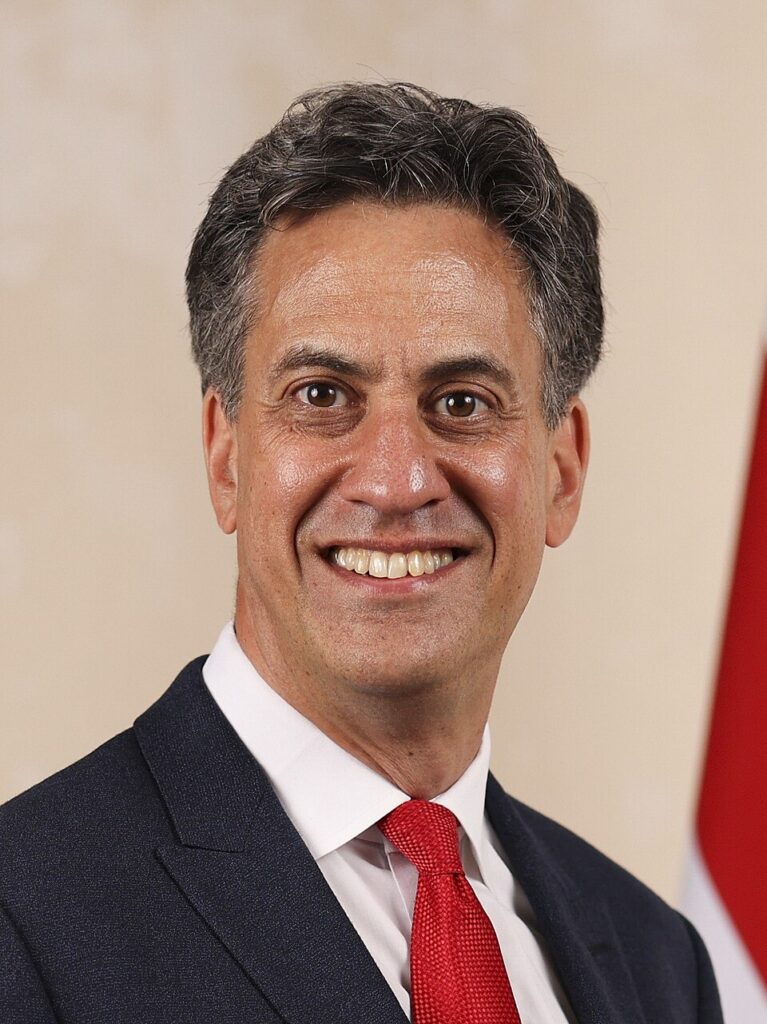
Ed Miliband and the Case for a Managed Transition

Since returning to government as Secretary of State for Energy Security and Net Zero, Ed Miliband has consistently framed the energy transition as something that must be both ambitious and practical. While he has not positioned ECO4 as a permanent fixture, his broader messaging has emphasised the importance of avoiding policy shocks that leave households worse off or delivery partners unable to plan.

The idea of transitioning from ECO rather than simply ending it reflects a more mature approach to policy design. It acknowledges that while the Warm Homes Plan may represent a new model, with longer-term public funding and stronger national coordination, it does not start from a blank slate. ECO’s delivery infrastructure, relationships with local authorities, and access to vulnerable households are assets that still have value.


In that context, allowing ECO4 to taper, extend, or overlap with new programmes would not signal a lack of confidence in reform. Instead, it would demonstrate an understanding that good policy is as much about continuity as it is about change.

How ECO4 and the Warm Homes Plan Fit Together

The Warm Homes Plan is widely expected to go further than ECO in both scale and ambition. With longer funding horizons and a clearer strategic framework, it has the potential to address structural problems in the UK housing stock that piecemeal schemes cannot fully resolve. However, even the best-designed programme requires time to mobilise.


ECO4 already operates within communities, through established installers and local authority partners. It reaches households who are often hard to engage and ensures that support is delivered where it is most needed. Allowing ECO4 to continue during the early stages of the Warm Homes Plan would help preserve this reach and maintain delivery momentum.


Rather than viewing the schemes as competitors, many in the sector see ECO4 as a bridge. Its continuation could help smooth the shift from supplier-obligated funding to publicly funded delivery, ensuring that households experience continuity rather than confusion.

Why ECO4 Still Matters Right Now

Speculation about extensions and future programmes should not obscure a simple but important fact: ECO4 is active, funded, and delivering real improvements today. For eligible households, it remains one of the fastest and most reliable routes to insulation, heating upgrades, and reduced energy bills.


Waiting for future schemes, even ones as promising as the Warm Homes Plan, introduces uncertainty. Application processes, eligibility criteria, and delivery timelines will inevitably evolve. By contrast, ECO4’s requirements are known, its delivery mechanisms are in place, and its outcomes are well understood.


Households who act now also gain a practical advantage. Energy assessments, insulation upgrades, and system improvements completed under ECO4 will form the foundation for any future enhancements. In many cases, acting early reduces overall waiting times rather than extending them.

A Positive Outlook for Home Energy Policy

Taken together, ECO4 and the Warm Homes Plan suggest a more stable and thoughtful approach to home energy policy than the UK has seen in the past. The focus has shifted away from short-lived initiatives toward long-term transformation, supported by delivery structures that already exist.


If handled well, this transition offers an opportunity to combine the strengths of both approaches: the practical delivery experience of ECO and the scale and ambition of the Warm Homes Plan. An extension or overlap would be a logical step in ensuring that progress continues without disruption.


For households, this should be reassuring. Support is not being withdrawn, it is being reshaped. And for those currently eligible under ECO4, the message remains clear: the opportunity to improve your home exists right now.

Final Thoughts

For many households, energy policy is not an abstract discussion about targets or funding cycles. It is about whether a home is warm enough in winter, whether energy bills are manageable, and whether improvements that are clearly needed ever feel achievable. In that context, ECO4 has played a quietly important role. It has helped people take steps they might never have been able to afford on their own, and it has done so through a delivery system that, while imperfect, is proven and trusted.


The introduction of the Warm Homes Plan is a positive and necessary evolution. It signals long-term commitment, greater ambition, and a recognition that upgrading the UK’s housing stock cannot be solved through short-term schemes alone. But ambition works best when it is built on continuity. The experience gained through ECO delivery, from installer expertise to local authority involvement, is not something that can be paused and restarted without consequence.


That is why the question of extending or transitioning ECO4 matters. Not because the scheme must exist forever, but because households and the delivery sector need stability while change is underway. A smooth handover would protect progress already made and ensure that the Warm Homes Plan begins from a position of strength rather than disruption.


For households reading this now, the most important takeaway is practical rather than political. ECO4 is live today. It is funding real improvements right now. Applying under the current scheme does not close doors to future support, in many cases, it opens them. Completing assessments, improving insulation, and upgrading heating systems now can significantly reduce waiting times later and place homes in a far better position as new programmes are rolled out.


In a period of transition, doing nothing is often the slowest option. ECO4 offers a chance to move forward today, while the Warm Homes Plan prepares to take the baton. Used together, thoughtfully and sequentially, they represent not uncertainty, but progress.

About Author

I’m a Second Class Honours, Upper Division Graduate of English Literature and Film Studies student at the University of Manchester, passionate about storytelling, media, and communication. I currently work as a Multi-Channel Marketing Apprentice at Cucumber Eco Solutions Ltd.

Recent Posts

Categories

Tag Cloud